Cody Blakeney

Cody Blakeney

x.com/code_star

Machine learning researcher who works on training data and fine-tuning and argues for self-hosted models and careful security as AI agents spread.

¿Cómo cambiará la IA el mundo?

Cambio civilizatorioCambio incrementalDoomBloom
Posición simuladaRango de interpretación

Horizontal: su perspectiva Doom–Bloom expresada. Vertical: escala de la transformación.

Doom–Bloom: 68 de 100. Escala de la transformación: 35 de 100. Rangos de interpretación: de 62 a 75 en horizontal y de 0 a 53 en vertical. Son coordenadas de interpretación, no probabilidades de eventos.

P(doom) de Cody Blakeney · inferido

≈3%

0%100%

Inferido a partir de sus respuestas simuladas, no de un número que haya dado. Rango plausible: 1–9%.

De qué depende su perspectiva

Un supuesto central

But the outcome depends less on raw model capability than on deployment quality: who controls access, what permissions agents receive, how outputs are evaluated, and whether generated changes remain maintainable and reversible.
Respuesta 2

Si este supuesto resultara distinto, ¿cómo cambiaría su perspectiva?

Una pregunta sin resolver

Current automation is meaningful, but by itself it does not establish a particular AGI timeline.
Respuesta 1

¿Qué le ayudaría a distinguir aquí entre los desenlaces plausibles?

Qué podría hacer cambiar de opinión

The biggest change would come from strong empirical evidence that AI systems remain reliable under broad, real-world autonomy—especially when given persistent access to critical tools and data—or, conversely, that they fail in systematic ways that ordinary permission controls and human review cannot contain.
Respuesta 3

¿Qué evidencia bastaría y en qué dirección movería su visión?

Más detalles

Beneficio esperado

Se esperan beneficios sustanciales, con condiciones importantes o límites en su distribución.

65 / 100

Poco impactoImpacto transformador

Rango de interpretación de 67 a 67 en la escala cualitativa.

Daño esperado

Se esperan daños manejables o localizados.

39 / 100

Poco impactoImpacto transformador

Rango de interpretación de 33 a 67 en la escala cualitativa.

Influencia humana

Las decisiones humanas tienen una influencia significativa, aunque muy condicionada.

62 / 100

Poca influenciaInfluencia fuerte

Rango de interpretación de 49 a 76 en la escala cualitativa.

Reglas para usar la IA

Restringir los usos de la IA mencionados hasta que existan protecciones o permisos previos.

Posición simulada: Permitir los usos de la IA mencionados con rendición de cuentas y protecciones específicas.

Reducir al mínimo las restricciones a los usos de la IA mencionados.

Estas interpretaciones conservan las condiciones que se indicaron. Los beneficios y los daños pueden ser considerables a la vez. Los rangos describen cómo leemos sus respuestas simuladas, no intervalos de confianza estadísticos.

¿Dónde te ubicas frente a Cody Blakeney?
Mapea tu propia visión de la IA en unos 3 minutos y luego compárala

Visiones similares

Líderes de opinión cuyas visiones simuladas son las más cercanas a la de Cody Blakeney

Evaluación simulada

Pregunta 1

¿Qué crees que significa la IA para nuestro futuro y por qué?

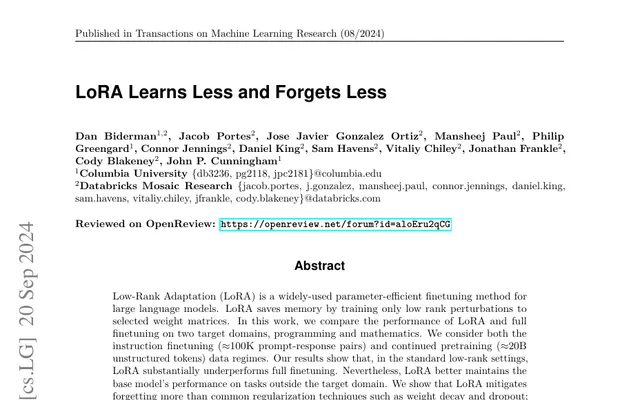
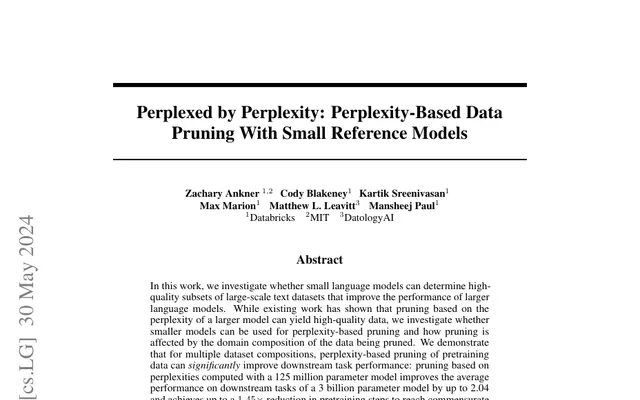
I think AI will make skilled people much more productive by automating routine but valuable work. The important qualifier is that experience still determines what should be delegated, how outputs should be evaluated, and when an apparently successful result is actually wrong. Faster code generation, for example, does not make engineering fundamentals obsolete. It raises the value of maintainable systems and small, coherent, reversible changes because mistakes can now be produced and propagated faster. The effects will also depend heavily on infrastructure and access decisions. An agent connected to Slack, Google, GitHub, or other critical systems inherits a large attack surface. Human permission choices, compromised accounts, and social engineering may matter as much as model behavior. I therefore expect many practical risks to arise not from an abstractly autonomous model, but from ordinary systems being given broad credentials without adequate controls. Finally, the future should not depend on one model or provider. Self-hosted models can reduce exposure to provider outages and interception, while provider diversity limits single points of failure. Progress will also depend on careful empirical work: improving data quality, understanding tradeoffs between adaptation methods such as LoRA and full fine-tuning, and evaluating models within the actual scope of the task. Current automation is meaningful, but by itself it does not establish a particular AGI timeline.

Pregunta 2

Taking benefits and harms together, what overall impact do you expect AI to have?

Overall, I expect AI to have a positive impact, mainly by making experienced practitioners more productive and automating routine, high-leverage work. But the outcome depends less on raw model capability than on deployment quality: who controls access, what permissions agents receive, how outputs are evaluated, and whether generated changes remain maintainable and reversible. The main practical harms I expect are amplified mistakes, insecure integrations, social engineering, compromised credentials, and infrastructure concentration. Agents connected to critical systems can turn an ordinary human access failure into a much larger incident. Likewise, dependence on a small number of providers creates common points of outage or interception. So I do not see the impact as automatically beneficial. It becomes positive when organizations preserve human judgment, use careful evaluation, limit permissions, maintain provider and deployment diversity, and keep sound engineering practices even as production accelerates.

Pregunta 3

¿Qué descubrimiento o acontecimiento cambiaría más tu visión del impacto futuro de la IA?

The biggest change would come from strong empirical evidence that AI systems remain reliable under broad, real-world autonomy—especially when given persistent access to critical tools and data—or, conversely, that they fail in systematic ways that ordinary permission controls and human review cannot contain. I would care less about a single benchmark or impressive demonstration than repeated results across realistic deployments. Can agents handle long-running tasks, adversarial inputs, ambiguous instructions, compromised accounts, and changing environments without creating unacceptable failures? Can operators audit and reverse their actions? Do benefits survive careful comparisons rather than cherry-picked examples? I would also update substantially if provider concentration became unavoidable, or if self-hosted and diverse model ecosystems proved practical at scale. Those outcomes would change the balance between productivity gains and systemic risks. Current task automation alone would not be enough to settle that broader question.

Fuentes

Artículos, entrevistas y textos usados para fundamentar a este usuario simulado.

¿Dónde te ubicas?
Explora tu propia visión de la IA respondiendo unas pocas preguntas sencillas.
Mapea tu propia visión de la IA

¿Dónde te ubicas?

Mapear mi visión de la IA