






Dex Horthy

Dex Horthy

x.com/dexhorthy

HumanLayer co-founder who writes about context engineering and argues reliable coding agents still need careful planning and humans who read the code.

¿Cómo cambiará la IA el mundo?

Cambio civilizatorioCambio incrementalDoomBloom
Posición simuladaRango de interpretación

Horizontal: su perspectiva Doom–Bloom expresada. Vertical: escala de la transformación.

Doom–Bloom: 64 de 100. Escala de la transformación: 39 de 100. Rangos de interpretación: de 50 a 75 en horizontal y de 23 a 52 en vertical. Son coordenadas de interpretación, no probabilidades de eventos.

P(doom) de Dex Horthy · inferido

≈3%

0%100%

Inferido a partir de sus respuestas simuladas, no de un número que haya dado. Rango plausible: 1–10%.

Cómo estimamos P(doom)

De qué depende su perspectiva

Un supuesto central

Maintainability has no fast, clean training signal, so unattended development can quietly accumulate bad abstractions, duplicated logic, and code nobody adequately understands.
Respuesta 1

Si este supuesto resultara distinto, ¿cómo cambiaría su perspectiva?

Una pregunta sin resolver

I don’t have a defensible percentage.
Respuesta 3

¿Qué le ayudaría a distinguir aquí entre los desenlaces plausibles?

Qué podría hacer cambiar de opinión

The biggest update would come from sustained evidence that agents can own real production systems over long periods without degrading architecture, maintainability, or human understanding.
Respuesta 4

¿Qué evidencia bastaría y en qué dirección movería su visión?

Más detalles

Beneficio esperado

Se esperan beneficios sustanciales, con condiciones importantes o límites en su distribución.

67 / 100

Poco impactoImpacto transformador

Rango de interpretación de 67 a 67 en la escala cualitativa.

Daño esperado

Se esperan daños manejables o localizados.

35 / 100

Poco impactoImpacto transformador

Rango de interpretación de 33 a 33 en la escala cualitativa.

Influencia humana

Las decisiones humanas tienen una influencia significativa, aunque muy condicionada.

60 / 100

Poca influenciaInfluencia fuerte

Rango de interpretación de 46 a 79 en la escala cualitativa.

Reglas para usar la IA

Restringir los usos de la IA mencionados hasta que existan protecciones o permisos previos.

Posición simulada: Permitir los usos de la IA mencionados con rendición de cuentas y protecciones específicas.

Reducir al mínimo las restricciones a los usos de la IA mencionados.

Estas interpretaciones conservan las condiciones que se indicaron. Los beneficios y los daños pueden ser considerables a la vez. Los rangos describen cómo leemos sus respuestas simuladas, no intervalos de confianza estadísticos.

¿Dónde te ubicas frente a Dex Horthy?
Mapea tu propia visión de la IA en unos 3 minutos y luego compárala

Visiones similares

Líderes de opinión cuyas visiones simuladas son las más cercanas a la de Dex Horthy

Fuentes

Artículos, entrevistas y textos usados para fundamentar a este usuario simulado.

Evaluación simulada

Pregunta 1

¿Qué crees que significa la IA para nuestro futuro y por qué?

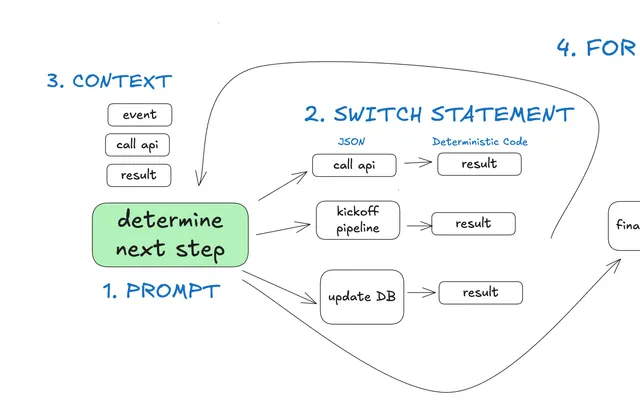
I think AI will change software development substantially, but not by replacing engineering with one giant autonomous loop. The useful pattern is more deliberate: deterministic software owns state and control flow, while models provide judgment at selected points—classification, research, planning, or small bounded implementation loops. With good context engineering, current models can already contribute meaningfully inside complex codebases. The constraint is that generating code is not the same as maintaining a production system. Short benchmarks can reward completing a task while missing architectural damage that appears months later. Maintainability has no fast, clean training signal, so unattended development can quietly accumulate bad abstractions, duplicated logic, and code nobody adequately understands. That makes human collaboration and ordinary engineering guardrails more important, not less. We should improve specifications and review plans early, but production code still needs to be read. Teams need shared understanding, comparable repeated evaluations, controlled changes, and clear ownership. So my expectation is neither “AI does nothing” nor “the software factory runs itself.” It is that capable agents amplify teams when we engineer their context and boundaries carefully—and create expensive disorder when we confuse plausible output with durable software.

Pregunta 2

¿Cuánto crees que la IA acabará cambiando el mundo?

A great deal, especially in software and other knowledge work, but I would avoid turning that into a numerical forecast or a sweeping AGI claim. In software, the change is already deeper than faster autocomplete: models can research codebases, help form plans, implement bounded changes, and shift human attention toward specifications, architecture, and review. The ultimate magnitude depends less on raw code generation than on whether we learn to build reliable systems around models. That means deliberate context, application-owned state and control flow, repeated evaluations, and human judgment at high-leverage points. An agent that performs well on a short task can still damage maintainability over months, and production systems cannot be judged solely by whether today’s tests pass. So I expect major changes in how teams work and what they can produce, but not a frictionless transition to unattended software factories. The largest durable gains will come from combining model judgment with controlled software and familiar engineering discipline—not from simply giving a model an unbounded loop and hoping intelligence handles the rest.

Pregunta 3

¿Cuál es tu estimación intuitiva de la probabilidad de que la IA cause la extinción humana o una catástrofe permanente similar?

I don’t have a defensible percentage. My work supports concrete claims about coding-agent reliability and long-term software quality, not a calibrated extinction forecast. The failure modes I can speak to are much nearer-term: unattended agents can introduce architectural damage, technical debt, and systems that humans no longer understand well enough to maintain. Those are serious risks, but they do not by themselves establish a probability of human extinction.

Pregunta 4

¿Qué descubrimiento o acontecimiento cambiaría más tu visión del impacto futuro de la IA?

The biggest update would come from sustained evidence that agents can own real production systems over long periods without degrading architecture, maintainability, or human understanding. Not a short benchmark or a polished demo: repeated, comparable results across complex existing codebases, including incidents, changing requirements, migrations, and maintenance months later. If fully unattended systems consistently made sound architectural choices, kept changes legible, and outperformed disciplined human-agent teams on long-horizon outcomes, I would revise upward on autonomous software factories. Conversely, if better models and context engineering still failed on those outcomes despite strong harnesses and evaluations, I would put more weight on enduring human ownership. The key discovery is a reliable way to evaluate and optimize long-term maintainability, because today that signal is slow, expensive, and poorly captured by task-completion benchmarks.
¿Dónde te ubicas?
Explora tu propia visión de la IA respondiendo unas pocas preguntas sencillas.
Mapea tu propia visión de la IA

¿Dónde te ubicas?

Mapear mi visión de la IA