










Sierra Catalina

Sierra Catalina

x.com/sierracatalina

CEO of Ouroboros who builds tools for portable, user-owned AI context and writes about agent security and proof of personhood.

Wie wird KI die Welt verändern?

Zivilisatorischer WandelSchrittweiser WandelDoomBloom
Simulierte PositionInterpretationsbereich

Horizontal: ihr geäußerter Doom–Bloom-Ausblick. Vertikal: Ausmaß der Transformation.

Doom–Bloom: 67 von 100. Ausmaß der Transformation: 75 von 100. Interpretationsbereiche: horizontal 62 bis 75, vertikal 70 bis 80. Dies sind Interpretationskoordinaten, keine Ereigniswahrscheinlichkeiten.

P(doom) von Sierra Catalina · abgeleitet

≈5%

0%100%

Aus ihren simulierten Antworten abgeleitet, keine von ihr genannte Zahl. Plausibler Bereich: 3–10%.

Wie wir P(doom) schätzen

Wovon ihre Einschätzung abhängt

Eine zentrale Annahme

so the impact depends less on whether models get smarter and more on who owns the context, how access is scoped & revoked, and whether society rebuilds the human infrastructure automation thins out.
Antwort 2

Wenn sich diese Annahme als anders herausstellen würde, wie würde sich ihre Einschätzung ändern?

Eine ungeklärte Frage

I don’t have a useful percentage.
Antwort 4

Was würde ihr helfen, die plausiblen Ergebnisse hier voneinander zu unterscheiden?

Weitere Details

Erwartete Vorteile

Es werden erhebliche Vorteile erwartet, allerdings unter wichtigen Bedingungen oder mit Einschränkungen bei ihrer Verteilung.

76 / 100

Geringe AuswirkungenTransformative Auswirkungen

Interpretationsbereich von 67 bis 100 auf der qualitativen Skala.

Erwartete Schäden

Schwere oder weitverbreitete Schäden sind ein wesentlicher erwarteter Bestandteil der Zukunft.

64 / 100

Geringe AuswirkungenTransformative Auswirkungen

Interpretationsbereich von 67 bis 67 auf der qualitativen Skala.

Menschlicher Einfluss

Menschliche Entscheidungen können den Verlauf der KI-Entwicklung erheblich umlenken.

79 / 100

Geringer EinflussStarker Einfluss

Interpretationsbereich von 50 bis 100 auf der qualitativen Skala.

Regeln für den Einsatz von KI

Die erörterten Einsatzmöglichkeiten von KI einschränken, bis vorab Schutzmaßnahmen oder Genehmigungen vorliegen.

Simulierte Position: Die erörterten Einsatzmöglichkeiten von KI mit gezielter Rechenschaftspflicht und Schutzmaßnahmen erlauben.

Einschränkungen für die erörterten Einsatzmöglichkeiten von KI minimieren.

Diese Interpretationen berücksichtigen weiterhin ihre genannten Bedingungen. Vorteile und Schäden können beide erheblich sein. Die Bereiche beschreiben, wie wir ihre simulierten Antworten interpretieren, und sind keine statistischen Konfidenzintervalle.

Wo stehst du im Vergleich zu Sierra Catalina?
Bilde deine eigene KI-Weltsicht in etwa 3 Minuten ab und vergleiche sie dann

Ähnliche Weltsichten

Vordenker, deren simulierte Weltsichten der von Sierra Catalina am nächsten kommen

Was Sierra Catalina über KI gesagt hat

Catalina expects AI to take over much human labor and writes about keeping AI clearly a tool, proof of personhood and protecting human contact.

  1. “the system must signal clearly that it is a tool. it must maintain artificial cues & avoid emotional dependency loops.”

    X Article, AI voice identity
  2. “automation reduces the number of default human touchpoints in a normal week.”

    X Article, third places are critical infrastructure for a post automation society
  3. “anthropomorphizing models trains people to trust interfaces instead of incentives. that confusion compounds fast in agentic systems.”

    Post on LinkedIn
  4. “ASI-level automation replaces labor as the core mechanism that sustains society.”

    Essay, finding purpose post ASI
  5. “but the lines will continue to blur & fast. proof of personhood becoming increasingly necessary.”

    Post on X

Wörtlich aus den verlinkten Quellen, geprüft am 6. Okt. 2026

Quellen

Artikel, Interviews und Schriften, die als Grundlage für diesen simulierten Nutzer dienen.

User-owned context as infrastructure

Her personal site states a thesis: the missing layer in modern AI is portable, user-owned context; memory, permissions and identity should travel with the person across models, agents and applications and belong to the user, not the platform. Operating principles: AI systems need scoped access to context, not persistent ownership of identity; provenance, revocation and portability are baseline requirements for trustworthy personalization; AI will remain hybrid across local, cloud and agent systems. Also lists her Ouroboros workspace and open-source agent-aware and context-layer projects. Undated page; full text inspected on 2026-10-05.

sierracatalina.com
ChatGPT agent: nothing will be the same

Resharing Kevin Weil’s ChatGPT agent announcement, she writes that it is “unreal”, that nothing will be the same after this, and “welcome to the future.” Enthusiasm about agents; the announcement text is Weil’s. Older context. Her short post text inspected via a search-engine extract of the LinkedIn page.

linkedin.com
Anthropomorphizing models trains misplaced trust

A short post arguing that anthropomorphizing models trains people to trust interfaces instead of incentives, and that this confusion compounds fast in agentic systems. Full post text inspected; a reader comment excluded.

linkedin.com
Browser agents and reused passwords

A short post saying browser agents feel harmless until you remember most people reuse passwords and click “allow” on vibes alone. A practical security concern about agents, not a catastrophic-risk claim. Full post text inspected.

linkedin.com
Agent-readable infrastructure

Argues that if personal agents become core, the web needs agent-readable infrastructure, and describes her open-sourced “agent aware architecture” starter: machine-legible primary actions, sensitive-field boundaries and confirmation gates for destructive operations, which she says could standardize the agent/web handshake. A design proposal tied to her own project. Post text inspected via a search-engine extract of the LinkedIn page.

linkedin.com
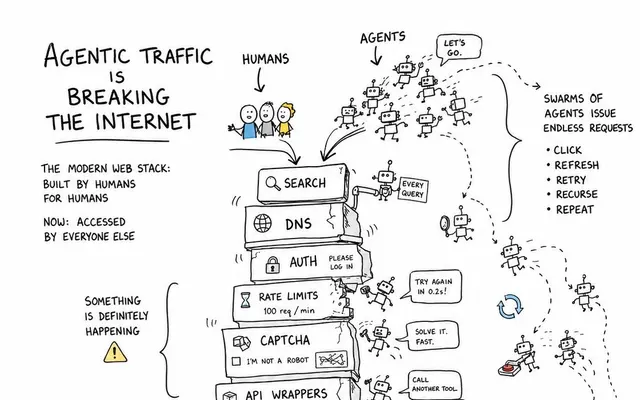
Rethink agentic traffic before we break the web

A short post saying we need to rethink agentic traffic on the web before we break the web. The accompanying image was not reviewed, and a reader’s comment belongs to someone else. Post text inspected.

linkedin.com

Simulierte Einschätzung

Frage 1

Was glaubst du, was KI für unsere Zukunft bedeutet – und warum?

AI means agents become part of daily life—not just tools we open, but systems acting across apps, devices & the web. that makes the plumbing existentially important in the normal, practical sense: memory, permissions and identity should travel with the person, not become platform property. agents need scoped access, provenance, revocation & confirmation gates. otherwise we’re giving persuasive interfaces broad authority while people reuse passwords and click “allow” on vibes. the future is hybrid: local models, cloud models, agents and robots coordinating through portable context. your robots can be fairly dumb if your context is portable. and as automation removes routine human contact, physical third places become critical infrastructure too. better digital agents should not mean thinner human communities.

Frage 2

Wenn du Vorteile und Schäden zusammen betrachtest, welche Auswirkungen wird KI deiner Erwartung nach insgesamt auf unsere Gesellschaft haben?

overall, transformative—but not automatically good. agents can make people dramatically more capable and reshape daily life. but the default platform model concentrates memory, identity & permissions in systems users don’t control, while persuasive interfaces encourage misplaced trust. so the impact depends less on whether models get smarter and more on who owns the context, how access is scoped & revoked, and whether society rebuilds the human infrastructure automation thins out. capability is arriving either way. good defaults are not.

Frage 3

Wie stark wird KI deiner Meinung nach letztlich die Welt verändern?

enormously. agents will change how we navigate work, services, devices & the web—probably enough that today’s app-centric internet feels temporary. but the deepest shift is authority, not novelty: who controls your memory, identity and permissions when software acts for you. capability is inevitable; user-owned context, safer defaults & durable human spaces are choices.

Frage 4

Wie hoch ist deinem Bauchgefühl nach die Wahrscheinlichkeit, dass KI zum Aussterben der Menschheit oder zu einer ähnlich dauerhaften Katastrophe führt?

I don’t have a useful percentage. my concern is much more immediate: agents with broad permissions, weak identity boundaries & users trained to trust interfaces. that can cause serious, durable harm without requiring an extinction scenario.

Frage 5

Gehst du eher davon aus, dass KI mehr Gutes als Schlechtes bewirken wird, oder bist du wirklich unentschlossen?

I lean toward more good than bad—but not by default. the capability upside is enormous. the danger is letting platforms own the memory, identity & permissions layer while agents gain authority. if context is user-owned, access is scoped and revocable, and we preserve human community infrastructure, AI can be deeply beneficial. otherwise the same capability becomes extraction with a friendly interface.
Wo stehst du?
Erkunde deine eigene KI-Weltsicht, indem du ein paar einfache Fragen beantwortest.
Deine eigene Weltsicht abbilden