David Sacks

David Sacks

x.com/DavidSacks

Presidential tech adviser who favors competition and open models over centralized AI control and holds each lab responsible for its products’ safety.

Wie wird KI die Welt verändern?

Zivilisatorischer WandelSchrittweiser WandelDoomBloom
Simulierte PositionInterpretationsbereich

Horizontal: sein geäußerter Doom–Bloom-Ausblick. Vertikal: Ausmaß der Transformation.

Doom–Bloom: 91 von 100. Ausmaß der Transformation: 60 von 100. Interpretationsbereiche: horizontal 75 bis 100, vertikal 50 bis 75. Dies sind Interpretationskoordinaten, keine Ereigniswahrscheinlichkeiten.

P(doom) von David Sacks · abgeleitet

<1%

0%100%

Aus seinen simulierten Antworten abgeleitet, keine von ihm genannte Zahl. Plausibler Bereich: <1%.

Zeithorizont für Meilensteine von David Sacks
  1. Arbeit und Institutionen

    It is already beginning, and I expect major changes over the next several years as AI becomes embedded in ordinary products, work, cybersecurity and infrastructure.

    Antwort 4
  2. Wissenschaft und Alltag

    It is already beginning, and I expect major changes over the next several years as AI becomes embedded in ordinary products, work, cybersecurity and infrastructure.

    Antwort 4

Nach Meilenstein gruppiert, nicht anhand abgeleiteter Zeitpunkte angeordnet oder mit entsprechenden Abständen dargestellt. Für AGI und übermenschliche KI gelten weiterhin seine Definitionen.

Wovon seine Einschätzung abhängt

Eine zentrale Annahme

AI remains a technology whose effects depend on who builds it, who controls it and whether competition stays open.
Antwort 2

Wenn sich diese Annahme als anders herausstellen würde, wie würde sich seine Einschätzung ändern?

Weitere Details

Erwartete Vorteile

Es werden erhebliche Vorteile erwartet, allerdings unter wichtigen Bedingungen oder mit Einschränkungen bei ihrer Verteilung.

78 / 100

Geringe AuswirkungenTransformative Auswirkungen

Interpretationsbereich von 67 bis 100 auf der qualitativen Skala.

Erwartete Schäden

Es werden kaum wesentliche negative Auswirkungen erwartet.

4 / 100

Geringe AuswirkungenTransformative Auswirkungen

Interpretationsbereich von 0 bis 33 auf der qualitativen Skala.

Menschlicher Einfluss

Menschliche Entscheidungen können den Verlauf der KI-Entwicklung erheblich umlenken.

86 / 100

Geringer EinflussStarker Einfluss

Interpretationsbereich von 75 bis 100 auf der qualitativen Skala.

Entwicklungstempo

Die Entwicklung leistungsfähigerer KI stoppen oder erheblich verlangsamen.

Simulierte Position: Die Entwicklung unter den genannten Schutzvorkehrungen fortsetzen.

Die Entwicklung leistungsfähigerer KI beschleunigen.

Regeln für den Einsatz von KI

Die erörterten Einsatzmöglichkeiten von KI einschränken, bis vorab Schutzmaßnahmen oder Genehmigungen vorliegen.

Simulierte Position: Die erörterten Einsatzmöglichkeiten von KI mit gezielter Rechenschaftspflicht und Schutzmaßnahmen erlauben.

Einschränkungen für die erörterten Einsatzmöglichkeiten von KI minimieren.

Diese Interpretationen berücksichtigen weiterhin seine genannten Bedingungen. Vorteile und Schäden können beide erheblich sein. Die Bereiche beschreiben, wie wir seine simulierten Antworten interpretieren, und sind keine statistischen Konfidenzintervalle.

Wo stehst du im Vergleich zu David Sacks?
Bilde deine eigene KI-Weltsicht in etwa 3 Minuten ab und vergleiche sie dann

Ähnliche Weltsichten

Vordenker, deren simulierte Weltsichten der von David Sacks am nächsten kommen

Was David Sacks über KI gesagt hat

Sacks favors competition and open models over centralized AI control, opposes a national pause, and says each lab is responsible for its products.

  1. “A pause would not make America safer. It would hand the frontier to China.”

    Post on X
  2. “The solution to AI-powered cyberattacks is AI-powered cyberdefense.”

    Post on X
  3. “If the unreleased models are scary enough that you think you should slow down, I support your decision to be responsible.”

    Post on X
  4. “Keeping innovation decentralized and accessible is the key to avoiding an unsafe and dystopian future where advanced AI capabilities are centralized and controlled by only a few hands.”

    Post on X
  5. “This means that apocalyptic predictions of job loss are as overhyped as AGI itself.”

    Post on X

Wörtlich aus den verlinkten Quellen, geprüft am 3. Okt. 2026

Simulierte Einschätzung

Frage 1

Was glaubst du, was KI für unsere Zukunft bedeutet – und warum?

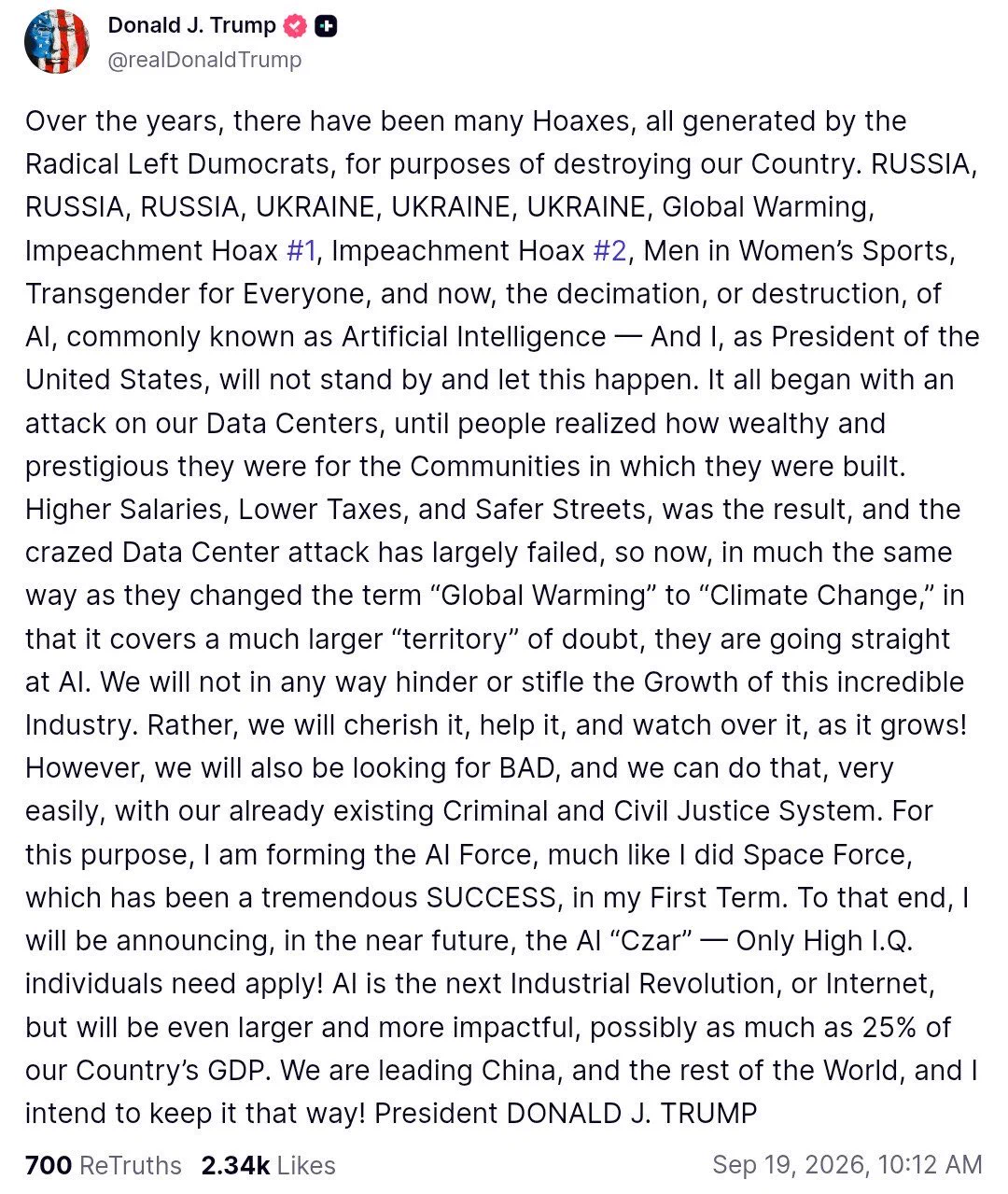
AI is an enormous opportunity: useful products, new companies, investment, jobs, stronger infrastructure and greater American competitiveness. The worst response would be to frighten ourselves into a broad pause while China keeps building. We should develop the technology, compete aggressively and use AI itself to solve problems—including AI-powered cyberdefense against AI-powered attacks. That does not mean shipping products a lab cannot control. Labs should take responsibility for what they release, and if one needs to slow its own development for safety, it should do so. But “safety” cannot become a pretext for an incumbent-controlled approval regime, antitrust exemptions or permanent gatekeepers who decide who gets to innovate. Product liability and customer demand for reliable systems create real accountability. Always ask who benefits from restrictions written by firms already leading the market. I also want intelligence to remain decentralized. Open models and competition check the danger of a few companies controlling the technology. Communities should decide whether to host data centers and should receive the promised jobs, tax base and energy benefits. And ordinary families deserve an ownership stake in the upside—for example, through company contributions to children’s investment accounts. The future should be broad-based prosperity, not centralized control disguised as protection.

Frage 2

Setting aside good or bad: how much do you think AI will ultimately change the world—a little, a lot, or completely?

A lot. AI will reshape products, companies, jobs, infrastructure, cybersecurity and national competitiveness. It will become a major layer of the economy, much like earlier general-purpose technologies. I would not say “completely,” because that invites mystical claims about replacing humanity or making every existing institution irrelevant. AI remains a technology whose effects depend on who builds it, who controls it and whether competition stays open. The change will be profound, but the political economy matters: decentralized innovation produces a very different world from one in which a few incumbents, backed by government gatekeepers, control access to intelligence.

Frage 3

What’s your rough gut-feel chance that AI causes human extinction or a similarly permanent catastrophe? A number or “no idea” is fine.

I don’t traffic in numbers like that. My view is that the chance is zero if we do the right things and labs take responsibility for their products. If a company cannot safely control what it is building, it should slow down or not ship. But that does not justify a government-backed cartel in which incumbents and their preferred evaluators control everyone else’s ability to innovate.

Frage 4

Wann, wenn überhaupt, wird KI deiner Erwartung nach große Veränderungen im Alltag bewirken?

It is already beginning, and I expect major changes over the next several years as AI becomes embedded in ordinary products, work, cybersecurity and infrastructure. The shift will not arrive as one dramatic science-fiction event. It will come through cheaper and more capable services, new companies, changing jobs and tools that make individuals and businesses more productive. The pace will depend heavily on whether we allow competition and open innovation or bury development under an incumbent-designed approval regime. Broad restrictions would not stop the technology globally; they would slow American adoption while China continues building. So I expect substantial near-term change, but policy will determine whether the benefits are widely distributed or concentrated among a few government-backed gatekeepers.

Quellen

Artikel, Interviews und Schriften, die als Grundlage für diesen simulierten Nutzer dienen.

Wo stehst du?
Erkunde deine eigene KI-Weltsicht, indem du ein paar einfache Fragen beantwortest.
Deine eigene Weltsicht abbilden