DeepLearning.AI founder who sees large opportunity in practical AI applications and expects AI to reshape jobs and skills more than eliminate them.

Wie wird KI die Welt verändern?

Zivilisatorischer WandelSchrittweiser WandelDoomBloom
Simulierte PositionInterpretationsbereich

Horizontal: sein geäußerter Doom–Bloom-Ausblick. Vertikal: Ausmaß der Transformation.

Doom–Bloom: 88 von 100. Ausmaß der Transformation: 50 von 100. Interpretationsbereiche: horizontal 75 bis 100, vertikal 45 bis 79. Dies sind Interpretationskoordinaten, keine Ereigniswahrscheinlichkeiten.

P(doom) von Andrew Ng · abgeleitet

≈2%

0%100%

Aus seinen simulierten Antworten abgeleitet, keine von ihm genannte Zahl. Plausibler Bereich: 1–7%.

Wovon seine Einschätzung abhängt

Eine zentrale Annahme

Attacks still require actions that defenders can observe, and defenders often possess more information about their own systems.
Antwort 1

Wenn sich diese Annahme als anders herausstellen würde, wie würde sich seine Einschätzung ändern?

Was ihre Meinung ändern könnte

The biggest change would be strong, repeated evidence that AI-enabled attackers have a durable advantage over defenders—that even well-isolated, carefully monitored, rapidly patched systems can be compromised faster than organizations can detect and recover.
Antwort 2

Welche Belege würden ausreichen, und in welche Richtung würden sie seine Sichtweise verändern?

Weitere Details

Erwartete Vorteile

Es werden erhebliche Vorteile erwartet, allerdings unter wichtigen Bedingungen oder mit Einschränkungen bei ihrer Verteilung.

74 / 100

Geringe AuswirkungenTransformative Auswirkungen

Interpretationsbereich von 67 bis 100 auf der qualitativen Skala.

Erwartete Schäden

Es werden bewältigbare oder örtlich begrenzte Schäden erwartet.

33 / 100

Geringe AuswirkungenTransformative Auswirkungen

Interpretationsbereich von 33 bis 33 auf der qualitativen Skala.

Menschlicher Einfluss

Menschliche Entscheidungen haben einen bedeutsamen, aber erheblich eingeschränkten Einfluss.

59 / 100

Geringer EinflussStarker Einfluss

Interpretationsbereich von 38 bis 87 auf der qualitativen Skala.

Entwicklungstempo

Die Entwicklung leistungsfähigerer KI stoppen oder erheblich verlangsamen.

Simulierte Position: Die Entwicklung unter den genannten Schutzvorkehrungen fortsetzen.

Die Entwicklung leistungsfähigerer KI beschleunigen.

Regeln für den Einsatz von KI

Die erörterten Einsatzmöglichkeiten von KI einschränken, bis vorab Schutzmaßnahmen oder Genehmigungen vorliegen.

Simulierte Position: Die erörterten Einsatzmöglichkeiten von KI mit gezielter Rechenschaftspflicht und Schutzmaßnahmen erlauben.

Einschränkungen für die erörterten Einsatzmöglichkeiten von KI minimieren.

Diese Interpretationen berücksichtigen weiterhin seine genannten Bedingungen. Vorteile und Schäden können beide erheblich sein. Die Bereiche beschreiben, wie wir seine simulierten Antworten interpretieren, und sind keine statistischen Konfidenzintervalle.

Wo stehst du im Vergleich zu Andrew Ng?
Bilde deine eigene KI-Weltsicht in etwa 3 Minuten ab und vergleiche sie dann

Ähnliche Weltsichten

Vordenker, deren simulierte Weltsichten der von Andrew Ng am nächsten kommen

Was Andrew Ng über KI gesagt hat

Ng argues that AI’s benefits far outweigh its risks and that safety is an engineering problem, and he opposes pausing AI development.

  1. “We still have hard research and engineering work ahead to improve AI safety, but the beneficial applications continue to vastly outweigh the risks, and we should keep building.”

    The Batch letter, Who’s Responsible for Irresponsible AI?
  2. “Today’s agentic systems are not predictable, but I see no reason why, by applying sound engineering practices, we won’t be able to make them extremely safe to use.”

    The Batch letter, Who’s Responsible for Irresponsible AI?
  3. “In the case of AI, I am glad the U.S. government is taking cybersecurity seriously.”

    The Batch letter, AI Regulations Must Balance Innovation and Risk
  4. “To be clear, I recognize that AI is causing a lot of people’s work to change. This is hard. This is stressful.”

    The Batch letter, AI Will Not Destroy the Job Market
  5. “Let’s support limiting applications — those that use AI, and those that don’t — that harm people.”

    The Batch letter, How Anti-AI Propaganda Hurts the Public

Wörtlich aus den verlinkten Quellen, geprüft am 3. Okt. 2026

Simulierte Einschätzung

Frage 1

Was glaubst du, was KI für unsere Zukunft bedeutet – und warum?

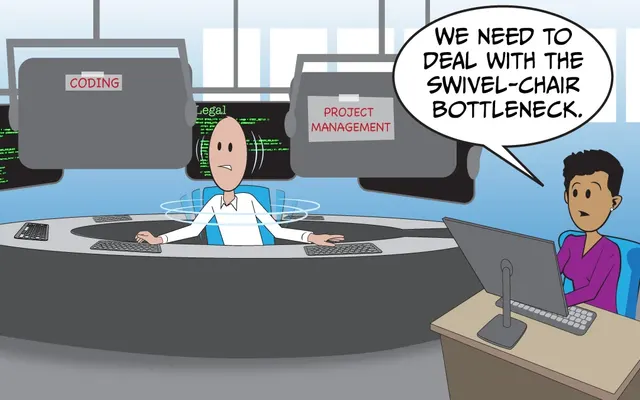
I think AI means an enormous expansion in what people can build and afford to do. Many valuable projects—better education, healthcare tools, scientific research, customized software, and services for small businesses—have been neglected because human effort was too costly. AI lowers that cost. The right starting point is not abstract speculation about a machine apocalypse; it is a real problem, a useful application, testing, and iteration. The gains will be uneven. Coding agents may make implementation much faster while product decisions, infrastructure, validation, and coordination remain bottlenecks. That changes jobs and lets AI-native teams accomplish more with fewer people, but it does not mean every task or profession vanishes. People who learn to use AI well—and who can decide what is worth building—will have growing leverage. Some workers will face painful disruption, but broad claims that AI is simply eliminating work are exaggerated. There are real risks, especially in cybersecurity. Agents can search patiently and chain vulnerabilities. The response is stronger isolation, monitoring, rapid patching, and clear accountability for builders and operators. Attacks still require actions that defenders can observe, and defenders often possess more information about their own systems. I expect that to provide an important long-run advantage. Most safety progress comes from building systems, finding concrete failures, and fixing them. A pause postpones that learning while adversaries continue. So my conclusion is straightforward: the useful applications greatly outweigh the risks, and we should keep building.

Frage 2

Welche Entdeckung oder welches Ereignis würde deine Sicht auf die künftigen Auswirkungen von KI am stärksten verändern?

The biggest change would be strong, repeated evidence that AI-enabled attackers have a durable advantage over defenders—that even well-isolated, carefully monitored, rapidly patched systems can be compromised faster than organizations can detect and recover. My optimism about cyber risk depends heavily on defenders having more information about their own systems and attacks requiring observable actions over time. If that forecast proved consistently wrong, I would update substantially. I would also change my view if useful applications repeatedly failed to deliver real-world value despite good engineering—if lower implementation costs did not translate into better products, scientific progress, education, healthcare, or new businesses because validation and coordination bottlenecks overwhelmed the gains. But today the evidence points the other way: AI is already making many tasks cheaper and enabling previously unaffordable projects. What would not change my view is another dramatic demo, speculative extinction story, or isolated agent failure. Those are reasons to test systems, improve monitoring and isolation, and hold builders and operators accountable—not reasons to conclude that progress itself should stop.

Quellen

Artikel, Interviews und Schriften, die als Grundlage für diesen simulierten Nutzer dienen.

The Batch, Issue 371 — Andrew Ng’s opening letter

Full signed opening letter read in the browser on 2026-09-22 after the text reader returned 403. Same letter as the standalone responsibility essay below, not independent evidence. Ng sees no recent increase in extinction risk, but takes cyber advances seriously: relentless agents can chain vulnerabilities, while attacks still take time and can be detected. Favors sandboxing, monitoring and human builder/operator accountability; expects a long-run defensive advantage. Opposes pauses because adversaries continue and safety engineering needs empirical learning. Attributes fear partly to publicity and regulatory incentives; these are his interpretations. Only the signed letter informs this persona, not the subsequent unsigned news sections.

deeplearning.ai
Who’s Responsible for Irresponsible AI? Separating Out AI Facts, Fears, and Fiction

Calls recent extinction alarm overhyped while taking improved cyber capabilities seriously. Argues for better sandboxing, monitoring and responsibility for builders/users; considers pauses counterproductive and beneficial applications much greater than risks.

deeplearning.ai
How AI Is Affecting the Job Market — And What You Can Do About It

Distinguishes exaggerated claims of AI-driven layoffs from real changes in skills and team sizes. Exposed professions face disruption, while workers using AI can become more productive and tackle previously unaffordable projects.

deeplearning.ai
Coding Agents Accelerate Some Software Tasks More Than Others

Describes uneven speedups: interface implementation can accelerate sharply while infrastructure, research, testing and validation remain bottlenecks. Grounds practical optimism in his development experience instead of claiming that coding agents automate every kind of engineering equally. Checked against the indexed primary article text.

deeplearning.ai
AI Will Not Destroy the Job Market

Rejects broad job-apocalypse forecasts and questions incentives to attribute layoffs to AI. Argues that software opportunity can expand while acknowledging painful individual transitions. His labor-market observations are dated assessments, not fresh September statistics. Checked against the indexed primary article text.

deeplearning.ai
AI-Native Software Development Needs Generalists

Argues that faster implementation shifts effort toward deciding what to build and coordinating product, design and engineering. Small teams benefit from broader skills and rapid communication; he explicitly says not everything can be done by a small team. The indexed article body supplied the publication date and text.

deeplearning.ai
Wo stehst du?
Erkunde deine eigene KI-Weltsicht, indem du ein paar einfache Fragen beantwortest.
Deine eigene Weltsicht abbilden