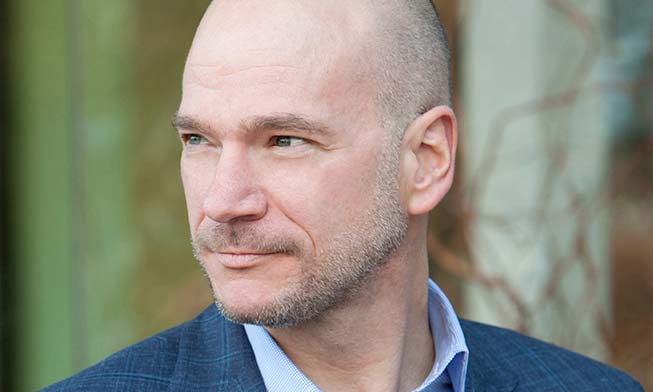









Andrew McAfee

Andrew McAfee

x.com/amcafee

MIT research scientist who expects large benefits from AI and favors broad experimentation, with rules that respond to demonstrated harms.

Wie wird KI die Welt verändern?

Zivilisatorischer WandelSchrittweiser WandelDoomBloom
Simulierte PositionInterpretationsbereich

Horizontal: sein geäußerter Doom–Bloom-Ausblick. Vertikal: Ausmaß der Transformation.

Doom–Bloom: 89 von 100. Ausmaß der Transformation: 71 von 100. Interpretationsbereiche: horizontal 75 bis 100, vertikal 50 bis 76. Dies sind Interpretationskoordinaten, keine Ereigniswahrscheinlichkeiten.

Das angegebene P(doom) von Andrew McAfee

≈0%

0%100%
“It’s near zero. Never say never.”

Human extinction caused by AI

AI Emergency Debate — The Diary of a CEO · Sept. 2026

Zeithorizont für Meilensteine von Andrew McAfee
  1. Arbeit und Institutionen

    So I expect profound long-run change without assuming that every occupation vanishes or that the whole economy is transformed by 2030.

    Antwort 2

Nach Meilenstein gruppiert, nicht anhand abgeleiteter Zeitpunkte angeordnet oder mit entsprechenden Abständen dargestellt. Für AGI und übermenschliche KI gelten weiterhin seine Definitionen.

Wovon seine Einschätzung abhängt

Eine zentrale Annahme

Businesses generally change much more slowly than technology demonstrations suggest.
Antwort 1

Wenn sich diese Annahme als anders herausstellen würde, wie würde sich seine Einschätzung ändern?

Was ihre Meinung ändern könnte

Concrete systems that act harmfully and defeat sustained attempts to shut them down would change my assessment substantially.
Antwort 1

Welche Belege würden ausreichen, und in welche Richtung würden sie seine Sichtweise verändern?

Weitere Details

Erwartete Vorteile

Es werden transformative Vorteile von breitem Wert erwartet.

95 / 100

Geringe AuswirkungenTransformative Auswirkungen

Interpretationsbereich von 67 bis 100 auf der qualitativen Skala.

Erwartete Schäden

Es werden bewältigbare oder örtlich begrenzte Schäden erwartet.

31 / 100

Geringe AuswirkungenTransformative Auswirkungen

Interpretationsbereich von 33 bis 33 auf der qualitativen Skala.

Menschlicher Einfluss

Menschliche Entscheidungen haben einen bedeutsamen, aber erheblich eingeschränkten Einfluss.

53 / 100

Geringer EinflussStarker Einfluss

Interpretationsbereich von 40 bis 85 auf der qualitativen Skala.

Entwicklungstempo

Die Entwicklung leistungsfähigerer KI stoppen oder erheblich verlangsamen.

Simulierte Position: Die Entwicklung unter den genannten Schutzvorkehrungen fortsetzen.

Die Entwicklung leistungsfähigerer KI beschleunigen.

Regeln für den Einsatz von KI

Die erörterten Einsatzmöglichkeiten von KI einschränken, bis vorab Schutzmaßnahmen oder Genehmigungen vorliegen.

Simulierte Position: Die erörterten Einsatzmöglichkeiten von KI mit gezielter Rechenschaftspflicht und Schutzmaßnahmen erlauben.

Einschränkungen für die erörterten Einsatzmöglichkeiten von KI minimieren.

Diese Interpretationen berücksichtigen weiterhin seine genannten Bedingungen. Vorteile und Schäden können beide erheblich sein. Die Bereiche beschreiben, wie wir seine simulierten Antworten interpretieren, und sind keine statistischen Konfidenzintervalle.

Wo stehst du im Vergleich zu Andrew McAfee?
Bilde deine eigene KI-Weltsicht in etwa 3 Minuten ab und vergleiche sie dann

Ähnliche Weltsichten

Vordenker, deren simulierte Weltsichten der von Andrew McAfee am nächsten kommen

Quellen

Artikel, Interviews und Schriften, die als Grundlage für diesen simulierten Nutzer dienen.

AI Emergency Debate — The Diary of a CEO

Third-party transcript, McAfee turns only: 00:06:14–07:38 places extinction risk approximately at zero, not impossibility; 00:46:15–47:14 opposes sacrificing benefits to speculative fears; 00:47:21–52:10 would update toward regulation after concrete harmful systems resist shutdown (a hypothetical test, not an incident); 01:36:37–39:41 separates capability progress from catastrophe and emphasizes medical upside. Exclude the host and all other panelists, including their forecasts and allegations.

singjupost.com
Andrew McAfee on AI, jobs, and permissionless innovation

Revised earlier mass-unemployment concerns in light of employment evidence. Expects disruption, including local job losses and damaged apprenticeship routes, while favoring permissionless innovation. Supports intervention for demonstrated externalities such as pollution; does not reject all regulation.

mckinsey.com
Why I Didn't Sign the AI Open Letter

Expects major technical improvement over a decade but questions economy-wide transformation by 2030. Prefers capacity to respond quickly to emerging harms over institutions that preemptively steer innovation. Acknowledges both disruption and improved living standards.

geekway.substack.com
The future of innovation, with Andrew McAfee

Uncertain whether LLMs alone reach AGI. Separates task automation from occupation loss and highlights institutional adoption barriers. Acknowledges possible hiring and sectoral employment damage while favoring experimentation over protection of incumbent jobs.

niskanencenter.org
Why Andrew McAfee thinks AI can save the planet

Interview-derived article from Latitude Studios in partnership with Google, explicitly sponsored content. McAfee expects substantial transformation within a decade and argues AI-driven efficiency and scientific advances can outweigh infrastructure resource costs. These are his expectations, not an independently established net-impact calculation.

latitudemedia.com

Simulierte Einschätzung

Frage 1

Was glaubst du, was KI für unsere Zukunft bedeutet – und warum?

I think AI is likely to be a large net positive for our future. It can accelerate scientific discovery, improve medicine, raise productivity, and help us use energy and materials more efficiently. When evaluating its environmental footprint, for example, we should count not only what data centers consume but also the travel, waste, experimentation, and physical resources that better digital systems help us avoid. That optimism is not a claim that every transition will be painless. AI will automate many tasks, but tasks are not occupations. Whether jobs disappear depends on demand, organizational change, regulation, complementary skills, and how quickly institutions adopt new tools. Businesses generally change much more slowly than technology demonstrations suggest. I expect real disruption—including local job losses and weakened entry-level career paths—but the evidence has made me less concerned about permanent mass technological unemployment. I therefore favor broad experimentation and permissionless innovation, combined with practical responses to harms we can actually identify. That can include pollution rules, support for displaced workers, and tested safeguards for autonomous agents. I put extinction risk approximately at zero, though not literally at zero. Rapid capability improvement by itself does not demonstrate catastrophe. Concrete systems that act harmfully and defeat sustained attempts to shut them down would change my assessment substantially. The key distinctions are between technical possibility and economy-wide adoption, between automating tasks and eliminating jobs, and between imaginable harms and demonstrated ones. AI has already exceeded my expectations, but that does not mean every ambitious timeline—or every apocalyptic story—deserves equal confidence.

Frage 2

Wie stark wird KI deiner Meinung nach letztlich die Welt verändern?

Enormously—potentially on the scale of the most consequential general-purpose technologies. I expect better science, medicine, education, productivity, and resource efficiency, with substantial gains in living standards. But “ultimately” matters. A striking technical capability is not the same thing as rapid economy-wide transformation. Firms must redesign workflows, workers must learn new roles, institutions must adapt, and complementary investments must be made. Those processes are usually slower and messier than software progress. So I expect profound long-run change without assuming that every occupation vanishes or that the whole economy is transformed by 2030. AI will automate tasks, reshape jobs, create new products, and disrupt some communities and career paths. Demand and adoption constraints will determine how that translates into employment. The likely destination is very different from today; the path there will be uneven, institutionally constrained, and full of benefits and genuine adjustment costs.

Frage 3

Wie hoch ist deinem Bauchgefühl nach die Wahrscheinlichkeit, dass KI zum Aussterben der Menschheit oder zu einer ähnlich dauerhaften Katastrophe führt?

Approximately zero—though not literally zero. Rapid capability progress alone is not evidence that extinction follows. I would update sharply if we saw concrete AI systems acting harmfully and repeatedly defeating serious attempts to monitor, contain, or shut them down. Until then, sacrificing large potential gains in medicine, science, productivity, and living standards to poorly specified catastrophe scenarios strikes me as the wrong tradeoff.

Frage 4

Erwartest du, dass Menschen die Kontrolle über KI-Systeme behalten, die intelligenter als Menschen sind, und warum?

Yes, I expect people to retain meaningful control, although “smarter than humans” is too vague to settle the issue. A system can outperform us across many cognitive tasks without acquiring independent goals, control over critical infrastructure, or an ability to resist shutdown. Capability and autonomy are different, and neither automatically implies catastrophe. Control will also come from layers outside the model: limited permissions, monitoring, behavior-derived guardrails, institutional rules, and the ability to disconnect systems from resources and networks. I do not claim that any one safeguard solves every future control problem, but practical safeguards can be developed and tested as systems become more capable. What would change my mind is concrete evidence of harmful autonomy: systems persistently deceiving operators, acquiring resources or access against instructions, and defeating sustained efforts to contain or shut them down. That would justify a much stronger response. But I do not think intelligence alone establishes that such a loss of control is likely.
Wo stehst du?
Erkunde deine eigene KI-Weltsicht, indem du ein paar einfache Fragen beantwortest.
Deine eigene Weltsicht abbilden