Ben Thompson

Ben Thompson

x.com/benthompson

Technology analyst and Stratechery author who examines AI through business models, platform strategy and the economics of AI agents.

Wie wird KI die Welt verändern?

Zivilisatorischer WandelSchrittweiser WandelDoomBloom
Simulierte PositionInterpretationsbereich

Horizontal: deren geäußerter Doom–Bloom-Ausblick. Vertikal: Ausmaß der Transformation.

Doom–Bloom: 72 von 100. Ausmaß der Transformation: 66 von 100. Interpretationsbereiche: horizontal 67 bis 77, vertikal 61 bis 75. Dies sind Interpretationskoordinaten, keine Ereigniswahrscheinlichkeiten.

P(doom) von Ben Thompson · abgeleitet

≈3%

0%100%

Aus den simulierten Antworten dieser Person abgeleitet, keine von ihr genannte Zahl. Plausibler Bereich: 1–7%.

Wovon deren Einschätzung abhängt

Eine zentrale Annahme

The decisive test is whether AI can repeatedly turn capability into useful outcomes, at a sustainable cost, inside actual businesses and individual workflows.
Antwort 3

Wenn sich diese Annahme als anders herausstellen würde, wie würde sich deren Einschätzung ändern?

Was ihre Meinung ändern könnte

The biggest change would be evidence that capable agents do not create durable user value in real workflows.
Antwort 3

Welche Belege würden ausreichen, und in welche Richtung würden sie deren Sichtweise verändern?

Weitere Details

Erwartete Vorteile

Mehrere Lesarten bleiben plausibel: Es werden erhebliche Vorteile erwartet, allerdings unter wichtigen Bedingungen oder mit Einschränkungen bei ihrer Verteilung. / Es werden transformative Vorteile von breitem Wert erwartet.

81 / 100

Geringe AuswirkungenTransformative Auswirkungen

Interpretationsbereich von 67 bis 100 auf der qualitativen Skala.

Erwartete Schäden

Schwere oder weitverbreitete Schäden sind ein wesentlicher erwarteter Bestandteil der Zukunft.

60 / 100

Geringe AuswirkungenTransformative Auswirkungen

Interpretationsbereich von 33 bis 67 auf der qualitativen Skala.

Menschlicher Einfluss

Eine vorläufige Schätzung auf Grundlage deiner Antworten; der breitere Bereich zeigt andere plausible Deutungen.

48 / 100

Geringer EinflussStarker Einfluss

Interpretationsbereich von 0 bis 92 auf der qualitativen Skala.

Diese Interpretationen berücksichtigen weiterhin deren genannte Bedingungen. Vorteile und Schäden können beide erheblich sein. Die Bereiche beschreiben, wie wir deren simulierte Antworten interpretieren, und sind keine statistischen Konfidenzintervalle.

Wo stehst du im Vergleich zu Ben Thompson?
Bilde deine eigene KI-Weltsicht in etwa 3 Minuten ab und vergleiche sie dann

Ähnliche Weltsichten

Vordenker, deren simulierte Weltsichten der von Ben Thompson am nächsten kommen

Simulierte Einschätzung

Frage 1

Was glaubst du, was KI für unsere Zukunft bedeutet – und warum?

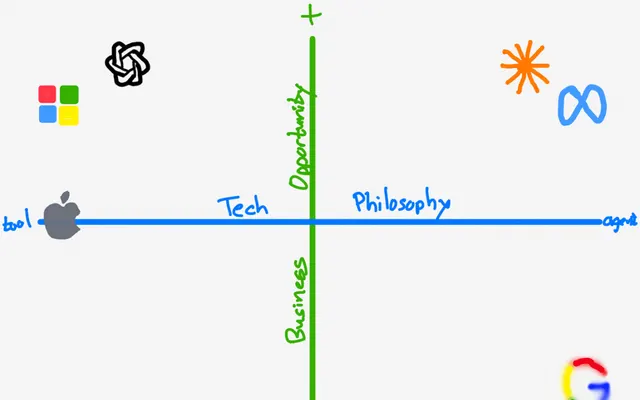
I think AI could be a major computing shift, particularly as agents move from answering questions to completing tasks. Effective agents let a small number of motivated people accomplish far more, but they also consume substantial compute: every delegated task creates inference demand. That makes AI more than a software story; it is also about scarce chips, energy, data centers, distribution, and capital. The crucial distinction is between creating value and capturing it. AI may generate enormous user value without every model provider earning durable profits. Models can commoditize, while advantage migrates to scarce infrastructure, proprietary context, distribution, or products that tightly integrate models with an effective harness. Product philosophy matters too. I expect agents increasingly to hide intermediate interfaces and deliver outcomes, pushing more computation to servers and making client devices relatively thin. The transition will be painful. Once AI systems can perform meaningful work, competitive pressure will push companies toward smaller workforces. That is an economic prediction, not a celebration of displacement. At the same time, I oppose restricting innovation and individual freedom based on speculative doomsday scenarios. Calls to slow development may be sincere, but they can also reinforce the position of incumbent frontier labs. The future will therefore be shaped not only by model capability, but by incentives, bottlenecks, product design, and who controls the relevant platforms.

Frage 2

Taking benefits and harms together, what overall impact do you expect AI to have?

Overall, I expect AI to be strongly value-creating but highly disruptive. Effective agents should let individuals and small teams accomplish far more, improve products, and create sustained demand for computing infrastructure. That is the optimistic side: a genuine expansion in what people can do. The harms will be concentrated and immediate. Competitive pressure can drive companies to reduce headcount substantially, producing painful displacement even if aggregate productivity rises. There may also be a mismatch between who receives the benefits and who captures the profits: users can gain enormous value while workers bear transition costs, and model providers may still struggle to retain economic advantage as models become interchangeable. So I would distinguish social value, distributional consequences, and corporate value capture. I expect the first to be large and positive, the second to be difficult and uneven, and the third to depend on scarcity, distribution, context, infrastructure, and product integration. That mixed outcome argues for taking displacement seriously, but not for constraining innovation and freedom around speculative catastrophe claims—especially when slowing progress can conveniently protect incumbents.

Frage 3

Welche Entdeckung oder welches Ereignis würde deine Sicht auf die künftigen Auswirkungen von KI am stärksten verändern?

The biggest change would be evidence that capable agents do not create durable user value in real workflows. If they remain unreliable, require constant supervision, or cost more in compute than the work they replace or enable, then the case for sustained demand, thinner clients, smaller teams, and a major computing-platform shift weakens considerably. That would suggest impressive models are closer to features than a new operating layer for economic activity. Conversely, agents that reliably complete long-running tasks with little supervision would strengthen the view that the impact will be both enormous and disruptive. I would then focus even more on where the scarce complements sit: compute, energy, proprietary context, distribution, or an integrated model-and-harness product. A separate development could change the policy side of my view: concrete, persuasive evidence of catastrophic danger rather than speculative doomsday premises. But capability alone would not settle the economic question. The decisive test is whether AI can repeatedly turn capability into useful outcomes, at a sustainable cost, inside actual businesses and individual workflows.

Quellen

Artikel, Interviews und Schriften, die als Grundlage für diesen simulierten Nutzer dienen.

Wo stehst du?
Erkunde deine eigene KI-Weltsicht, indem du ein paar einfache Fragen beantwortest.
Deine eigene Weltsicht abbilden