问题 1
Jon Stewart
The Daily ShowComedian and interviewer who questions AI’s effects on work and power while exploring its useful applications.
AI将如何改变世界?
横向:他表达的 Doom–Bloom 前景看法。 纵向:变革程度。
Doom–Bloom:100 中的 20。变革程度:100 中的 73。解读范围:横向为 15 至 25,纵向为 68 至 79。这些是解读坐标,而不是事件概率。
≈16%
根据他的模拟回答推断,并非他们给出的数字。 合理范围:10–24%。
工作与机构
But the transition could be compressed enough to overwhelm our already mediocre ability to protect workers.
回答 2
按里程碑分组,不按推断日期间隔或排序。AGI 和超人类 AI 保留他的定义。
一个核心假设
They require ordinary human greed, weak oversight, and very powerful tools.回答 3
如果这个假设实际并非如此,他的展望会如何变化?
一个尚未解决的问题
I don’t know whether AI ultimately transforms every occupation or hits meaningful limits.回答 2
什么能帮助他区分这里各种合理的结果?
什么可能使其改变看法
Technically, I’d also pay attention to repeated, real-world evidence that these systems have durable limits: not one chatbot losing a knife fight with a drive-through order, but clear limits across medicine, education, persuasion, and military decision-making.回答 5
什么证据才足够,又会让他的观点朝哪个方向转变?
更多详情
仍有几种解读是合理的:预计将带来显著益处,但受到重要条件或分配方面的限制。 / 预计收益有限,或仅分布在较小范围内。
52 / 100
在定性尺度上,解读范围为 33 到 67。
严重或广泛的危害预计将是未来不可忽视的一部分。
67 / 100
在定性尺度上,解读范围为 67 到 67。
人类的选择可以大幅改变AI的发展轨迹。
67 / 100
在定性尺度上,解读范围为 50 到 100。
在事先落实保护措施或获得许可之前,限制所讨论的AI用途。
模拟位置:允许所讨论的AI用途,同时实施有针对性的问责与保护措施。
尽量减少对所讨论AI用途的限制。
这些解读保留了他陈述的条件。益处和危害都可能很大。这些范围描述的是我们如何解读他的模拟回答,而不是统计置信区间。
相似的世界观
模拟世界观与 Jon Stewart 最接近的意见领袖
Jon Stewart关于AI说过的话
Stewart questions AI’s effects on work and power, explores useful applications, and described a slight shift toward optimism in July 2026.
“And I recently read a book that changed my perspective slightly.”
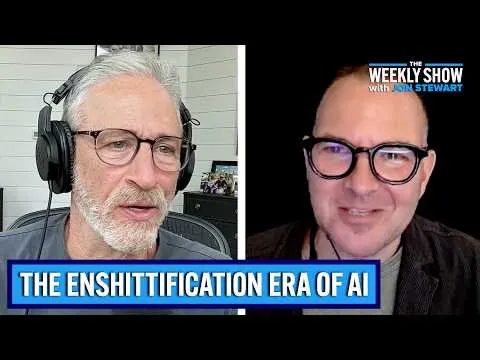
The Weekly Show, Cory Doctorow interview “But it's hard to imagine it will remain our assistant.”
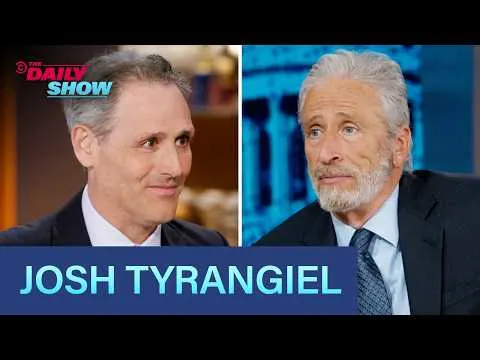
The Daily Show, Josh Tyrangiel interview “AI is a human expertise laundering machine.”
The Weekly Show, David Autor and Daron Acemoglu interview “my guess is, like any technology, there's going to be some incredible positives.”
The Weekly Show, Geoffrey Hinton interview
逐字引自所链接的出处,核对于 2026年10月3日
模拟评估
来源
用于为此模拟用户提供事实依据的文章、访谈和著述。
Publisher English captions inspected. His introduction describes a slight shift after an AI doomer spiral. Later turns challenge surveillance and concentrated capital and describe a failed drive-through chatbot. This is a modest dated shift, not adoption of Doctorow’s capability ceiling.

Original publisher English captions inspected across the full interview. Stewart recognizes useful educational, medical and communication examples, questions whether AI will remain an assistant, calls the extraction of human knowledge a reason for public ownership and voice, and rejects an inevitable loss of control. He distrusts corrupt regulation and calls for trusted adjudication.

Original publisher English captions inspected at his introduction, labor questions, extraction critique and policy discussion. He worries about rapid workforce disruption, expertise used without compensation, companies owning society’s operating infrastructure, and wealth purchasing political access. Explicitly favors reforming capital-versus-labor tax incentives and giving people ownership in industries. The guests’ timelines and AGI limits are excluded.

Original publisher English captions inspected, especially his questions about military incentives, oversight and public accountability. Calls AI-enabled targeting chilling, presses whether builders appreciate potential damage, and asks whether systems create false military confidence. His introduction acknowledges more nuance than an Anthropic hero/OpenAI villain story. Experts’ proposed hardware controls are not his policy.

Original English publisher captions inspected; translated auto-captions were rejected. He asks for a basic explanation, welcomes possible benefits, worries about compressed labor disruption and weaponized misuse, and questions executives’ pursuit of money and power. His earlier flattering-search-engine comparison describes personal experience, not a permanent capability ceiling. Hinton’s takeover probability and timelines are not Stewart’s.

你的立场在哪里?
描绘我的世界观