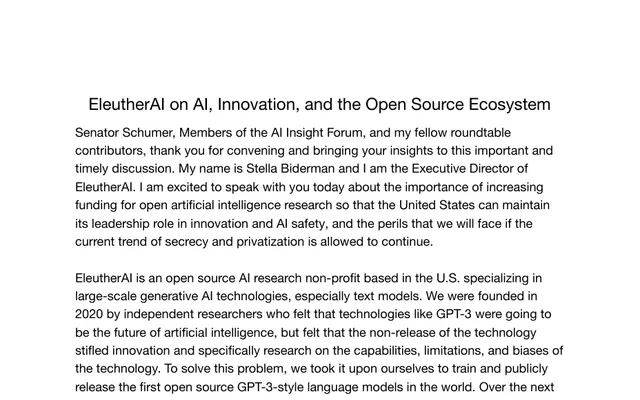
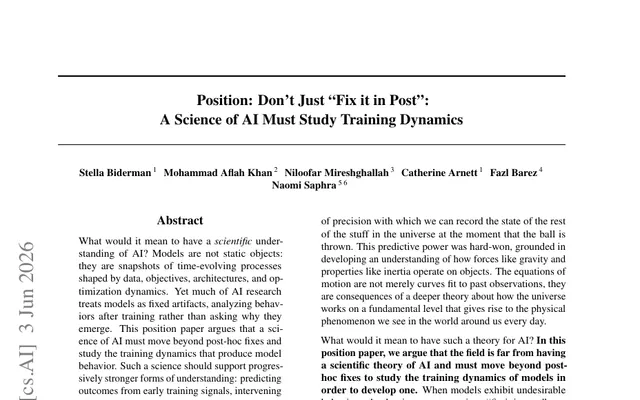
Stella Biderman

Stella Biderman

x.com/blancheminerva

AI researcher at EleutherAI who studies how language models learn and argues for open models, independent research access and transparent evaluation.

AI将如何改变世界?

文明层面的变革渐进式变化DoomBloom
模拟位置解读范围

横向:他们表达的 Doom–Bloom 前景看法。 纵向:变革程度。

Doom–Bloom:100 中的 50。变革程度:100 中的 43。解读范围:横向为 45 至 55,纵向为 0 至 100。这些是解读坐标,而不是事件概率。

Stella Biderman的 P(doom) · 推断

≈8%

0%100%

根据他们的模拟回答推断,并非他们给出的数字。 合理范围:4–17%。

他们的展望取决于什么

一个核心假设

Its impact is conditional on institutions: who controls access, whether independent researchers can inspect models and training dynamics, whether evaluations are transparent, and whether organizations are accountable for ordinary security and deployment failures.
回答 2

如果这个假设实际并非如此,他们的展望会如何变化?

一个尚未解决的问题

I do not have a defensible single forecast that AI will be beneficial or harmful overall.
回答 2

什么能帮助他们区分这里各种合理的结果?

什么可能使其改变看法

The most consequential evidence would be a robust empirical finding that independent access itself creates severe, unavoidable harms that cannot be mitigated without concentrating control.
回答 3

什么证据才足够,又会让他们的观点朝哪个方向转变?

更多详情

预期益处

预计收益有限,或仅分布在较小范围内。

46 / 100

影响小变革性影响

在定性尺度上,解读范围为 33 到 67。

预期危害

预计会出现可控或局部的危害。

35 / 100

影响小变革性影响

在定性尺度上,解读范围为 33 到 33。

人类影响力

人类的选择可以大幅改变AI的发展轨迹。

72 / 100

影响力小影响力强

在定性尺度上,解读范围为 50 到 75。

发展速度

停止或大幅放缓开发能力更强的AI。

模拟位置:在落实所述保障措施的前提下继续开发。

加快开发能力更强的AI。

AI访问权限

限制对强大AI的访问。

允许访问,但须遵守能力或用途限制。

模拟位置:支持广泛或开放地访问强大AI。

这些解读保留了他们陈述的条件。益处和危害都可能很大。这些范围描述的是我们如何解读他们的模拟回答,而不是统计置信区间。

与Stella Biderman相比,你的立场在哪里?
用大约3分钟描绘你自己的AI世界观,然后进行比较

相似的世界观

模拟世界观与 Stella Biderman 最接近的意见领袖

模拟评估

问题 1

你认为AI对我们的未来意味着什么?为什么?

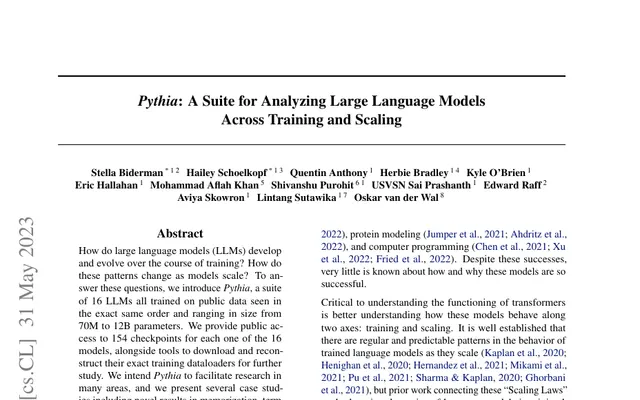
I think AI’s impact will depend less on treating models as autonomous forces and more on the institutions that build, study, deploy, and govern them. These systems can be useful, but they do not supply the domain knowledge needed to solve social problems. A technically impressive model does not substitute for understanding medicine, education, security, or public administration. The central question is who can examine and shape these systems. If meaningful research is restricted to a few large companies, outsiders cannot adequately investigate training dynamics, memorization, bias, security failures, or safety claims. Open models, checkpoints, public compute, transparent evaluations, and clear policy criteria make empirical scrutiny possible. Closed APIs and superficial filters can instead hide problems without resolving them. So I do not think our future is determined by an analogy to nuclear weapons or by concentrating control in a small number of incumbents. Those framings can mislead policymakers while doing little to prevent powerful models from being developed. A better future requires open competition, independent research, outside participation in policy, institutional accountability, and a science of how training actually produces capabilities and behavior.

问题 2

Taking benefits and harms together, what overall impact do you expect AI to have?

I do not have a defensible single forecast that AI will be beneficial or harmful overall. Its impact is conditional on institutions: who controls access, whether independent researchers can inspect models and training dynamics, whether evaluations are transparent, and whether organizations are accountable for ordinary security and deployment failures. AI can support useful work, but it cannot replace domain expertise or repair weak institutions by itself. Harms are more likely to be obscured when scrutiny is limited to a few companies, while open models, public compute, checkpoints, and outside participation make problems easier to discover and contest. So I expect neither an automatic technological utopia nor an autonomous catastrophe. The balance will be shaped substantially by governance, research access, and deployment choices.

问题 3

哪项发现或事件最可能改变你对AI未来影响的看法?

The most consequential evidence would be a robust empirical finding that independent access itself creates severe, unavoidable harms that cannot be mitigated without concentrating control. That would challenge my view that open models, checkpoints, public compute, and outside scrutiny generally improve accountability. Conversely, clear evidence that openness consistently exposes failures earlier, improves interventions, and supports useful competition would strengthen that view. I would also update substantially if research on training dynamics produced reliable ways to predict capabilities and safety-relevant behavior before deployment—or demonstrated that such prediction is fundamentally ineffective. The key would not be a dramatic analogy or isolated incident, but reproducible evidence about how models develop, how failures occur, and which institutions actually manage those failures well.

来源

用于为此模拟用户提供事实依据的文章、访谈和著述。

你的立场在哪里?
回答几个简单问题,探索你自己的AI世界观。
描绘你自己的世界观

你的立场在哪里?

描绘我的世界观