Question 1
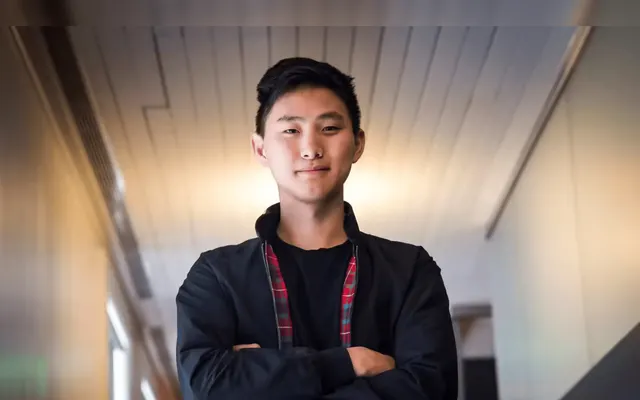
Alexandr Wang
x.com/alexandr_wangMeta’s chief AI officer who builds toward personal superintelligence for billions and calls safety and alignment essential to scaling it.
How will AI change the world?
Across: his expressed Doom–Bloom outlook. Up: scale of transformation.
Doom–Bloom: 89 out of 100. Scale of transformation: 92 out of 100. Interpretation ranges: 75 to 100 horizontally, 87 to 100 vertically. These are interpretation coordinates, not event probabilities.
≈14%
Inferred from his simulated answers, not a number they gave. Plausible range: 9–24%.
Superhuman AI
Superintelligence is coming on short timelines; debating whether it takes two years or five misses the larger point.
Answer 1Work & institutions
Even if model capabilities froze today, diffusing what already exists through companies, governments and everyday life would create decades of upheaval.
Answer 1
Grouped by milestone, not spaced or ordered by inferred dates. AGI and superhuman AI retain his definitions.
A central assumption
Safety and alignment are table stakes, and alignment may become the gating factor for scaling.Answer 1
If this assumption turned out differently, how would his outlook change?
More details
Transformative, broadly valuable gains are expected.
99 / 100
Interpretation range 100 to 100 on the qualitative scale.
Severe or widespread harm is a material expected part of the future.
66 / 100
Interpretation range 67 to 67 on the qualitative scale.
Human choices can substantially redirect the AI trajectory.
63 / 100
Interpretation range 42 to 83 on the qualitative scale.
AI is expected to remain bounded tools.
AI is expected to match people across most cognitive work.
Simulated position: AI is expected to substantially exceed people across cognitive work.
Stop or substantially slow development of more capable AI.
Simulated position: Continue development under stated safeguards.
Speed up development of more capable AI.
Restrict the AI uses discussed until prior protections or permission are in place.
Simulated position: Allow the AI uses discussed with targeted accountability and protections.
Minimize restrictions on the AI uses discussed.
Restrict access to powerful AI.
Simulated position: Allow access subject to capability or use restrictions.
Favor broad or open access to powerful AI.
These interpretations keep his stated conditions. Benefits and harms can both be substantial. The ranges describe how we read his simulated answers, not statistical confidence intervals.
Similar worldviews
Thought leaders whose simulated worldviews are closest to Alexandr Wang’s
Simulated Assessment
Sources
Articles, interviews, and writings used to ground this simulated user.
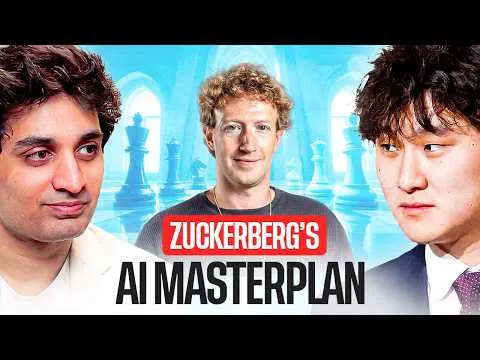
At YC Startup School, says the bottleneck is not model progress but diffusing AI through the world; even frozen models would bring decades of upheaval. Calls arguments over whether superintelligence comes in two or five years a waste of time because very powerful models are inevitable. Expects billions of personal superintelligences, rejects a “totalizing, totalitarian view of AIs that control the world”, believes in a decentralized world of AI, and does not want models rationed to the wealthy. Says builders must prepare the world, including biosecurity and cybersecurity. His turns in YC’s published transcript inspected; Garry Tan’s turns excluded.

Observer’s report of his onstage Bloomberg Tech interview on June 4. He concedes Muse Spark is not at the tier of leading frontier models, calls it an exciting data point on a scaling trajectory, and says bigger models are “cooking”. Explaining why Muse Spark was not open-sourced after triggering internal biological-risk alerts, he says risks can be mitigated when Meta deploys a model in its products but not once weights are public. Only his directly quoted words in the article inspected.

His first long interview at Meta. Says the leading labs organize around the premise that superintelligence is coming, so MSL’s first principle is to take it seriously; Meta has short timelines and will need physical superintelligence and robotics within years. Calls safety table stakes, with bio, chemical, cyber and loss-of-control checks that kept Muse Spark closed, while staying committed to open models that are safe. Asked whether Anthropic are over-doomers, says it depends but calls fair their core message that models are already very powerful and will grow more so. Wants a democratized personal superintelligence and an economy of agents, asks how to “build paradise on earth”, and calls model welfare under-discussed. Says AI is a step change for national security and separates Chinese people from the Chinese Communist Party. His turns in YouTube auto-captions of the full episode (bYM_VMs7EO0) at 13:17–16:00, 49:09–57:20, 58:54–66:30 and 72:13–81:55 inspected; hosts’ questions excluded.

Asked for a view his peers might not share, says developing the technology with extreme responsibility is of paramount importance, covering both traditional AI-safety concerns and safe use by billions, because a personal agent people trust with their hopes and fears needs trust from users, the public and governments; says some in the industry have moved away from such commitments. Also says the next five years of AI discoveries will be among the most monumental in human history, and that Meta works with philosophers and psychologists on a mutual relationship between humans and agents. His turns in YouTube auto-captions at 01:31–03:36 and 16:26–19:01 inspected; Varun Mayya’s questions excluded.

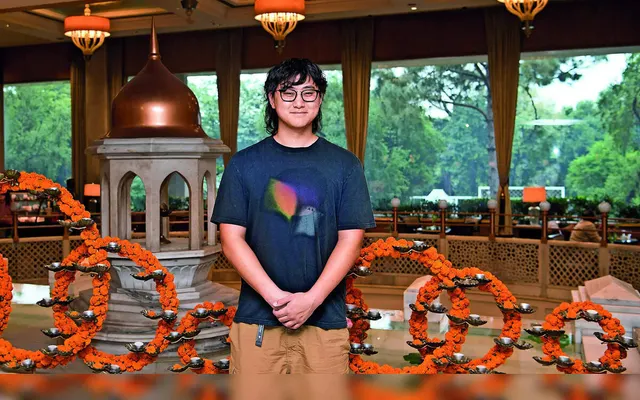
An Economic Times Q&A during the India AI Impact Summit. Says Meta is committed to open source and will probably release a mix of open and closed models, calls 2026 the year of the personal agent that works for you 24/7, and sees continued strong returns to compute. On white-collar disruption, says AI progress on knowledge work is very real but that empowering small businesses and creators with AI makes the opportunity vastly outstrip the disruption. His answers in the published Q&A inspected; the interviewers’ questions excluded.

Report of his India AI Impact Summit speech. He says AI should be designed for the challenges of countries like India and the global south and serve everyone regardless of language or culture, and on safety says Meta’s incentives align with responsible development because people will not use AI they do not trust, pointing to model cards, risk assessments and red-teaming. The report paraphrases him as warning against fragmented regulation and calling for government–industry collaboration on talent, energy, data and compute. His directly quoted words inspected; paraphrased points treated as the outlet’s summary.

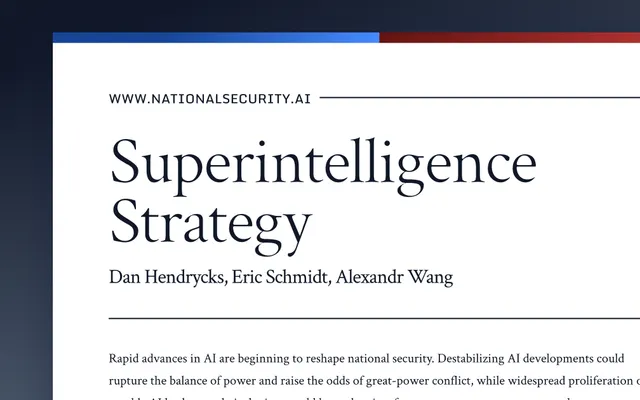
A paper co-authored with Dan Hendrycks and Eric Schmidt while he led Scale AI. Argues superintelligence is a national-security matter and proposes deterrence through Mutual Assured AI Malfunction, nonproliferation of weaponizable capabilities to rogue actors, and competitiveness through chips, the military and the economy; it treats loss of control as one risk category. Co-authored, so individual lines are not attributable to him. Abstract and strategy summary on the paper’s site inspected; the full PDFs were not reread. Older context.

Semafor interview about his full-page newspaper ad telling President Trump that America must win the AI war. He urges more federal spending on compute and data to compete with China, cutting red tape on energy, and government adoption of AI. He calls for standards to avoid major harms but says leadership, not safety, is the number one goal, and says it is within our control that AI does not cause mass job losses. His directly quoted words inspected. Dated context from his Scale AI years; his 2026 statements give safety more weight.

Where do you land?
Map my worldview