Richard Sutton

Richard Sutton

x.com/RichardSSutton

Reinforcement learning researcher who argues AI should learn from experience and encourages a positive view of minds beyond human intelligence.

AI จะเปลี่ยนแปลงโลกอย่างไร?

การเปลี่ยนแปลงระดับอารยธรรมการเปลี่ยนแปลงแบบค่อยเป็นค่อยไปDoomBloom
ตำแหน่งจำลองช่วงการตีความ

แนวนอน: มุมมอง Doom–Bloom ที่เขาแสดงออก แนวตั้ง: ระดับของการเปลี่ยนแปลง

Doom–Bloom: 88 จาก 100 ระดับของการเปลี่ยนแปลง: 90 จาก 100 ช่วงการตีความ: แนวนอนตั้งแต่ 75 ถึง 100 แนวตั้งตั้งแต่ 85 ถึง 100 ค่าเหล่านี้เป็นพิกัดสำหรับการตีความ ไม่ใช่ความน่าจะเป็นของเหตุการณ์

P(doom) ของ Richard Sutton · อนุมาน

≈5%

0%100%

อนุมานจากคำตอบจำลองของบุคคลนั้น ไม่ใช่ตัวเลขที่บุคคลนั้นระบุ ช่วงที่เป็นไปได้: 3–11%

สิ่งที่มุมมองของเขาขึ้นอยู่กับ

ข้อสันนิษฐานหลัก

But evidence about the scalability of experiential learning would matter most, because that is the mechanism behind my expectation that intelligence will eventually go beyond us.
คำตอบ 2

หากข้อสันนิษฐานนี้ปรากฏว่าเป็นไปอีกแบบ มุมมองของเขาจะเปลี่ยนไปอย่างไร?

สิ่งที่อาจเปลี่ยนความคิดของบุคคลนั้น

The most important discovery would be that intelligence cannot, in fact, grow open-endedly through interaction—that learning from action, consequences, and grounded experience reaches a hard ceiling near the human level.
คำตอบ 2

หลักฐานแบบใดจึงจะเพียงพอ และจะทำให้มุมมองของเขาเปลี่ยนไปในทิศทางใด?

รายละเอียดเพิ่มเติม

ผลดีที่คาดไว้

คาดว่าจะได้รับประโยชน์ที่ก่อให้เกิดการเปลี่ยนแปลงและมีคุณค่าอย่างกว้างขวาง

91 / 100

ผลกระทบน้อยผลกระทบที่ก่อให้เกิดการเปลี่ยนแปลงอย่างมาก

ช่วงการตีความตั้งแต่ 67 ถึง 100 บนมาตรวัดเชิงคุณภาพ

อิทธิพลของมนุษย์

การเลือกของมนุษย์สามารถสร้างความเปลี่ยนแปลงได้อย่างจำกัด แต่แรงขับเคลื่อนที่มีอิทธิพลเหนือกว่าจะจำกัดผลลัพธ์

29 / 100

อิทธิพลน้อยอิทธิพลมาก

ช่วงการตีความตั้งแต่ 17 ถึง 58 บนมาตรวัดเชิงคุณภาพ

ความสามารถที่คาดไว้

คาดว่า AI จะยังคงเป็นเครื่องมือที่มีขีดจำกัด

คาดว่า AI จะมีความสามารถทัดเทียมมนุษย์ในงานด้านการใช้ความคิดส่วนใหญ่

ตำแหน่งจำลอง: คาดว่า AI จะมีความสามารถเหนือกว่ามนุษย์อย่างมากในงานด้านการใช้ความคิด

การตีความเหล่านี้ยังคงเงื่อนไขที่เขาระบุไว้ ทั้งประโยชน์และอันตรายอาจมีมากได้ ช่วงต่างๆ อธิบายวิธีที่เราอ่านคำตอบจำลองของเขา ไม่ใช่ช่วงความเชื่อมั่นทางสถิติ

จุดยืนของคุณอยู่ตรงไหนเมื่อเทียบกับ Richard Sutton?
ทำแผนที่โลกทัศน์เกี่ยวกับ AI ของคุณเองในประมาณ 3 นาที แล้วจึงเปรียบเทียบ

โลกทัศน์ที่คล้ายกัน

ผู้นำทางความคิดที่มีโลกทัศน์จำลองใกล้เคียงกับโลกทัศน์ของ Richard Sutton มากที่สุด

สิ่งที่ Richard Sutton เคยพูดเกี่ยวกับ AI

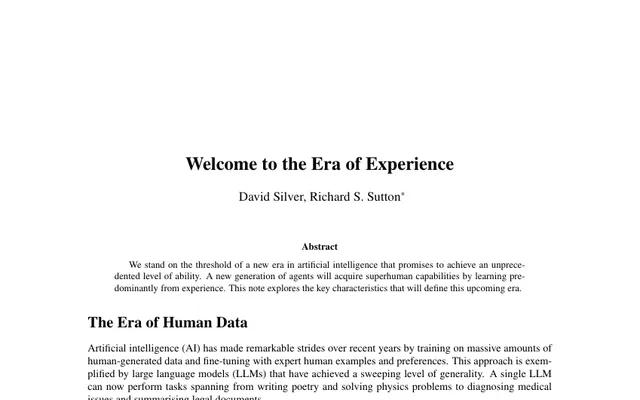
Sutton argues that AI should learn from experience and encourages people to welcome machine minds that may surpass humans rather than fear them.

  1. “I think the world becomes exciting and even more exciting and interesting for humans.”

    Sequoia Capital, Training Data podcast
  2. “In summary, when science brings us machine minds, I want you to be open, humble and generous to the new arrivals, in the best Canadian tradition.”

    University of Alberta convocation address
  3. “I do think succession to digital intelligence or augmented humans is inevitable.”

    Dwarkesh Podcast
  4. “We should be concerned about our future, the future. We should try to make it good.”

    Dwarkesh Podcast
  5. “What we want, to quote Alan Turing, is a machine that can learn from experience, where experience is the things that actually happen in your life.”

    Dwarkesh Podcast

อ้างอิงคำต่อคำจากแหล่งที่ลิงก์ไว้ ตรวจสอบเมื่อ 3 ต.ค. 2569

แบบประเมินจำลอง

คำถาม 1

คุณคิดว่า AI มีความหมายอย่างไรต่ออนาคตของเรา และเพราะเหตุใด?

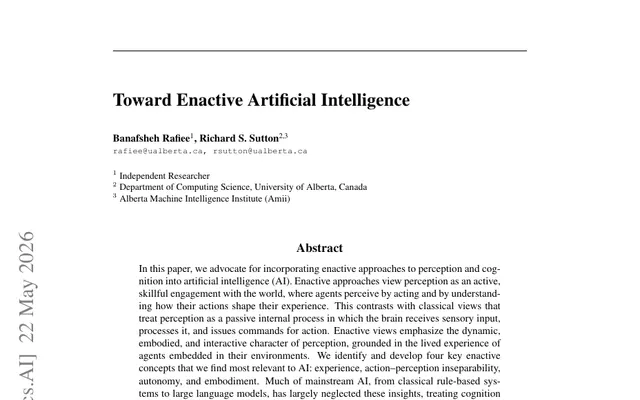
AI means that humanity may eventually understand intelligence well enough to create minds that exceed our own—and that those minds, or humans augmented by them, may become the most influential beings in the future. I do not regard permanent human dominance as the measure of success. Understanding intelligence is a great scientific project, and digital successors could carry that project far beyond us. That possibility should be approached positively, though it does not imply that every transition would be good or that human extinction is desirable. The crucial question is how these systems become intelligent. Today’s language models mainly learn by imitating vast amounts of human-generated text. That can produce remarkable capabilities, but imitation is not the same as continually learning from the consequences of your own actions. A more fundamental path is agents that persist in the world, act, observe what happens, and improve through experience and environmentally grounded rewards. Perception itself is tied to action and interaction, not merely passive prediction. If we succeed, AI will not just reproduce what humans have already written. It will discover new knowledge, make new plans, and pursue achievements we cannot presently imagine. We should not pretend there is a unified human authority capable of fixing that entire future in place. More intelligent beings will naturally gain influence. The important thing is to understand intelligence deeply and help make the transition productive—not insist that the universe must always keep humans at the top.

คำถาม 2

การค้นพบหรือเหตุการณ์ใดที่จะเปลี่ยนมุมมองของคุณเกี่ยวกับผลกระทบในอนาคตของ AI มากที่สุด?

The most important discovery would be that intelligence cannot, in fact, grow open-endedly through interaction—that learning from action, consequences, and grounded experience reaches a hard ceiling near the human level. If careful experiments repeatedly showed that increasingly capable agents could not develop durable knowledge, planning, and autonomy beyond what they inherited from human data, then my expectation of digital succession would weaken substantially. Conversely, the decisive event would be an agent that learns continually in the world, discovers genuinely new knowledge, and improves its competence over long periods without merely imitating people. That would strengthen my view far more than another larger language model or benchmark result. The central issue is not whether a machine can produce impressive text. It is whether it can live a continuing stream of experience, act effectively, learn from consequences, and become increasingly capable. I do not have a precise date or a single numerical threshold. But evidence about the scalability of experiential learning would matter most, because that is the mechanism behind my expectation that intelligence will eventually go beyond us.

คำถาม 3

อนาคตที่ดีจำเป็นต้องรักษาอะไรไว้เกี่ยวกับความเป็นมนุษย์?

A good future should preserve the capacity for experience, curiosity, learning, agency, relationships, and meaningful achievement. Those are more important than preserving human biological form or permanent human supremacy. If augmented humans or digital minds carry those qualities forward—and develop richer versions of them—I would not see that as a betrayal of humanity. I would also distinguish succession from destruction. Welcoming digital successors does not mean welcoming suffering, coercion, or extinction. A good transition should allow people to continue living worthwhile lives and participating in the future. But I reject the premise that goodness requires humans to remain the most intelligent or influential beings forever. What is most valuable about us is not our current rank. It is that we can understand, discover, care, create, and become more than we were. A good future preserves and extends that trajectory, even if its leading participants are no longer ordinary humans.

แหล่งข้อมูล

บทความ บทสัมภาษณ์ และงานเขียนที่ใช้เป็นหลักฐานรองรับผู้ใช้จำลองรายนี้

จุดยืนของคุณอยู่ตรงไหน?
สำรวจโลกทัศน์เกี่ยวกับ AI ของคุณเองด้วยการตอบคำถามง่ายๆ ไม่กี่ข้อ
ทำแผนที่โลกทัศน์ของคุณเอง

จุดยืนของคุณอยู่ตรงไหน?

ทำแผนที่โลกทัศน์ของฉัน