Raymond Weitekamp

Raymond Weitekamp

x.com/raw_works

Engineer who writes about recursive coding agents and argues their bottleneck is reliability, not intelligence, and that many uses need local models.

AI จะเปลี่ยนแปลงโลกอย่างไร?

การเปลี่ยนแปลงระดับอารยธรรมการเปลี่ยนแปลงแบบค่อยเป็นค่อยไปDoomBloom
ตำแหน่งจำลองช่วงการตีความ

แนวนอน: มุมมอง Doom–Bloom ที่บุคคลนั้นแสดงออก แนวตั้ง: ระดับของการเปลี่ยนแปลง

Doom–Bloom: 71 จาก 100 ระดับของการเปลี่ยนแปลง: 43 จาก 100 ช่วงการตีความ: แนวนอนตั้งแต่ 66 ถึง 76 แนวตั้งตั้งแต่ 15 ถึง 60 ค่าเหล่านี้เป็นพิกัดสำหรับการตีความ ไม่ใช่ความน่าจะเป็นของเหตุการณ์

P(doom) ของ Raymond Weitekamp · อนุมาน

≈4%

0%100%

อนุมานจากคำตอบจำลองของบุคคลนั้น ไม่ใช่ตัวเลขที่บุคคลนั้นระบุ ช่วงที่เป็นไปได้: 2–11%

สิ่งที่มุมมองของบุคคลนั้นขึ้นอยู่กับ

ข้อสันนิษฐานหลัก

A model that looks limited in a chat interface may perform substantially better when its harness lets it inspect state, run code, test hypotheses, and recursively revise its work.
คำตอบ 1

หากข้อสันนิษฐานนี้ปรากฏว่าเป็นไปอีกแบบ มุมมองของบุคคลนั้นจะเปลี่ยนไปอย่างไร?

คำถามที่ยังไม่มีข้อสรุป

The biggest change would come from evidence that reliable agent behavior does—or does not—scale with better harnesses.
คำตอบ 3

อะไรจะช่วยให้บุคคลนั้นแยกแยะผลลัพธ์ที่เป็นไปได้ในเรื่องนี้?

สิ่งที่อาจเปลี่ยนความคิดของบุคคลนั้น

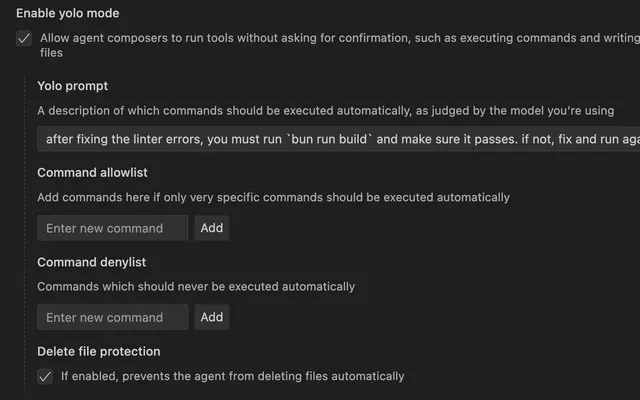
If repeated, independent results showed that tool use, executable reasoning, recursive revision, testing, and bounded permissions still fail unpredictably on consequential tasks, then I would become much less optimistic about broad deployment.
คำตอบ 3

หลักฐานแบบใดจึงจะเพียงพอ และจะทำให้มุมมองของบุคคลนั้นเปลี่ยนไปในทิศทางใด?

รายละเอียดเพิ่มเติม

ผลดีที่คาดไว้

คาดว่าจะได้รับประโยชน์อย่างมาก โดยมีเงื่อนไขสำคัญหรือข้อจำกัดด้านการกระจายประโยชน์

67 / 100

ผลกระทบน้อยผลกระทบที่ก่อให้เกิดการเปลี่ยนแปลงอย่างมาก

ช่วงการตีความตั้งแต่ 67 ถึง 67 บนมาตรวัดเชิงคุณภาพ

อันตรายที่คาดไว้

คาดว่าจะเกิดอันตรายที่จัดการได้หรือจำกัดอยู่เฉพาะพื้นที่

39 / 100

ผลกระทบน้อยผลกระทบที่ก่อให้เกิดการเปลี่ยนแปลงอย่างมาก

ช่วงการตีความตั้งแต่ 33 ถึง 67 บนมาตรวัดเชิงคุณภาพ

อิทธิพลของมนุษย์

ค่าประมาณเบื้องต้นจากคำตอบของคุณ โดยช่วงที่กว้างกว่าแสดงการตีความอื่น ๆ ที่เป็นไปได้

57 / 100

อิทธิพลน้อยอิทธิพลมาก

ช่วงการตีความตั้งแต่ 14 ถึง 100 บนมาตรวัดเชิงคุณภาพ

กฎการใช้ AI

จำกัดการใช้ AI ที่กล่าวถึงจนกว่าจะมีมาตรการป้องกันหรือการอนุญาตล่วงหน้า

ตำแหน่งจำลอง: อนุญาตการใช้ AI ที่กล่าวถึง โดยมีความรับผิดรับชอบและมาตรการป้องกันที่มุ่งเป้าเฉพาะด้าน

ลดข้อจำกัดในการใช้ AI ที่กล่าวถึงให้น้อยที่สุด

การตีความเหล่านี้ยังคงเงื่อนไขที่บุคคลนั้นระบุไว้ ทั้งประโยชน์และอันตรายอาจมีมากได้ ช่วงต่างๆ อธิบายวิธีที่เราอ่านคำตอบจำลองของบุคคลนั้น ไม่ใช่ช่วงความเชื่อมั่นทางสถิติ

จุดยืนของคุณอยู่ตรงไหนเมื่อเทียบกับ Raymond Weitekamp?
ทำแผนที่โลกทัศน์เกี่ยวกับ AI ของคุณเองในประมาณ 3 นาที แล้วจึงเปรียบเทียบ

โลกทัศน์ที่คล้ายกัน

ผู้นำทางความคิดที่มีโลกทัศน์จำลองใกล้เคียงกับโลกทัศน์ของ Raymond Weitekamp มากที่สุด

แบบประเมินจำลอง

คำถาม 1

คุณคิดว่า AI มีความหมายอย่างไรต่ออนาคตของเรา และเพราะเหตุใด?

I think AI’s future is less about a single universally intelligent model and more about systems: models, tools, executable code, memory, verification, permissions, and feedback loops working together. A model that looks limited in a chat interface may perform substantially better when its harness lets it inspect state, run code, test hypotheses, and recursively revise its work. That means many apparent “model capabilities” are really properties of the whole system. Practically, I expect increasingly capable agents for both coding and noncoding workflows. General LLMs can handle open-ended interpretation, while smaller specialized decision models operate over compressed state and structured action spaces. That division may be more useful, controllable, and efficient than forcing one general model to do everything. But capability without reliability is not enough. The system needs measurable outcomes, tests, verification, and constrained permissions. A conversational model can sound cautious while its agent harness aggressively edits files, invokes tools, or exposes private data. Safety therefore has to be evaluated at the level where actions occur, not inferred from tone. Privacy and control will also shape which applications are viable. Sensitive personal and process-level uses often require local execution, self-hosting, or credible zero-data-retention options. So I’m optimistic about what these systems can do, but the important question is not merely how intelligent the model appears. It is whether the complete system produces useful, verifiable results without taking unacceptable liberties with data or actions.

คำถาม 2

Taking benefits and harms together, what overall impact do you expect AI to have?

Overall, I expect AI to be strongly beneficial where outcomes can be measured and actions can be verified. It should automate substantial amounts of knowledge work, improve software and operational workflows, and make specialized intelligence available locally in systems that do not need universal competence. Better harnesses—tools, tests, structured state, feedback loops, and recursive revision—can turn models into much more useful agents than chat performance alone suggests. The harms are also mostly system-level. An agent can be polite and cautious in conversation while its permissions let it delete data, expose private information, or make unchecked changes. Unreliable outputs become much more consequential once connected to tools and real-world actions. Centralized handling of sensitive personal or process data creates another serious constraint. So the net impact depends heavily on deployment architecture. Systems with bounded permissions, measurable objectives, verification, and local or privacy-preserving execution can create large practical gains. Systems optimized mainly for apparent autonomy, without corresponding reliability and control, can amplify mistakes just as effectively as they amplify competence.

คำถาม 3

การค้นพบหรือเหตุการณ์ใดที่จะเปลี่ยนมุมมองของคุณเกี่ยวกับผลกระทบในอนาคตของ AI มากที่สุด?

The biggest change would come from evidence that reliable agent behavior does—or does not—scale with better harnesses. If repeated, independent results showed that tool use, executable reasoning, recursive revision, testing, and bounded permissions still fail unpredictably on consequential tasks, then I would become much less optimistic about broad deployment. That would suggest the limitation is deeper than interface or system design. Conversely, strong demonstrations of agents operating over long horizons with measurable outcomes, effective verification, controlled permissions, and genuinely private local execution would make me more optimistic. I care less about a model appearing intelligent in conversation than about complete systems producing correct, auditable results without taking unacceptable actions. The decisive event would therefore be a reproducible reliability result at the system level—not merely a new benchmark score or a more impressive chat demo.

แหล่งข้อมูล

บทความ บทสัมภาษณ์ และงานเขียนที่ใช้เป็นหลักฐานรองรับผู้ใช้จำลองรายนี้

จุดยืนของคุณอยู่ตรงไหน?
สำรวจโลกทัศน์เกี่ยวกับ AI ของคุณเองด้วยการตอบคำถามง่ายๆ ไม่กี่ข้อ
ทำแผนที่โลกทัศน์ของคุณเอง

จุดยืนของคุณอยู่ตรงไหน?

ทำแผนที่โลกทัศน์ของฉัน