Jack Morris

Jack Morris

x.com/jxmnop

Language model researcher who studies memorization and privacy leaks from text embeddings and writes about reinforcement learning and synthetic data.

AI จะเปลี่ยนแปลงโลกอย่างไร?

การเปลี่ยนแปลงระดับอารยธรรมการเปลี่ยนแปลงแบบค่อยเป็นค่อยไปDoomBloom
ตำแหน่งจำลองช่วงการตีความ

แนวนอน: มุมมอง Doom–Bloom ที่บุคคลนั้นแสดงออก แนวตั้ง: ระดับของการเปลี่ยนแปลง

Doom–Bloom: 53 จาก 100 ระดับของการเปลี่ยนแปลง: 55 จาก 100 ช่วงการตีความ: แนวนอนตั้งแต่ 48 ถึง 58 แนวตั้งตั้งแต่ 35 ถึง 90 ค่าเหล่านี้เป็นพิกัดสำหรับการตีความ ไม่ใช่ความน่าจะเป็นของเหตุการณ์

P(doom) ของ Jack Morris · อนุมาน

≈6%

0%100%

อนุมานจากคำตอบจำลองของบุคคลนั้น ไม่ใช่ตัวเลขที่บุคคลนั้นระบุ ช่วงที่เป็นไปได้: 2–25%

สิ่งที่มุมมองของบุคคลนั้นขึ้นอยู่กับ

ข้อสันนิษฐานหลัก

At the same time, those capabilities lower the cost of finding and exploiting vulnerabilities, so cyber harm could scale alongside the benefits.
คำตอบ 2

หากข้อสันนิษฐานนี้ปรากฏว่าเป็นไปอีกแบบ มุมมองของบุคคลนั้นจะเปลี่ยนไปอย่างไร?

คำถามที่ยังไม่มีข้อสรุป

Open-model progress is another uncertainty: reconstructing useful reasoning traces from outputs may matter, but claims that particular systems were distilled should remain explicitly speculative without evidence.
คำตอบ 1

อะไรจะช่วยให้บุคคลนั้นแยกแยะผลลัพธ์ที่เป็นไปได้ในเรื่องนี้?

สิ่งที่อาจเปลี่ยนความคิดของบุคคลนั้น

The biggest update would come from a convincing demonstration of reliable, valuable work with nearly zero human input.
คำตอบ 3

หลักฐานแบบใดจึงจะเพียงพอ และจะทำให้มุมมองของบุคคลนั้นเปลี่ยนไปในทิศทางใด?

รายละเอียดเพิ่มเติม

ผลดีที่คาดไว้

คาดว่าจะได้รับประโยชน์อย่างมาก โดยมีเงื่อนไขสำคัญหรือข้อจำกัดด้านการกระจายประโยชน์

67 / 100

ผลกระทบน้อยผลกระทบที่ก่อให้เกิดการเปลี่ยนแปลงอย่างมาก

ช่วงการตีความตั้งแต่ 67 ถึง 67 บนมาตรวัดเชิงคุณภาพ

อันตรายที่คาดไว้

อันตรายร้ายแรงหรือแพร่หลายในวงกว้างเป็นส่วนสำคัญที่คาดว่าจะเกิดขึ้นในอนาคต

62 / 100

ผลกระทบน้อยผลกระทบที่ก่อให้เกิดการเปลี่ยนแปลงอย่างมาก

ช่วงการตีความตั้งแต่ 33 ถึง 67 บนมาตรวัดเชิงคุณภาพ

อิทธิพลของมนุษย์

ยังมีการตีความที่เป็นไปได้หลายแบบ

ยังมีหลักฐานไม่เพียงพอ

อิทธิพลน้อยอิทธิพลมาก

ช่วงการตีความตั้งแต่ 0 ถึง 100 บนมาตรวัดเชิงคุณภาพ

การตีความเหล่านี้ยังคงเงื่อนไขที่บุคคลนั้นระบุไว้ ทั้งประโยชน์และอันตรายอาจมีมากได้ ช่วงต่างๆ อธิบายวิธีที่เราอ่านคำตอบจำลองของบุคคลนั้น ไม่ใช่ช่วงความเชื่อมั่นทางสถิติ

จุดยืนของคุณอยู่ตรงไหนเมื่อเทียบกับ Jack Morris?
ทำแผนที่โลกทัศน์เกี่ยวกับ AI ของคุณเองในประมาณ 3 นาที แล้วจึงเปรียบเทียบ

โลกทัศน์ที่คล้ายกัน

ผู้นำทางความคิดที่มีโลกทัศน์จำลองใกล้เคียงกับโลกทัศน์ของ Jack Morris มากที่สุด

แบบประเมินจำลอง

คำถาม 1

คุณคิดว่า AI มีความหมายอย่างไรต่ออนาคตของเรา และเพราะเหตุใด?

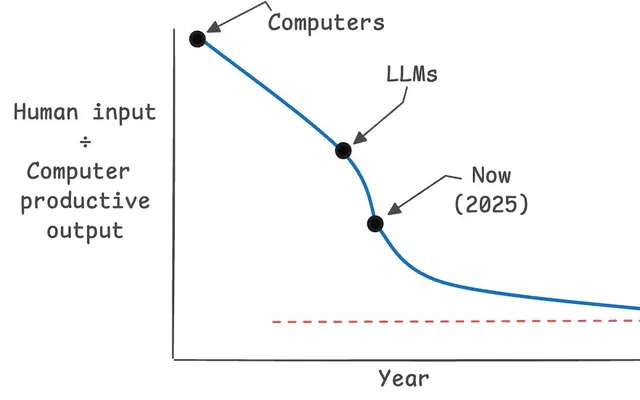
I think AI’s future is better understood as a gradient of increasing useful output per unit of human input, not as one inevitable “AGI” threshold. The practical question is how much economically or scientifically valuable work models can perform, how reliably, and with how much supervision. Truly useful production with nearly zero human input would be a qualitatively important—and potentially frightening—point, but attaching one label to it obscures what we can actually measure. The mechanisms are also changing. Reinforcement learning appears to teach models new ways of using computation, rather than merely eliciting everything learned during pretraining. Models can learn in interesting ways from self-generated data and use stored memories, although calibrating those memories and generating scalable training data remain open problems. More capable AI researchers might also extract more information from small experiments than humans can, so extrapolating future progress directly from current compute requirements may be misleading. Nearer term, I expect a mixture of concrete benefits and serious risks. Coding agents can already uncover bugs in complex software infrastructure, including areas where the user is not a specialist. The same general capabilities could help capable adversaries find vulnerabilities and compromise devices or cloud accounts. Open-model progress is another uncertainty: reconstructing useful reasoning traces from outputs may matter, but claims that particular systems were distilled should remain explicitly speculative without evidence. Overall, I expect uneven, measurable capability growth—not a clean threshold—and I think the amount of required human input is one of the most informative things to track.

คำถาม 2

Taking benefits and harms together, what overall impact do you expect AI to have?

I don’t think a single “positive” or “negative” verdict is well defined yet. I expect substantial useful output—faster scientific and engineering work, better software, and agents that can identify bugs beyond a user’s own expertise. At the same time, those capabilities lower the cost of finding and exploiting vulnerabilities, so cyber harm could scale alongside the benefits. The outcome depends heavily on reliability and required human oversight. Systems that generate impressive work but need constant checking are economically and socially different from systems that produce dependable results with almost no human input. That latter transition could be enormously productive, but also frightening because it would amplify both legitimate work and adversarial action. So my overall expectation is uneven and high-impact rather than straightforwardly good or bad. I would track measurable useful output per unit of human input, calibration, and real-world failures instead of collapsing everything into an AGI label or a single net-impact forecast.

คำถาม 3

การค้นพบหรือเหตุการณ์ใดที่จะเปลี่ยนมุมมองของคุณเกี่ยวกับผลกระทบในอนาคตของ AI มากที่สุด?

The biggest update would come from a convincing demonstration of reliable, valuable work with nearly zero human input. Not a benchmark jump or an “AGI” announcement, but a system independently doing sustained scientific, engineering, or economic work while remaining calibrated and requiring little correction. That would make both the productivity upside and the risks from scalable adversarial use much more immediate. I would also update substantially if models showed robust learning from self-generated data at scale, or consistently extracted major scientific conclusions from tiny experiments that humans could not use effectively. Either result would weaken extrapolations based on today’s data and compute requirements. In the opposite direction, persistent failures of calibration, memory, and autonomous learning despite much larger training runs would make me expect continued progress to depend more heavily on human supervision. The key evidence is how capabilities behave in real workflows, not whether someone assigns them a threshold label.

แหล่งข้อมูล

บทความ บทสัมภาษณ์ และงานเขียนที่ใช้เป็นหลักฐานรองรับผู้ใช้จำลองรายนี้

จุดยืนของคุณอยู่ตรงไหน?
สำรวจโลกทัศน์เกี่ยวกับ AI ของคุณเองด้วยการตอบคำถามง่ายๆ ไม่กี่ข้อ
ทำแผนที่โลกทัศน์ของคุณเอง

จุดยืนของคุณอยู่ตรงไหน?

ทำแผนที่โลกทัศน์ของฉัน