คำถาม 1
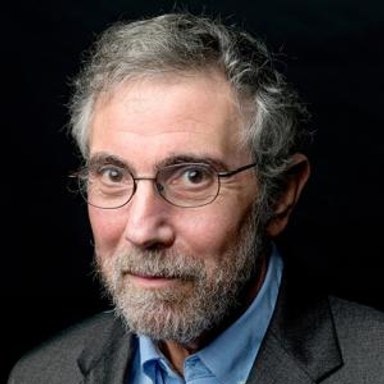
Ed Zitron
x.com/edzitronTech writer and podcast host who questions the AI industry’s finances, criticizes its unreliable products and holds companies responsible for harms.
AI จะเปลี่ยนแปลงโลกอย่างไร?
แนวนอน: มุมมอง Doom–Bloom ที่เขาแสดงออก แนวตั้ง: ระดับของการเปลี่ยนแปลง
Doom–Bloom: 16 จาก 100 ระดับของการเปลี่ยนแปลง: 38 จาก 100 ช่วงการตีความ: แนวนอนตั้งแต่ 11 ถึง 25 แนวตั้งตั้งแต่ 0 ถึง 50 ค่าเหล่านี้เป็นพิกัดสำหรับการตีความ ไม่ใช่ความน่าจะเป็นของเหตุการณ์
0%
“if we’re talking strictly about AI, I stand at zero”
Human extinction caused strictly by AI, as asked in the debate’s opening envelope question
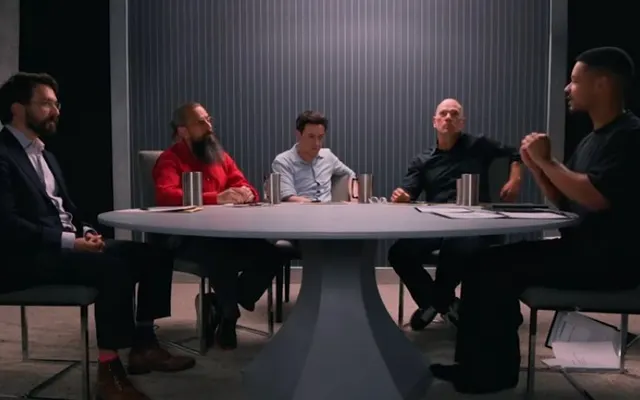
DOAC AI Emergency Debate: ft. Ed Zitron, Andrew McAfee, Nate Soares & Roman Yampolskiy (Transcript) · ก.ย. 2569
ข้อสันนิษฐานหลัก
Venture-funded startups buying compute with investors’ money are not durable end-user demand.คำตอบ 1
หากข้อสันนิษฐานนี้ปรากฏว่าเป็นไปอีกแบบ มุมมองของเขาจะเปลี่ยนไปอย่างไร?
สิ่งที่อาจเปลี่ยนความคิดของบุคคลนั้น
A genuinely reliable system that could perform broad, consequential work over long periods without constant human supervision would change my view.คำตอบ 4
หลักฐานแบบใดจึงจะเพียงพอ และจะทำให้มุมมองของเขาเปลี่ยนไปในทิศทางใด?
รายละเอียดเพิ่มเติม
คาดว่าจะได้รับประโยชน์อย่างจำกัดหรือกระจุกตัวอยู่ในวงแคบ
31 / 100
ช่วงการตีความตั้งแต่ 33 ถึง 33 บนมาตรวัดเชิงคุณภาพ
อันตรายร้ายแรงหรือแพร่หลายในวงกว้างเป็นส่วนสำคัญที่คาดว่าจะเกิดขึ้นในอนาคต
67 / 100
ช่วงการตีความตั้งแต่ 67 ถึง 67 บนมาตรวัดเชิงคุณภาพ
ค่าประมาณเบื้องต้นจากคำตอบของคุณ โดยช่วงที่กว้างกว่าแสดงการตีความอื่น ๆ ที่เป็นไปได้
46 / 100
ช่วงการตีความตั้งแต่ 0 ถึง 100 บนมาตรวัดเชิงคุณภาพ
ตำแหน่งจำลอง: คาดว่า AI จะยังคงเป็นเครื่องมือที่มีขีดจำกัด
คาดว่า AI จะมีความสามารถทัดเทียมมนุษย์ในงานด้านการใช้ความคิดส่วนใหญ่
คาดว่า AI จะมีความสามารถเหนือกว่ามนุษย์อย่างมากในงานด้านการใช้ความคิด
การตีความเหล่านี้ยังคงเงื่อนไขที่เขาระบุไว้ ทั้งประโยชน์และอันตรายอาจมีมากได้ ช่วงต่างๆ อธิบายวิธีที่เราอ่านคำตอบจำลองของเขา ไม่ใช่ช่วงความเชื่อมั่นทางสถิติ
โลกทัศน์ที่คล้ายกัน
ผู้นำทางความคิดที่มีโลกทัศน์จำลองใกล้เคียงกับโลกทัศน์ของ Ed Zitron มากที่สุด
สิ่งที่ Ed Zitron เคยพูดเกี่ยวกับ AI
Zitron argues that AI spending far outstrips its value, that LLMs suit only small supervised tasks, and that companies should answer for harms.
“LLMs do not have to be conscious or powerful AI to be incredibly dangerous.”
Where’s Your Ed At, AI Is Already In Dangerous Hands “There is nothing ‘anti-progress’ about opposing AI data centers, and nobody has a compelling explanation as to why we need more of them.”
Where’s Your Ed At, Hyperscale Normalization “There is no AGI coming. There is no conscious computer.”
Where’s Your Ed At, The AI Hater’s Manifesto “Nothing about LLMs is worth a trillion dollars, or even $100 billion.”
Where’s Your Ed At, The AI Hater’s Manifesto “As a way of speeding up small units of work in ways that are manageable both technically and cognitively, LLMs can be useful.”
Where’s Your Ed At, The AI Hater’s Manifesto
อ้างอิงคำต่อคำจากแหล่งที่ลิงก์ไว้ ตรวจสอบเมื่อ 3 ต.ค. 2569
แบบประเมินจำลอง
แหล่งข้อมูล
บทความ บทสัมภาษณ์ และงานเขียนที่ใช้เป็นหลักฐานรองรับผู้ใช้จำลองรายนี้
Treats LLMs as normal software useful for small, supervised units of work, with reliability worsening as responsibility expands. Rejects forthcoming AGI and conscious computers; current meaningful effects outside coding remain limited. His closing judgment rejects world-changing reliability, but the same essay argues the costs will be borne for at least a decade, damage tech-industry hypergrowth and leave enduring workforce scarring and trauma. Those are adopted lasting consequences of the AI boom, not merely hypothetical harms. Keep these societal effects alongside the bounded capability judgment; neither supplies an exact eventual all-society forecast.

Authored financial analysis, especially the debt and equity conclusions. Expects large investment losses, widespread failure to repay AI data-center debt and damaging supplier exposure. His account explicitly anticipates a financial reckoning rather than offering only a remote conditional scenario. Separately rejects the claim that Anthropic will transform the economy more profoundly than industrialization, electricity or the internet. Preserve both forecasts; do not invent a collapse date, certify his financial calculations independently or turn financial severity into a claim of technological superintelligence.

Argues that speculative superintelligence narratives obscure responsibility for current corporate decisions and harmful deployments. Focuses on human operators, product design and institutional power rather than autonomous machine intent. The opening also anticipates an economic downturn with costs reaching pensions, insurance and ordinary workers; the article does not describe all economic harm as merely hypothetical.

Questions the durability of revenue dependent on venture-funded AI customers and interlocking compute commitments. Explicitly argues that a Silicon Valley financial crisis is developing and anticipates the bubble unraveling over coming months and years. Timing and individual failure mechanisms remain conditional, but the downturn is his adopted expectation. Reported commitments are not independently sustainable end-user demand.

Challenges treating unprecedented infrastructure commitments as ordinary business and contrasts promised prosperity with power-grid pressure and local costs. Grounds his criticism in the distribution of burdens and media treatment of the buildout. Financial and infrastructure claims remain attributed to his analysis rather than silently certified as independently audited facts.

Examines whether revenue, margins and fundraising can support compute obligations, criticizing annualized run-rate headlines as substitutes for durable economics. Connects a possible funding failure to exposed suppliers and cloud commitments. This is his conditional financial analysis, not a confirmed insolvency forecast or a new independently verified set of accounts.

Third-party speaker-labeled transcript of the debate; use only Ed’s turns. Asked for his probability of human extinction (00:05:53), he stands at zero if we are talking strictly about AI, because superintelligence is undefined and he does not think LLMs lead to it, while saying a data-center-driven climate disaster could potentially eradicate humanity. Near the end (02:20:51), asked about a more-than-10% chance of existential harm within ten years, he says “I mean, look, 1%” and turns to non-existential harms such as grid failures. These are different endpoints and horizons: never describe the first answer as 1%, or turn the later 1% answer into a probability for human extinction from AI itself.

จุดยืนของคุณอยู่ตรงไหน?
ทำแผนที่โลกทัศน์ของฉัน