Pergunta 1
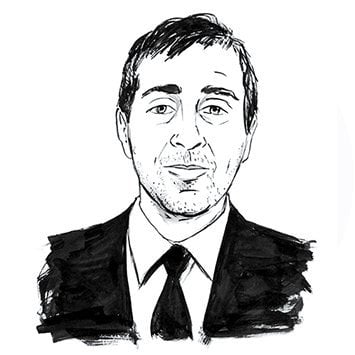
Thomas G. Dietterich
x.com/tdietterichOregon State machine learning professor emeritus who works on safe and robust AI and argues that AI agents need continual human oversight.
Como a IA mudará o mundo?
Na horizontal: a perspectiva Doom–Bloom expressa por ele. Para cima: escala da transformação.
Doom–Bloom: 63 de 100. Escala da transformação: 57 de 100. Intervalos de interpretação: 50 a 75 na horizontal, 50 a 75 na vertical. Estas são coordenadas de interpretação, não probabilidades de eventos.
≈9%
Inferido a partir das respostas simuladas dele, não de um número que essa pessoa forneceu. Intervalo plausível: 5–16%.
Uma premissa central
It is maintained by monitoring and controlling the whole human-machine system, with adversarial testing and rapid detection and recovery when failures occur.Resposta 1
Se essa premissa se revelasse diferente, como a perspectiva dele mudaria?
O que poderia mudar essa opinião
The biggest change would be a convincing demonstration that a system can learn general rules and reliably apply them far beyond its training distribution—not merely interpolate, imitate, or pass a benchmark.Resposta 4
Que evidência seria suficiente e em que direção ela mudaria a visão dele?
Mais detalhes
Esperam-se benefícios substanciais, com condições importantes ou limites de distribuição.
67 / 100
Intervalo de interpretação de 67 a 67 na escala qualitativa.
Danos graves ou generalizados são uma parte relevante do futuro esperado.
58 / 100
Intervalo de interpretação de 33 a 67 na escala qualitativa.
As escolhas humanas têm uma influência significativa, mas substancialmente limitada.
54 / 100
Intervalo de interpretação de 44 a 81 na escala qualitativa.
Interromper ou desacelerar substancialmente o desenvolvimento de uma IA mais capaz.
Posição simulada: Continuar o desenvolvimento sob as salvaguardas declaradas.
Acelerar o desenvolvimento de uma IA mais capaz.
Restringir os usos da IA discutidos até que proteções prévias ou uma autorização estejam em vigor.
Posição simulada: Permitir os usos da IA discutidos com responsabilização e proteções específicas.
Minimizar as restrições aos usos da IA discutidos.
Estas interpretações mantêm as condições que ele declarou. Tanto os benefícios quanto os danos podem ser substanciais. Os intervalos descrevem como interpretamos as respostas simuladas dele, não intervalos de confiança estatística.
Visões de mundo semelhantes
Líderes de opinião cujas visões de mundo simuladas são mais próximas da visão de Thomas G. Dietterich
Avaliação simulada
Fontes
Artigos, entrevistas e textos usados para fundamentar este usuário simulado.
Asked whether machine learning is over, he says it is in a crisis in Kuhn’s sense: after enormous investment in scaling statistical learning, large language models look more like smoothing and interpolating between training data than learning general rules that extrapolate; they can state the rules of chess yet make illegal moves, cannot judge which sources to trust, struggle to know whether they saw relevant data, and cannot attribute outputs. He names causal machine learning, world models, uncertainty quantification, attribution and multi-agent trust as open challenges. From his DARPA PAL and startup experience he warns that agents must fit real workflows, demand intrusive personal knowledge, need ways to forget, and will make mistakes. These are research challenges, not proofs of impossibility. Own turns in the publisher’s machine transcript inspected; most of the episode is field history.

Calls recent scaling a brute-force period and expects its environmental costs to fall partly through efficiency incentives. Repeats that hallucination and failure to learn generalizable rules (for example, multiplication beyond trained lengths) suggest a fundamentally different approach may be needed. Says he shares concerns about AI replacing creative and intellectual work, that LLMs do not understand argument or evidence so universities must still teach them, that artists’ styles may deserve new legal protection, and that the claim people who do not use AI will be left behind is “too much of an AI-booster statement.” Expects some of the biggest benefits in drugs, materials and sustainability. Full published transcript of his turns inspected.

Three-post reply to a user arguing that AI’s supposedly inevitable advance is driven by capital. As an AI/ML researcher he says complexity is a reason not to push today’s systems, the first “knowledge technology” to scale but with many problems. He hopes for something simpler and better: cheaper, more efficient, more controllable and safer, able to attribute outputs to sources, learn continually, quantify uncertainty and avoid hallucination; attribution would compensate creators and control would mitigate risks. A hope and research vision, not a forecast. Thread and parent inspected via the public Bluesky API.

Points to symbolic layers over LLMs as a way to address probabilistic execution, continual learning, attribution and perhaps uncertainty quantification. Says an LLM directly taking actions is an unpredictable probabilistic execution engine that cannot enforce hard safety constraints, noting an agent architecture that checks LLM-emitted code before execution. Suggests layering could also allow very rapid learning from little data. A favored research direction, not a claim that it already works. Three-post thread inspected via the public Bluesky API.

Six-post thread arguing that defining AGI as matching or exceeding humans on all tasks makes human performance the measure of intelligence. He prefers systems that complement people by doing well what people do poorly, such as formal proofs, verification tests, integrating the scientific literature, faster physical simulations, organizational situational awareness and helping journalists assess sources, evaluated on those capabilities rather than IQ-style tests. Ends by calling AGI-building a distraction. Older context consistent with his 2026 posts. Full thread inspected via the public Bluesky API.

During a dispute over military AI contracts, he says LLM-based technology is good for many things but not reliable for autonomous weapons: it needs large GPU computers and lacks quantified uncertainty for novel, high-stakes situations. He first attributed a rival contract to an Altman-orchestrated move, then in later self-replies noted reporting that the government initiated it and that the story was more complex. He adds that models need guardrails, but guardrails trained by RL or fine-tuning are not modular, raising questions about who chooses them. Thread self-replies inspected via the public Bluesky API.

In a thread where another user said experts are not worried enough to act, he notes that Bengio chairs the International AI Safety Report, calls it a good-faith effort to assess the whole spectrum of AI risks, and says he served as one of its external advisors. This establishes engagement with broad risk assessment, not agreement with every finding or any probability. Post inspected via the public Bluesky API; the thread root was unavailable.

Sharing a New York Times opinion piece about chatbot romance, he says he agrees that emotional addiction to chatbots is the number one risk of AI today. This ranks present-day harms; it is not a long-run forecast. The linked op-ed’s arguments are not his and were not inspected. Post inspected via the public Bluesky API.

Older, secondary context. Responding to the Statement on AI Risk, he said he was baffled by prominent signers’ positions, that outside deep learning most researchers thought industry and the press were over-reacting to LLM fluency, and that the greatest computing risk was cyberattacks on critical infrastructure. He suggested examining the funding incentives of existential-risk organizations alongside those of researchers like himself, without questioning their sincerity. Newer sources take precedence: by 2026 he takes AI-enabled mass-casualty misuse seriously and endorses a broad international risk assessment. Full article inspected.

Onde você se situa?
Mapear minha visão de mundo