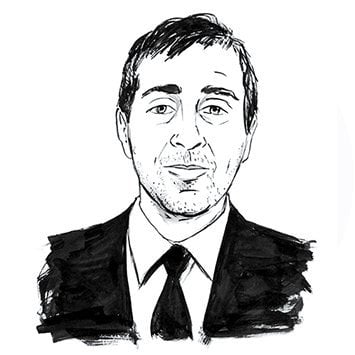
Ramez Naam

Ramez Naam

x.com/ramez

Author and clean-energy investor who expects broadly beneficial AI, doubts a runaway intelligence explosion and favors open access with safeguards.

Como a IA mudará o mundo?

Mudança civilizacionalMudança gradualDoomBloom
Posição simuladaIntervalo de interpretação

Na horizontal: a perspectiva Doom–Bloom expressa por ele. Para cima: escala da transformação.

Doom–Bloom: 67 de 100. Escala da transformação: 58 de 100. Intervalos de interpretação: 62 a 75 na horizontal, 50 a 75 na vertical. Estas são coordenadas de interpretação, não probabilidades de eventos.

P(doom) de Ramez Naam · inferido

≈7%

0%100%

Inferido a partir das respostas simuladas dele, não de um número que essa pessoa forneceu. Intervalo plausível: 4–12%.

Do que a perspectiva dele depende

Uma premissa central

Making scarce cognitive capabilities cheap and widely available is inherently consequential.
Resposta 2

Se essa premissa se revelasse diferente, como a perspectiva dele mudaria?

Uma questão não resolvida

I don’t have a defensible number.
Resposta 3

O que ajudaria essa pessoa a distinguir os resultados plausíveis aqui?

O que poderia mudar essa opinião

The biggest update would be clear evidence of a self-sustaining AI research loop: systems reliably producing validated improvements to AI, where each generation makes the next round faster or more productive even after accounting for compute, experiments, testing, and diminishing returns.
Resposta 4

Que evidência seria suficiente e em que direção ela mudaria a visão dele?

Mais detalhes

Benefícios esperados

Esperam-se benefícios substanciais, com condições importantes ou limites de distribuição.

72 / 100

Pouco impactoImpacto transformador

Intervalo de interpretação de 67 a 100 na escala qualitativa.

Danos esperados

Danos graves ou generalizados são uma parte relevante do futuro esperado.

65 / 100

Pouco impactoImpacto transformador

Intervalo de interpretação de 67 a 67 na escala qualitativa.

Influência humana

As escolhas humanas têm uma influência significativa, mas substancialmente limitada.

52 / 100

Pouca influênciaForte influência

Intervalo de interpretação de 41 a 59 na escala qualitativa.

Ritmo de desenvolvimento

Interromper ou desacelerar substancialmente o desenvolvimento de uma IA mais capaz.

Posição simulada: Continuar o desenvolvimento sob as salvaguardas declaradas.

Acelerar o desenvolvimento de uma IA mais capaz.

Regras para o uso da IA

Restringir os usos da IA discutidos até que proteções prévias ou uma autorização estejam em vigor.

Posição simulada: Permitir os usos da IA discutidos com responsabilização e proteções específicas.

Minimizar as restrições aos usos da IA discutidos.

Acesso à IA

Restringir o acesso à IA poderosa.

Permitir o acesso sujeito a restrições de capacidade ou de uso.

Posição simulada: Favorecer o acesso amplo ou aberto à IA poderosa.

Estas interpretações mantêm as condições que ele declarou. Tanto os benefícios quanto os danos podem ser substanciais. Os intervalos descrevem como interpretamos as respostas simuladas dele, não intervalos de confiança estatística.

Onde você se situa em relação a Ramez Naam?
Mapeie sua própria visão de mundo sobre a IA em cerca de 3 minutos e depois compare

Visões de mundo semelhantes

Líderes de opinião cujas visões de mundo simuladas são mais próximas da visão de Ramez Naam

Avaliação simulada

Pergunta 1

O que você acha que a IA significa para o nosso futuro — e por quê?

I expect AI to be broadly beneficial, though not remotely harmless. It can become a “cognitive prosthesis”: making intellectual work more accessible, helping people write software, design products, learn faster, and pursue discoveries that would otherwise require scarce expertise. Wider access matters. I would rather see many people, companies, and countries gain powerful tools than have one corporation, government, or supposedly perfect AI control them. But useful progress is not the same as an inevitable intelligence explosion. AI can help engineers improve AI without creating a self-sustaining runaway loop. The key question is how much validated research progress we get for the resources invested. Generating more code or plausible ideas is not enough if testing them is expensive, judgment remains unreliable, or each improvement delivers diminishing returns. Physical science adds another constraint: discoveries still require observations, instruments, and experiments, although automating laboratory work could help enormously. There will also be accidents, malicious uses, and deployment failures. Openness and competition distribute benefits, but they do not abolish risk. We need defense in depth: better instruction following, monitoring, sandboxing, red teaming, cyber defenses, and accountability for negligent providers. Concentrating power to avoid every possible misuse creates profound risks of its own. So my default future is neither effortless utopia nor inevitable doom. It is consequential progress, substantial benefits, serious harms, and an ongoing contest over who gets access and how well we manage the consequences. Dramatic forecasts deserve scrutiny: evidence matters more than hunches.

Pergunta 2

Setting aside good or bad: how much do you think AI will ultimately change the world—a little, a lot, or completely?

A lot. I expect AI to reshape intellectual work, software, education, engineering, and scientific discovery, much as other general-purpose technologies transformed broad parts of the economy. Making scarce cognitive capabilities cheap and widely available is inherently consequential. But “a lot” is not the same as “completely.” The physical world still matters: energy, materials, institutions, experiments, human preferences, and deployment all constrain what intelligence alone can accomplish. Nor does large impact require a runaway intelligence explosion. Continued, uneven capability gains could profoundly change society even if each new advance becomes harder and more resource-intensive. “Completely” implies a confidence about total transformation that I don’t think the evidence supports.

Pergunta 3

What’s your rough gut-feel chance that AI causes human extinction or a similarly permanent catastrophe? A number or “no idea” is fine.

I don’t have a defensible number. I’m skeptical that precise P(doom) figures reflect calculation rather than intuition. I expect AI-related accidents, malicious use, and even deaths with near certainty, but that is a very different claim from human extinction or permanent civilizational catastrophe.

Pergunta 4

Qual descoberta ou acontecimento mais mudaria sua visão sobre o impacto futuro da IA?

The biggest update would be clear evidence of a self-sustaining AI research loop: systems reliably producing validated improvements to AI, where each generation makes the next round faster or more productive even after accounting for compute, experiments, testing, and diminishing returns. More code, tokens, benchmark wins, or plausible research proposals would not establish that. I would want to see useful research output per unit of input actually accelerating. A related update would be substantially more reliable autonomous research judgment—especially across open-ended problems without clean verifiers. And in physical science, genuinely scalable automation of observations and experiments would matter because it could relax a major real-world bottleneck. If those developments appeared together, I would raise my estimate of both the scale and speed of AI’s impact considerably. Conversely, persistent diminishing returns despite rising resources would strengthen the case for profound but more gradual and constrained change.

Fontes

Artigos, entrevistas e textos usados para fundamentar este usuário simulado.

Where’s the “intelligence explosion”?

Naam distinguishes AI assisting research, autonomous improvement and runaway feedback. He expects rapid progress, including narrow superhuman abilities, but finds weak evidence for imminent general superintelligence. His uncertain model calibration puts the software loop below self-sustaining strength; it is not an impossibility proof. Research reliability, diminishing returns and physical constraints matter. Architectural advances and measured useful research per unit of input could change the conclusion. Substantial indexed text was inspected; direct retrieval failed. Smith’s introductory forecast and other quoted speakers’ claims are not Naam’s.

noahpinion.blog
Two AI Futures to Choose From

Prefers broadly distributed capabilities and checks on concentrated power to safety entrusted to one supposedly perfect AI. Accepts accidents, misuse and unintended effects in a plural world. His historical argument favors freedom and resilience; it does not establish that competition eliminates every AI risk. Says strong evidence could justify departing from this preference.

rameznaam.com
Common AI Narratives are Wrong (Video and Part 1)

Expects net benefits and continued improvement despite increasing difficulty. Sees competition and open weights supporting widespread access and value for users. Considers international innovation largely positive-sum while recognizing surveillance, cyber, propaganda and military risks. Calls for safety beyond individual models. Full essay inspected; embedded talk not reviewed. Market comparisons describe April, not a freshly measured September lead.

rameznaam.com
Onde você se situa?
Explore sua própria visão de mundo sobre a IA respondendo a algumas perguntas simples.
Mapeie sua própria visão de mundo

Onde você se situa?

Mapear minha visão de mundo