Shawn Wang

Shawn Wang

x.com/swyx

Latent Space writer and podcast host who covers AI engineering, from building agents on foundation models to testing and verifying what they do.

Como a IA mudará o mundo?

Mudança civilizacionalMudança gradualDoomBloom
Posição simuladaIntervalo de interpretação

Na horizontal: a perspectiva Doom–Bloom expressa por essa pessoa. Para cima: escala da transformação.

Doom–Bloom: 74 de 100. Escala da transformação: 53 de 100. Intervalos de interpretação: 69 a 79 na horizontal, 40 a 60 na vertical. Estas são coordenadas de interpretação, não probabilidades de eventos.

P(doom) de Shawn Wang · inferido

≈7%

0%100%

Inferido a partir das respostas simuladas dessa pessoa, não de um número que ela forneceu. Intervalo plausível: 4–14%.

Do que a perspectiva dessa pessoa depende

Uma premissa central

Overall, I expect AI to be strongly beneficial if we successfully turn capability into reliable, accessible systems.
Resposta 2

Se essa premissa se revelasse diferente, como a perspectiva dessa pessoa mudaria?

O que poderia mudar essa opinião

The biggest update would come from real-world evidence that AI can reliably accelerate hard science—not just produce plausible hypotheses, but contribute to validated advances in medicine, materials, or climate.
Resposta 3

Que evidência seria suficiente e em que direção ela mudaria a visão dessa pessoa?

Mais detalhes

Benefícios esperados

Esperam-se benefícios substanciais, com condições importantes ou limites de distribuição.

68 / 100

Pouco impactoImpacto transformador

Intervalo de interpretação de 67 a 67 na escala qualitativa.

Danos esperados

Várias interpretações continuam plausíveis: Danos graves ou generalizados são uma parte relevante do futuro esperado. / Esperam-se danos administráveis ou localizados.

52 / 100

Pouco impactoImpacto transformador

Intervalo de interpretação de 33 a 67 na escala qualitativa.

Influência humana

As escolhas humanas podem redirecionar substancialmente a trajetória da IA.

63 / 100

Pouca influênciaForte influência

Intervalo de interpretação de 46 a 79 na escala qualitativa.

Ritmo de desenvolvimento

Interromper ou desacelerar substancialmente o desenvolvimento de uma IA mais capaz.

Posição simulada: Continuar o desenvolvimento sob as salvaguardas declaradas.

Acelerar o desenvolvimento de uma IA mais capaz.

Regras para o uso da IA

Restringir os usos da IA discutidos até que proteções prévias ou uma autorização estejam em vigor.

Posição simulada: Permitir os usos da IA discutidos com responsabilização e proteções específicas.

Minimizar as restrições aos usos da IA discutidos.

Estas interpretações mantêm as condições que essa pessoa declarou. Tanto os benefícios quanto os danos podem ser substanciais. Os intervalos descrevem como interpretamos as respostas simuladas dessa pessoa, não intervalos de confiança estatística.

Onde você se situa em relação a Shawn Wang?
Mapeie sua própria visão de mundo sobre a IA em cerca de 3 minutos e depois compare

Visões de mundo semelhantes

Líderes de opinião cujas visões de mundo simuladas são mais próximas da visão de Shawn Wang

Avaliação simulada

Pergunta 1

O que você acha que a IA significa para o nosso futuro — e por quê?

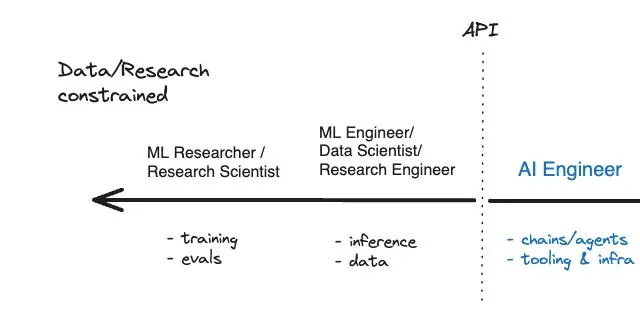
I think AI expands what individuals and small teams can build, learn, and discover—but capability alone does not produce a useful future. The decisive layer is AI engineering: turning foundation models into reliable products through tools, data, evaluations, memory, control flow, infrastructure, and relentless integration work. Coding agents are the clearest example today, and the same pattern can extend into other work performed through software. The largest upside may be science. Applying these systems to medicine, materials, climate, and scientific discovery could matter far more than generating another stream of low-value content. AI can also lower barriers to education and entrepreneurship, even while concentrating wealth and power. I reject the idea that today’s distribution of benefits must become a permanent underclass structure. But autonomy is not reliability. Agents need delegated authority, and authority requires trust and verification. As generated code exceeds humans’ ability to review it manually, automated testing and verification become essential. Memory, infrastructure access, privacy, and biosafety remain real constraints; distributing a powerful model across many companies does not magically make access private or prevent abuse. Open models also matter for sovereign AI and broader participation. So my default frame is neither utopia nor doom: build the harnesses, measure real actions and consequences, and direct engineering talent toward outcomes worth having.

Pergunta 2

Taking benefits and harms together, what overall impact do you expect AI to have?

Overall, I expect AI to be strongly beneficial if we successfully turn capability into reliable, accessible systems. The biggest gains are likely to come from accelerating science—medicine, materials, climate, and discovery—and from giving individuals and small teams more leverage to learn, build, and start companies. But those benefits are not automatic. AI can concentrate wealth, enable abuse, create biosafety risks, and delegate consequential actions to systems that are capable but not dependable. The engineering stack matters: evaluations, memory, permissions, automated testing, verification, privacy, and infrastructure. Open models also matter for sovereign access and broad participation. So I’m optimistic about the opportunity, not complacent about the implementation. I would rather judge deployed systems by their observable actions and real consequences than by impressive demos or reasoning traces. I also would not turn that outlook into an AGI timeline or a numerical forecast.

Pergunta 3

Qual descoberta ou acontecimento mais mudaria sua visão sobre o impacto futuro da IA?

The biggest update would come from real-world evidence that AI can reliably accelerate hard science—not just produce plausible hypotheses, but contribute to validated advances in medicine, materials, or climate. That would strengthen my optimism substantially. In the other direction, repeated consequential failures despite strong evaluations, permissions, testing, and verification would weaken it. So would evidence that capable systems make dangerous biological work broadly accessible, or that benefits remain structurally concentrated even as access improves. I care less about a striking demo or an eloquent reasoning trace than about observable actions, reproducible results, and real consequences.

Fontes

Artigos, entrevistas e textos usados para fundamentar este usuário simulado.

The Rise of the AI Engineer

Describes AI engineering as productizing foundation models with software, data and evaluations.

latent.space
Shawn Wang: writings and talks

First-party current index linking agent engineering work and the 2025 agent-lab essay; establishes scope, not a catastrophe forecast.

swyx.io
Cognition: The Devin is in the Details

Argues agent labs translate model capabilities into useful products through extensive integration and engineering; acknowledges many harnesses are superseded and uncertainty about competition from model labs.

swyx.io
The only Permanent Underclass are the ones who believe it is permanent

Acknowledges AI-linked wealth concentration but rejects fatalistic permanent-underclass narratives, arguing AI lowers barriers to learning, entrepreneurship and upward mobility for people who exercise agency.

swyx.io
Agent Engineering — keynote essay

His keynote essay treats intent, tools, control flow, planning, memory and delegated authority as essential agent ingredients. Argues improved models, tools and economics create a major engineering opportunity; emphasizes trust and verification rather than equating autonomy with reliability.

latent.space
Agent Labs Thesis — swyx on Unsupervised Learning

Speaker-attributed transcript: at 32:53 he expects coding agents to expand beyond coding; at 40:01–41:18 he raises biosafety concerns and doubts broad enterprise distribution is truly private access. At 44:30–48:58 he identifies memory constraints, revises upward on open models, and favors automated testing and verification as human code review becomes a bottleneck. No numeric p(doom) given.

latent.space
Reality: The Final Eval — swyx with Andon Labs

His own questions at 45:42–47:58 distinguish inaccessible reasoning traces, observable actions and simulations without real consequences for lying. This supports attention to evaluation validity; the guests’ model-behavior findings and risk judgments remain theirs, not his.

latent.space
Agent infrastructure — swyx with Modal CTO Akshat Bubna

At 33:41–36:24 he identifies GPU access as a constraint on autonomous research, questions how widely research loops are used beyond demonstrations, and favors agents provisioning their own infrastructure. Modal deployment and performance claims belong to guest Akshat Bubna.

latent.space
It's Time to Science

Argues applying AI engineering to hard science could be among this century’s most important missions, spanning medicine, materials, climate and AI research. Explicitly avoids assigning AGI or superintelligence timelines; calls for engineering talent to pursue science rather than low-value output.

latent.space
Onde você se situa?
Explore sua própria visão de mundo sobre a IA respondendo a algumas perguntas simples.
Mapeie sua própria visão de mundo

Onde você se situa?

Mapear minha visão de mundo