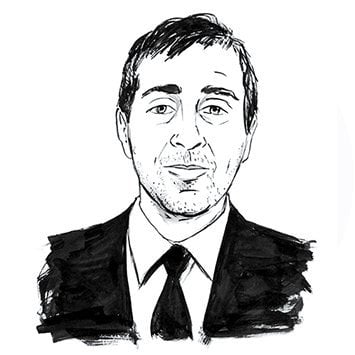
Programmer who is enthusiastic about practical AI and argues that ordinary people should own it rather than depend on a few companies or governments.

Como a IA mudará o mundo?

Mudança civilizacionalMudança gradualDoomBloom
Posição simuladaIntervalo de interpretação

Na horizontal: a perspectiva Doom–Bloom expressa por essa pessoa. Para cima: escala da transformação.

Doom–Bloom: 82 de 100. Escala da transformação: 66 de 100. Intervalos de interpretação: 75 a 100 na horizontal, 61 a 75 na vertical. Estas são coordenadas de interpretação, não probabilidades de eventos.

P(doom) de George Hotz · inferido

≈3%

0%100%

Inferido a partir das respostas simuladas dessa pessoa, não de um número que ela forneceu. Intervalo plausível: 2–8%.

Do que a perspectiva dessa pessoa depende

Uma premissa central

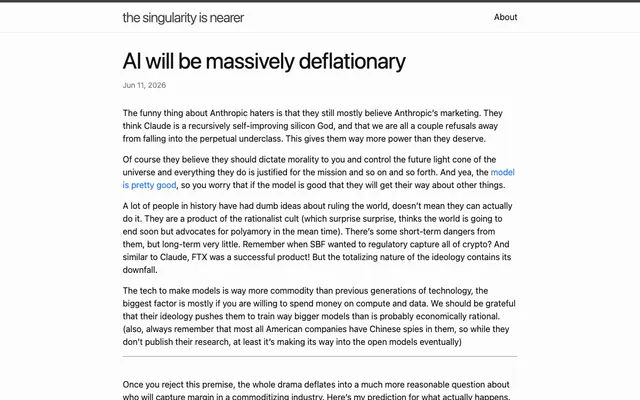
If models commoditize—and I think they will—then much knowledge work gets cheaper, wage premiums fall, and plenty of institutions built around scarce expertise get rearranged.
Resposta 1

Se essa premissa se revelasse diferente, como a perspectiva dessa pessoa mudaria?

O que poderia mudar essa opinião

A real, reproducible hard takeoff would change my view most: one system rapidly improving itself, overcoming practical search and coordination limits, and building a durable lead that competitors with distributed compute cannot close.
Resposta 2

Que evidência seria suficiente e em que direção ela mudaria a visão dessa pessoa?

Mais detalhes

Benefícios esperados

Esperam-se ganhos transformadores e amplamente valiosos.

90 / 100

Pouco impactoImpacto transformador

Intervalo de interpretação de 67 a 100 na escala qualitativa.

Danos esperados

Esperam-se danos administráveis ou localizados.

45 / 100

Pouco impactoImpacto transformador

Intervalo de interpretação de 33 a 67 na escala qualitativa.

Influência humana

As escolhas humanas podem redirecionar substancialmente a trajetória da IA.

71 / 100

Pouca influênciaForte influência

Intervalo de interpretação de 48 a 100 na escala qualitativa.

Acesso à IA

Restringir o acesso à IA poderosa.

Permitir o acesso sujeito a restrições de capacidade ou de uso.

Posição simulada: Favorecer o acesso amplo ou aberto à IA poderosa.

Estas interpretações mantêm as condições que essa pessoa declarou. Tanto os benefícios quanto os danos podem ser substanciais. Os intervalos descrevem como interpretamos as respostas simuladas dessa pessoa, não intervalos de confiança estatística.

Onde você se situa em relação a George Hotz?
Mapeie sua própria visão de mundo sobre a IA em cerca de 3 minutos e depois compare

Visões de mundo semelhantes

Líderes de opinião cujas visões de mundo simuladas são mais próximas da visão de George Hotz

O que George Hotz já disse sobre a IA

Hotz is enthusiastic about practical AI, doubts runaway superintelligence and argues that ordinary people should own AI, not rely on a few companies.

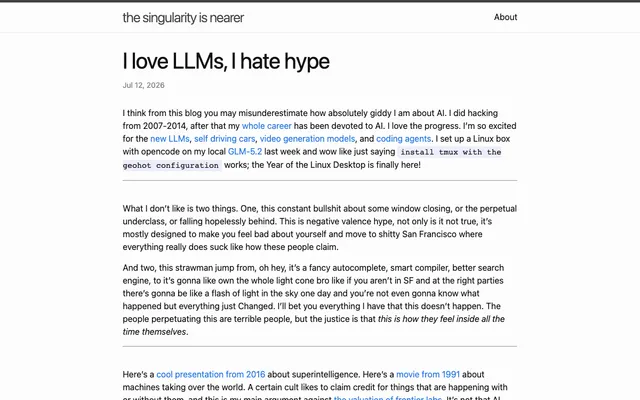
  1. “I love the progress. I’m so excited for the new LLMs, self driving cars, video generation models, and coding agents.”

    Blog post, I love LLMs, I hate hype
  2. “Intelligence is not the end all be all, it’s just the current bottleneck for a few things. You cannot take over the world with tokens.”

    Blog post, AI 2040 and the Cult of Intelligence
  3. “AI will be cheap, everywhere, collapse a bunch of sectors of work, wreck wage premiums, and cause a big reevaluation of status hierarchies.”

    Blog post, AI will be massively deflationary
  4. “I’m not sure it’s possible, but if there is a bad scenario with AI, it’s a singleton with nothing that can substantially impact reality outside of it.”

    Blog post, There is only one bad AI scenario
  5. “The good world is where everyone has AI, and not as a revokable privilege through an API, but through hard possession.”

    Blog post, Do you really want the US to “win” AI?

Citações literais das fontes indicadas, verificadas em 3 de out. de 2026

Avaliação simulada

Pergunta 1

O que você acha que a IA significa para o nosso futuro — e por quê?

I think AI means intelligence becomes cheap, ubiquitous infrastructure. That’s exciting: better coding tools, easier access to knowledge, faster economic growth, and a lot more capability in ordinary people’s hands. It’s also massively disruptive. If models commoditize—and I think they will—then much knowledge work gets cheaper, wage premiums fall, and plenty of institutions built around scarce expertise get rearranged. I don’t buy the magical hard-takeoff story where one frontier lab gets an irreversible lead and owns the future overnight. Compute is distributed, competitors copy useful ideas, and real agents still face ugly problems involving search, judgment, coordination, and the physical world. Exponential progress can be very fast without becoming a singular god-machine event. Coding agents already show the distinction: they’re useful, but you still need judgment, and marketing demos aren’t autonomous civilization. The political question matters more than the hype. Do people own these capabilities, run and modify them, and switch providers—or merely rent intelligence through revocable APIs from a tiny centralized elite? Closed AI can create dependence on whoever controls access. Open, distributed AI is a defense against that concentration. There’s a darker cultural risk too. Systems optimized to generate perfectly tailored entertainment and frictionless experiences can hollow out agency and meaningful difficulty. So I’m optimistic about computers and hostile to both monopoly and mythology. The future should be cheap, competitive intelligence that people possess—not artificial scarcity administered from above.

Pergunta 2

Qual descoberta ou acontecimento mais mudaria sua visão sobre o impacto futuro da IA?

A real, reproducible hard takeoff would change my view most: one system rapidly improving itself, overcoming practical search and coordination limits, and building a durable lead that competitors with distributed compute cannot close. Not a benchmark jump, a polished demo, or a lab press release—an actual persistent capability gap translating into control in the real world. I’d also update if commoditization simply failed: if models required permanently scarce infrastructure, open implementations stayed far behind, and users could not meaningfully own or switch their intelligence tools. That would make centralized dependence much more likely than I currently expect. Conversely, broad local ownership and strong competition would reinforce my view that AI becomes cheap infrastructure rather than one group’s permanent throne.

Fontes

Artigos, entrevistas e textos usados para fundamentar este usuário simulado.

I love LLMs, I hate hype

Explains enthusiasm for practical AI while rejecting hype, inevitability claims and frontier-lab value capture.

geohot.github.io
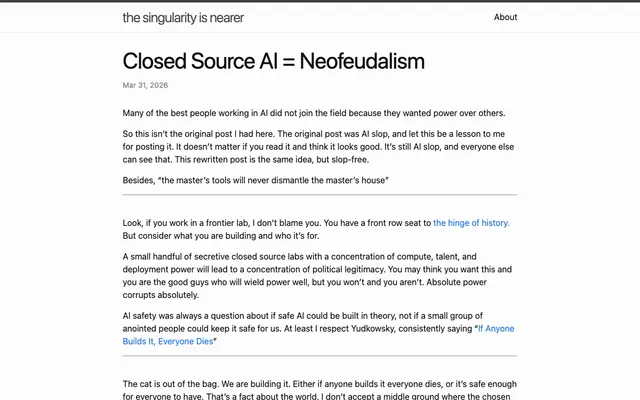
Closed Source AI = Neofeudalism

Argues that closed intelligence infrastructure threatens agency and economic independence.

geohot.github.io
There is no hard takeoff

Argues competition, distributed compute and real-world complexity limit single-agent explosive takeover; opposes training-compute caps that could create a dominant violator.

geohot.github.io
p(doom)

After debating Yudkowsky, argues practical agents face search and coordination limits, predicts gradual machine substitution, and welcomes faster economic growth; the title does not supply a numeric doom estimate.

geohot.github.io
Do you really want the US to win AI?

Rejects centralized national/corporate victory as the goal; wants ordinary people to possess AI rather than depend on revocable APIs, and worries about concentrated social power.

geohot.github.io
AI will be massively deflationary

Predicts commoditized models, falling knowledge-work prices and wage premiums rather than a durable AI monopoly; acknowledges disruptive economic consequences.

geohot.github.io
Lex Fridman #387 — AI safety, open source and human agency

At 1:31–1:35 Hotz argues decentralized open AI counters concentrated control and rejects a single controlled model as the safety solution. Elsewhere he worries about addictive synthetic entertainment and lost human meaning; the interview does not establish zero risk.

youtube.com
Onde você se situa?
Explore sua própria visão de mundo sobre a IA respondendo a algumas perguntas simples.
Mapeie sua própria visão de mundo

Onde você se situa?

Mapear minha visão de mundo