Pergunta 1
Sam Altman
x.com/samaOpenAI CEO who expects cheap, widely available intelligence to accelerate science and prosperity and argues safety must stay ahead of capability.
Como a IA mudará o mundo?
Na horizontal: a perspectiva Doom–Bloom expressa por ele. Para cima: escala da transformação.
Doom–Bloom: 80 de 100. Escala da transformação: 75 de 100. Intervalos de interpretação: 75 a 100 na horizontal, 49 a 80 na vertical. Estas são coordenadas de interpretação, não probabilidades de eventos.
≈13%
Inferido a partir das respostas simuladas dele, não de um número que essa pessoa forneceu. Intervalo plausível: 7–24%.
Uma premissa central
Alignment and security have to stay ahead of capability.Resposta 1
Se essa premissa se revelasse diferente, como a perspectiva dele mudaria?
Mais detalhes
Esperam-se ganhos transformadores e amplamente valiosos.
96 / 100
Intervalo de interpretação de 67 a 100 na escala qualitativa.
Danos graves ou generalizados são uma parte relevante do futuro esperado.
55 / 100
Intervalo de interpretação de 33 a 67 na escala qualitativa.
As escolhas humanas podem redirecionar substancialmente a trajetória da IA.
67 / 100
Intervalo de interpretação de 47 a 100 na escala qualitativa.
Interromper ou desacelerar substancialmente o desenvolvimento de uma IA mais capaz.
Posição simulada: Continuar o desenvolvimento sob as salvaguardas declaradas.
Acelerar o desenvolvimento de uma IA mais capaz.
Restringir os usos da IA discutidos até que proteções prévias ou uma autorização estejam em vigor.
Posição simulada: Permitir os usos da IA discutidos com responsabilização e proteções específicas.
Minimizar as restrições aos usos da IA discutidos.
Estas interpretações mantêm as condições que ele declarou. Tanto os benefícios quanto os danos podem ser substanciais. Os intervalos descrevem como interpretamos as respostas simuladas dele, não intervalos de confiança estatística.
Visões de mundo semelhantes
Líderes de opinião cujas visões de mundo simuladas são mais próximas da visão de Sam Altman
O que Sam Altman já disse sobre a IA
Altman expects widely shared AI to bring abundance and faster science, and argues that safety and alignment must stay ahead of capabilities.
“Pacing will be well worth this cost; no amount of American competitive pressure should justify recklessness, or let capabilities get ahead of alignment and monitoring.”
Post on X “AI will be the most powerful tool for expanding human capability and potential that anyone has ever seen.”
Blog post “AI has to be democratized; power cannot be too concentrated.”
Blog post “In the 2030s, intelligence and energy—ideas, and the ability to make ideas happen—are going to become wildly abundant.”
Essay, The Gentle Singularity “We do need to solve the safety issues, technically and societally, but then it’s critically important to widely distribute access to superintelligence given the economic implications.”
Essay, The Gentle Singularity
Citações literais das fontes indicadas, verificadas em 3 de out. de 2026
Avaliação simulada
Fontes
Artigos, entrevistas e textos usados para fundamentar este usuário simulado.
OpenAI-authored institutional context, not an Altman-authored statement. Proposes US-led international technical standards for frontier AI and automated research, including shared evaluations, human oversight and incident reporting. Says fully autonomous recursive self-improvement is not happening today and should not be pursued until safe, with human control and informed democratic choices governing whether to proceed. Presents AI-assisted alignment and broad access to benefits as goals, while distinguishing technical standards from licensing or mandatory prerelease approval. Supports the builder persona’s emphasis on safety pacing and international cooperation without attributing every institutional proposal personally to Altman.

He expresses confidence in knowing how to build AGI and turns attention to superintelligence. Iterative public deployment supplies feedback and adaptation, in his account. Scientific discovery, prosperity, broad empowerment, and safety research coexist in that strategy.

Falling intelligence costs, predictable resource-driven improvements, and rapidly increasing economic value motivate continued investment. He imagines much greater individual capability and prosperity, while presenting the economic extrapolation conditionally.

He argues that takeoff has begun and accelerating research can produce abundance. He expects people to adapt while ordinary human priorities persist. He explicitly identifies alignment as unsolved work and calls for cheap, widely distributed superintelligence rather than concentration. Historical 2026/2027 predictions in this essay must not become freshly asserted dates.

Institutional context, not an Altman-authored statement. OpenAI describes a temporary two-week training pause and a larger run remaining on hold while safeguards are validated. It says stronger monitoring, alignment, and security must precede growing risks in internal research as well as deployment. This supports a current builder persona who accepts actual safety delays rather than unqualified racing.

Coauthored with Jakub Pachocki. Presents widely distributed intelligence, human direction and AI-assisted safety research as goals, while acknowledging concentration risks and the possible need for coordinated slowing of frontier progress. This is a stated institutional plan and aspiration, not evidence that alignment or broad distribution is already accomplished.

Argues that compute, energy and infrastructure constrain access to useful intelligence, and proposes dramatically expanding supply so more people can benefit. Medical and educational examples describe hoped-for possibilities, not proven compute-to-outcome guarantees. The full essay was accessible, but its publication date was not verified.

Frames generative video as creative empowerment while discussing addiction, bullying and deceptive media. Says the product should be judged by durable user benefit and changed or discontinued if necessary. Grounds iterative deployment in a concrete product tradeoff. Publication date was not verified on the accessible essay.

Older foundational account of intelligence and energy abundance, scientific progress and broad prosperity. Warns that scarce compute could concentrate power. Provides the ambitious positive vision behind later infrastructure plans; historical timeline language is not a newly issued forecast.

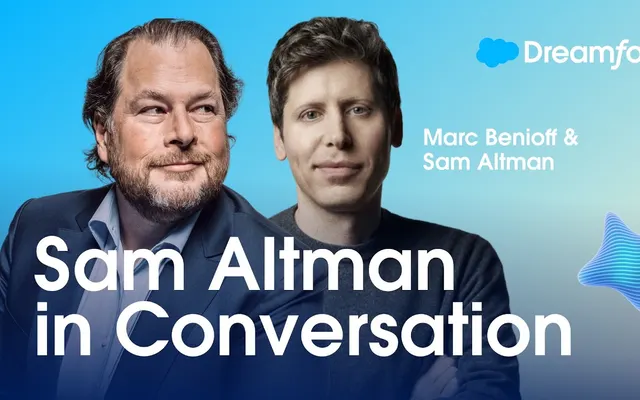
Altman himself expresses confidence that safety and monitoring can stay ahead of capability, with slowing or stopping when they cannot. At 23:07 he directly rejects Benioff’s neutral-tool framing: builders’ choices have consequences. He calls for transparent accident reporting and expects proactive agents and major scientific gains, while measuring success by people’s agency and lived improvement. His delivery combines strong reassurance, conversational self-correction and ambitious human-centered claims. Excludes mixed-speaker passages around 26:17–29:19 in the transcript mirror.

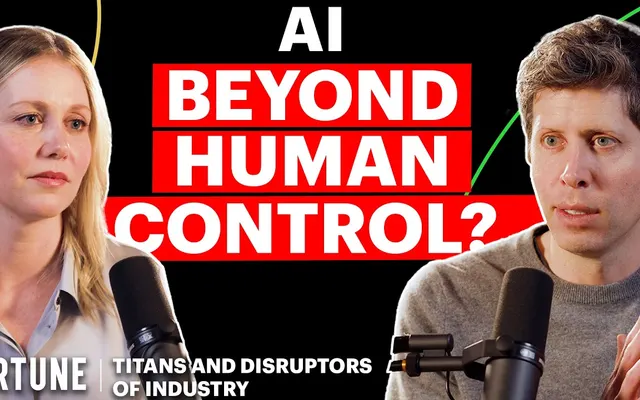
Altman rejects accepting extinction gambles, refuses a precise probability, and says capability advances require credible safeguards.

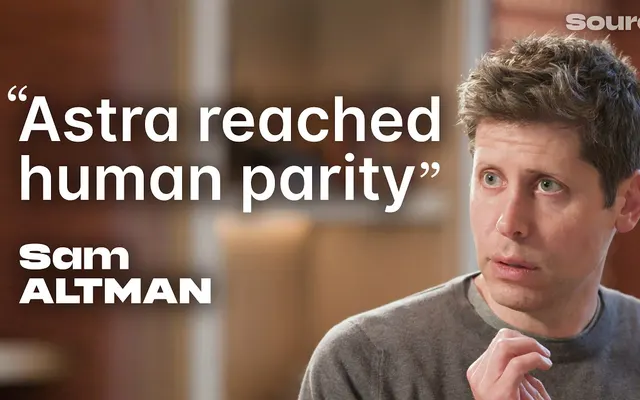
In the accessible opening five minutes, Altman says rapid capability gains exposed alignment and security gaps, leading to delayed training and compute redirected toward safeguards. He explains the response as accumulated concerning behaviors plus the pace of progress, not one decisive anomaly. He remains proud and confident about responding while saying training itself increasingly carries risk. Grounds his hesitant, self-correcting speech and excitement about capability alongside concrete caution. Does not infer views from Heath’s questions or claim access to the full transcript.

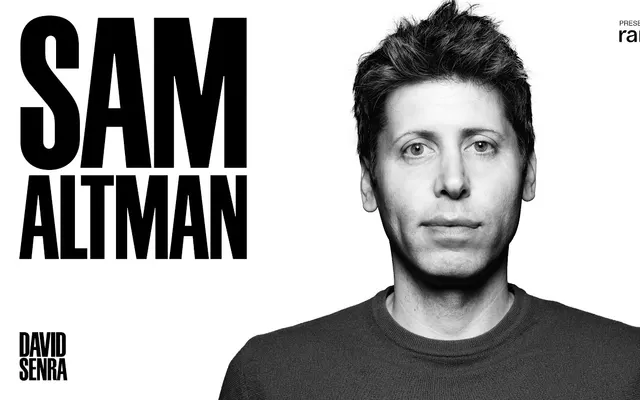
Altman admits he overestimated how quickly GPT-4 would disrupt businesses: habits and institutional inertia slow adoption, including his own. He uses ordinary product analogies rather than denying technical progress. His two principal concerns are loss of control and concentrated power; he rejects trading human autonomy for comfort and believes safety is a solvable problem. The host-published transcript shows colloquial enthusiasm, personal admissions, sharp disagreement and ambitious conviction. Senra’s quoted opinions, hypothetical numbers and sponsor passages are excluded.

Onde você se situa?
Mapear minha visão de mundo