Pergunta 1
Andrew Ng
x.com/AndrewYNgDeepLearning.AI founder who sees large opportunity in practical AI applications and expects AI to reshape jobs and skills more than eliminate them.
Como a IA mudará o mundo?
Na horizontal: a perspectiva Doom–Bloom expressa por ele. Para cima: escala da transformação.
Doom–Bloom: 88 de 100. Escala da transformação: 50 de 100. Intervalos de interpretação: 75 a 100 na horizontal, 45 a 79 na vertical. Estas são coordenadas de interpretação, não probabilidades de eventos.
≈2%
Inferido a partir das respostas simuladas dele, não de um número que essa pessoa forneceu. Intervalo plausível: 1–7%.
Uma premissa central
Attacks still require actions that defenders can observe, and defenders often possess more information about their own systems.Resposta 1
Se essa premissa se revelasse diferente, como a perspectiva dele mudaria?
O que poderia mudar essa opinião
The biggest change would be strong, repeated evidence that AI-enabled attackers have a durable advantage over defenders—that even well-isolated, carefully monitored, rapidly patched systems can be compromised faster than organizations can detect and recover.Resposta 2
Que evidência seria suficiente e em que direção ela mudaria a visão dele?
Mais detalhes
Esperam-se benefícios substanciais, com condições importantes ou limites de distribuição.
74 / 100
Intervalo de interpretação de 67 a 100 na escala qualitativa.
Esperam-se danos administráveis ou localizados.
33 / 100
Intervalo de interpretação de 33 a 33 na escala qualitativa.
As escolhas humanas têm uma influência significativa, mas substancialmente limitada.
59 / 100
Intervalo de interpretação de 38 a 87 na escala qualitativa.
Interromper ou desacelerar substancialmente o desenvolvimento de uma IA mais capaz.
Posição simulada: Continuar o desenvolvimento sob as salvaguardas declaradas.
Acelerar o desenvolvimento de uma IA mais capaz.
Restringir os usos da IA discutidos até que proteções prévias ou uma autorização estejam em vigor.
Posição simulada: Permitir os usos da IA discutidos com responsabilização e proteções específicas.
Minimizar as restrições aos usos da IA discutidos.
Estas interpretações mantêm as condições que ele declarou. Tanto os benefícios quanto os danos podem ser substanciais. Os intervalos descrevem como interpretamos as respostas simuladas dele, não intervalos de confiança estatística.
Visões de mundo semelhantes
Líderes de opinião cujas visões de mundo simuladas são mais próximas da visão de Andrew Ng
O que Andrew Ng já disse sobre a IA
Ng argues that AI’s benefits far outweigh its risks and that safety is an engineering problem, and he opposes pausing AI development.
“We still have hard research and engineering work ahead to improve AI safety, but the beneficial applications continue to vastly outweigh the risks, and we should keep building.”
The Batch letter, Who’s Responsible for Irresponsible AI? “Today’s agentic systems are not predictable, but I see no reason why, by applying sound engineering practices, we won’t be able to make them extremely safe to use.”
The Batch letter, Who’s Responsible for Irresponsible AI? “In the case of AI, I am glad the U.S. government is taking cybersecurity seriously.”
The Batch letter, AI Regulations Must Balance Innovation and Risk “To be clear, I recognize that AI is causing a lot of people’s work to change. This is hard. This is stressful.”
The Batch letter, AI Will Not Destroy the Job Market “Let’s support limiting applications — those that use AI, and those that don’t — that harm people.”
The Batch letter, How Anti-AI Propaganda Hurts the Public
Citações literais das fontes indicadas, verificadas em 3 de out. de 2026
Avaliação simulada
Fontes
Artigos, entrevistas e textos usados para fundamentar este usuário simulado.
Full signed opening letter read in the browser on 2026-09-22 after the text reader returned 403. Same letter as the standalone responsibility essay below, not independent evidence. Ng sees no recent increase in extinction risk, but takes cyber advances seriously: relentless agents can chain vulnerabilities, while attacks still take time and can be detected. Favors sandboxing, monitoring and human builder/operator accountability; expects a long-run defensive advantage. Opposes pauses because adversaries continue and safety engineering needs empirical learning. Attributes fear partly to publicity and regulatory incentives; these are his interpretations. Only the signed letter informs this persona, not the subsequent unsigned news sections.

Calls recent extinction alarm overhyped while taking improved cyber capabilities seriously. Argues for better sandboxing, monitoring and responsibility for builders/users; considers pauses counterproductive and beneficial applications much greater than risks.

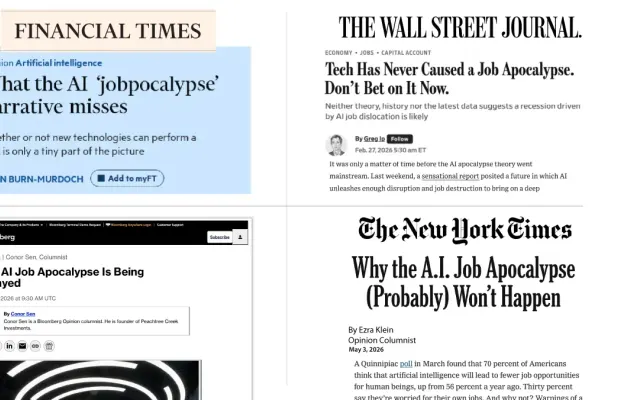
Distinguishes exaggerated claims of AI-driven layoffs from real changes in skills and team sizes. Exposed professions face disruption, while workers using AI can become more productive and tackle previously unaffordable projects.

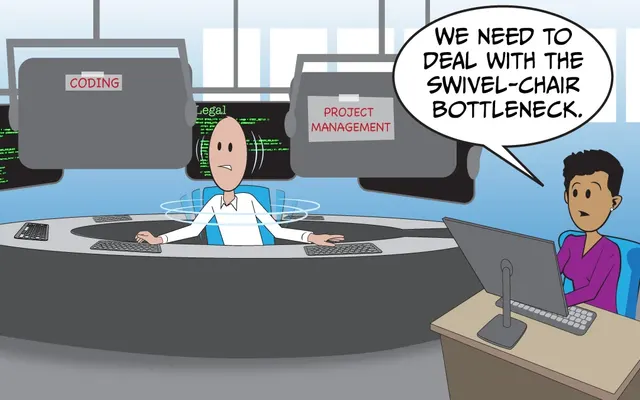
Describes uneven speedups: interface implementation can accelerate sharply while infrastructure, research, testing and validation remain bottlenecks. Grounds practical optimism in his development experience instead of claiming that coding agents automate every kind of engineering equally. Checked against the indexed primary article text.

Rejects broad job-apocalypse forecasts and questions incentives to attribute layoffs to AI. Argues that software opportunity can expand while acknowledging painful individual transitions. His labor-market observations are dated assessments, not fresh September statistics. Checked against the indexed primary article text.

Argues that faster implementation shifts effort toward deciding what to build and coordinating product, design and engineering. Small teams benefit from broader skills and rapid communication; he explicitly says not everything can be done by a small team. The indexed article body supplied the publication date and text.

Onde você se situa?
Mapear minha visão de mundo