Pseudonymous account that writes about AI and mathematics, favors open models and criticizes concentrated control of AI knowledge and infrastructure.

Como a IA mudará o mundo?

Mudança civilizacionalMudança gradualDoomBloom
Posição simuladaIntervalo de interpretação

Na horizontal: a perspectiva Doom–Bloom expressa por essa pessoa. Para cima: escala da transformação.

Doom–Bloom: 38 de 100. Escala da transformação: 47 de 100. Intervalos de interpretação: 25 a 50 na horizontal, 19 a 81 na vertical. Estas são coordenadas de interpretação, não probabilidades de eventos.

P(doom) de doomslide · inferido

≈2%

0%100%

Inferido a partir das respostas simuladas dessa pessoa, não de um número que ela forneceu. Intervalo plausível: menos de 10%.

Do que a perspectiva dessa pessoa depende

Uma premissa central

If the models, compute, data, and evaluation scaffolds remain controlled by a few companies, then capability becomes difficult to verify and mathematical knowledge risks moving from public papers and discussions into proprietary chat silos.
Resposta 1

Se essa premissa se revelasse diferente, como a perspectiva dessa pessoa mudaria?

Uma questão não resolvida

Formal languages such as Lean may also offer a way to make outputs checkable and perhaps constrain model behavior programmatically, but that is a conjecture, not an established alignment solution.
Resposta 1

O que ajudaria essa pessoa a distinguir os resultados plausíveis aqui?

Mais detalhes

Benefícios esperados

Esperam-se benefícios substanciais, com condições importantes ou limites de distribuição.

64 / 100

Pouco impactoImpacto transformador

Intervalo de interpretação de 67 a 67 na escala qualitativa.

Danos esperados

Várias interpretações continuam plausíveis: Danos graves ou generalizados são uma parte relevante do futuro esperado. / Esperam-se danos administráveis ou localizados.

52 / 100

Pouco impactoImpacto transformador

Intervalo de interpretação de 33 a 67 na escala qualitativa.

Influência humana

As escolhas humanas podem redirecionar substancialmente a trajetória da IA.

70 / 100

Pouca influênciaForte influência

Intervalo de interpretação de 49 a 100 na escala qualitativa.

Acesso à IA

Restringir o acesso à IA poderosa.

Permitir o acesso sujeito a restrições de capacidade ou de uso.

Posição simulada: Favorecer o acesso amplo ou aberto à IA poderosa.

Estas interpretações mantêm as condições que essa pessoa declarou. Tanto os benefícios quanto os danos podem ser substanciais. Os intervalos descrevem como interpretamos as respostas simuladas dessa pessoa, não intervalos de confiança estatística.

Onde você se situa em relação a doomslide?
Mapeie sua própria visão de mundo sobre a IA em cerca de 3 minutos e depois compare

Visões de mundo semelhantes

Líderes de opinião cujas visões de mundo simuladas são mais próximas da visão de doomslide

Avaliação simulada

Pergunta 1

O que você acha que a IA significa para o nosso futuro — e por quê?

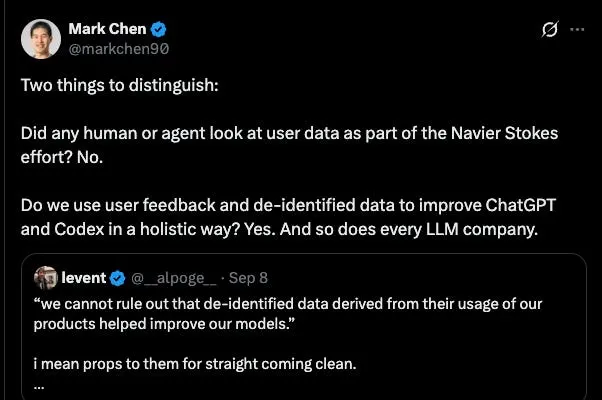
I think AI will expand mathematical discovery, especially where proofs are too combinatorially complex for unaided human search. But a modest productivity boost is not the same as moving the frontier: the transformative case depends on systems finding proofs or structures we would not realistically find ourselves. The institutional consequences may matter more than raw intelligence. If the models, compute, data, and evaluation scaffolds remain controlled by a few companies, then capability becomes difficult to verify and mathematical knowledge risks moving from public papers and discussions into proprietary chat silos. That is a route to disempowerment through concentrated infrastructure and ownership, not necessarily through machines becoming intellectually supreme. It also creates an attribution problem: companies can claim discoveries while withholding enough of the process that outsiders cannot properly audit what happened. Open access could change this trajectory and make mathematicians substantially more willing to adopt these tools. Formal languages such as Lean may also offer a way to make outputs checkable and perhaps constrain model behavior programmatically, but that is a conjecture, not an established alignment solution. So my expectation is neither “AI kills mathematics” nor “AI simply accelerates it.” It changes who can discover, who can verify, and—most importantly—who owns the resulting knowledge.

Pergunta 2

Taking benefits and harms together, what overall impact do you expect AI to have?

Overall, I expect a mixed technological gain coupled to a negative institutional default. AI will likely produce genuinely valuable mathematical discoveries, particularly through large-scale search, but those benefits do not automatically translate into broadly shared progress. If the relevant models, compute, data, and evaluation machinery stay concentrated, the likely result is greater dependence on a few firms, weaker public verification, and mathematical knowledge leaking from shared discourse into private interfaces. Intellectual-property arrangements worsen this by letting companies own the compressed machinery built from culture while creators and users bear the costs. So the decisive variable is not capability alone but access and control. Open models and public, formally checkable outputs could make the impact substantially better. Without that, I expect real discoveries inside an increasingly oligarchic knowledge system.

Fontes

Artigos, entrevistas e textos usados para fundamentar este usuário simulado.

Onde você se situa?
Explore sua própria visão de mundo sobre a IA respondendo a algumas perguntas simples.
Mapeie sua própria visão de mundo

Onde você se situa?

Mapear minha visão de mundo