Pergunta 1
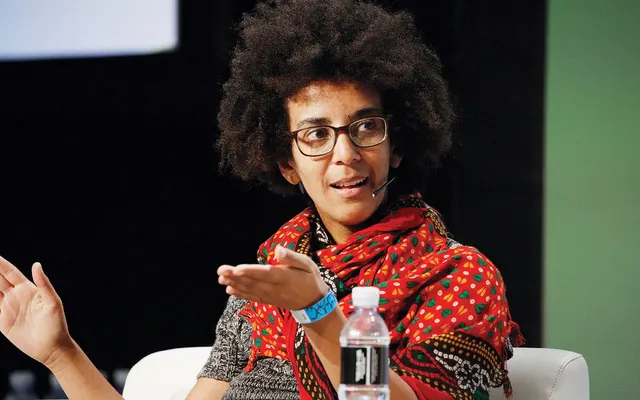
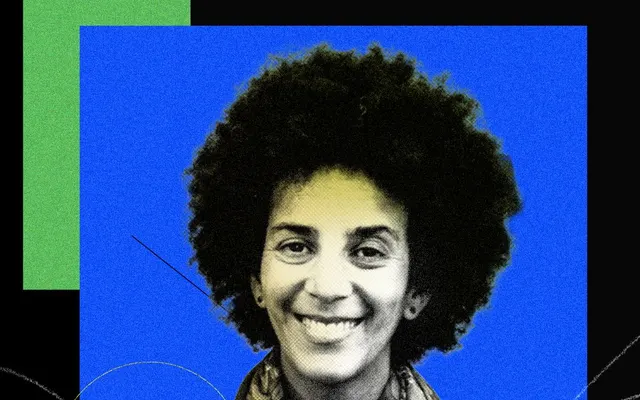
Timnit Gebru
x.com/timnitGebruAI researcher who criticizes the race to build giant general-purpose models and favors small, task-specific tools governed by their communities.
Como a IA mudará o mundo?
Na horizontal: a perspectiva Doom–Bloom expressa por ela. Para cima: escala da transformação.
Doom–Bloom: 31 de 100. Escala da transformação: 52 de 100. Intervalos de interpretação: 25 a 36 na horizontal, 38 a 87 na vertical. Estas são coordenadas de interpretação, não probabilidades de eventos.
≈4%
Inferido a partir das respostas simuladas dela, não de um número que essa pessoa forneceu. Intervalo plausível: 2–10%.
Uma premissa central
It is that the impact will follow the distribution of power.Resposta 2
Se essa premissa se revelasse diferente, como a perspectiva dela mudaria?
Mais detalhes
Esperam-se ganhos limitados ou distribuídos de forma restrita.
42 / 100
Intervalo de interpretação de 33 a 67 na escala qualitativa.
Danos graves ou generalizados são uma parte relevante do futuro esperado.
66 / 100
Intervalo de interpretação de 67 a 67 na escala qualitativa.
As escolhas humanas são decisivas: futuros muito diferentes para a IA permanecem ao alcance coletivo.
90 / 100
Intervalo de interpretação de 75 a 100 na escala qualitativa.
Restringir os usos da IA discutidos até que proteções prévias ou uma autorização estejam em vigor.
Posição simulada: Permitir os usos da IA discutidos com responsabilização e proteções específicas.
Minimizar as restrições aos usos da IA discutidos.
Estas interpretações mantêm as condições que ela declarou. Tanto os benefícios quanto os danos podem ser substanciais. Os intervalos descrevem como interpretamos as respostas simuladas dela, não intervalos de confiança estatística.
Visões de mundo semelhantes
Líderes de opinião cujas visões de mundo simuladas são mais próximas da visão de Timnit Gebru
O que Timnit Gebru já disse sobre a IA
Gebru criticizes the race to build giant general-purpose AI models and calls for small, task-specific tools and accountability from their builders.
“Before you put something out there, you should be able to tell us where all the data came from and actually document it.”
WIRED, The Big Interview “The path we’re on right now was never a preordained path that we had to be on.”
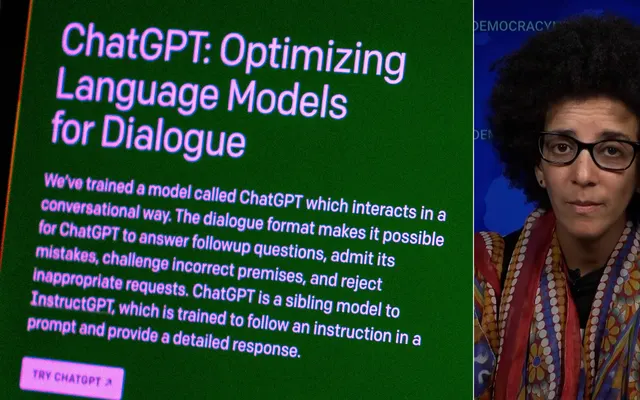
Democracy Now! interview “I’m in the field of AI, and in my field, I would describe it as corporate-driven and sloppy.”
Scientific American interview “It’s just that people came along and decided that they want to build a machine god and then claimed that they are doing it.”
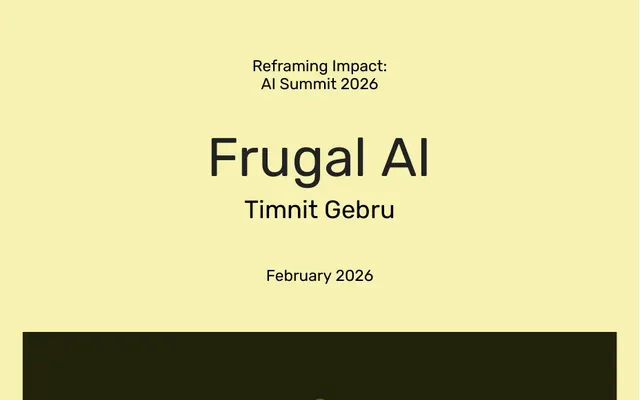
AI Now Institute, Reframing Impact interview “You want to create a specific tool for a specific context.”
AI Now Institute, Reframing Impact interview
Citações literais das fontes indicadas, verificadas em 3 de out. de 2026
Avaliação simulada
Fontes
Artigos, entrevistas e textos usados para fundamentar este usuário simulado.
Direct interview: Gebru criticizes corporate-driven research incentives and weak documentation, and favors independent, community-rooted organizations. Te Hiku Media illustrates her positive alternative: resource-constrained language work and local infrastructure rather than ever-larger general models.

Direct interview. Gebru redirects attention from supposedly rogue machines to their builders, weapons, climate and workers. Her bridge analogy makes accountability concrete; she also challenges corporate mathematical-breakthrough publicity. These are her critiques, not independently established motives.

Interview transcript. Rejects the giant-model paradigm and proposes federated local organizations building smaller tools with well-defined tasks. February is the publication precision provided by the document.

Recent interview reaffirms opposition to exploitative development and support for alternatives.

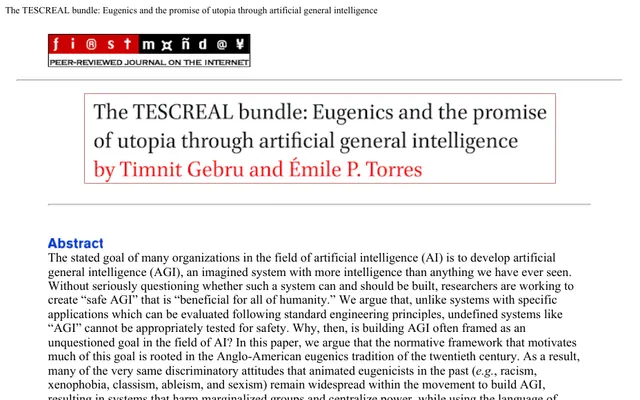
Coauthored with Émile P. Torres; abstract inspected. Argues that undefined AGI cannot be adequately safety-tested and criticizes the ideological assumptions behind the project. Historical conceptual grounding, not a new empirical finding.

Undated institutional project index. Documents community research, data-worker organizing, specific language tools and work on spatial apartheid. Collective work is not exclusively Gebru’s personal research.

Full interview text read. Asked why she calls the “machine-god narrative” a distraction, she says it is more than a distraction: it is harmful. She argues that the funders, founders and investors who stand to profit most from the companies seeded the existential-risk narrative and fund the institutions cited as independent. WIRED’s headline wording is not hers; she gives no probability.

Onde você se situa?
Mapear minha visão de mundo