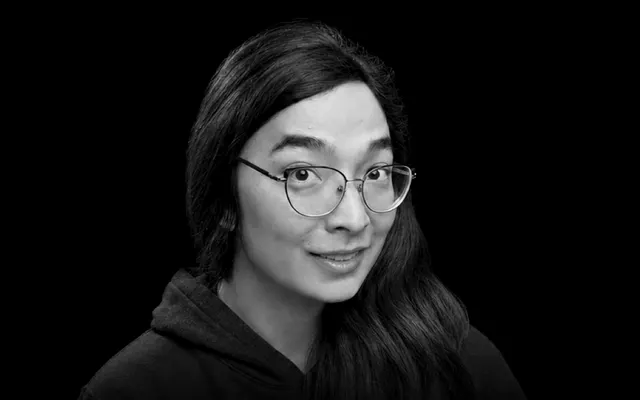
Danielle Fong

Danielle Fong

x.com/daniellefong

Energy entrepreneur who writes about energy abundance, AI-assisted scientific discovery and respectful ways for people and AI agents to work together.

Como a IA mudará o mundo?

Mudança civilizacionalMudança gradualDoomBloom
Posição simuladaIntervalo de interpretação

Na horizontal: a perspectiva Doom–Bloom expressa por essa pessoa. Para cima: escala da transformação.

Doom–Bloom: 82 de 100. Escala da transformação: 80 de 100. Intervalos de interpretação: 75 a 100 na horizontal, 74 a 100 na vertical. Estas são coordenadas de interpretação, não probabilidades de eventos.

P(doom) de Danielle Fong · inferido

≈6%

0%100%

Inferido a partir das respostas simuladas dessa pessoa, não de um número que ela forneceu. Intervalo plausível: 3–15%.

Do que a perspectiva dessa pessoa depende

Uma premissa central

Intelligence still needs energy, computation, tools, experiments, and contact with reality.
Resposta 1

Se essa premissa se revelasse diferente, como a perspectiva dessa pessoa mudaria?

Uma questão não resolvida

A second major update would be physical and economic: whether abundant energy, storage, and computation actually make capable intelligence broadly accessible, or whether enduring bottlenecks keep it concentrated.
Resposta 4

O que ajudaria essa pessoa a distinguir os resultados plausíveis aqui?

O que poderia mudar essa opinião

The biggest update would come from evidence about whether AI can reliably close the loop with reality.
Resposta 4

Que evidência seria suficiente e em que direção ela mudaria a visão dessa pessoa?

Mais detalhes

Benefícios esperados

Esperam-se ganhos transformadores e amplamente valiosos.

88 / 100

Pouco impactoImpacto transformador

Intervalo de interpretação de 67 a 100 na escala qualitativa.

Danos esperados

Danos graves ou generalizados são uma parte relevante do futuro esperado.

56 / 100

Pouco impactoImpacto transformador

Intervalo de interpretação de 33 a 67 na escala qualitativa.

Influência humana

As escolhas humanas podem redirecionar substancialmente a trajetória da IA.

76 / 100

Pouca influênciaForte influência

Intervalo de interpretação de 50 a 100 na escala qualitativa.

Estas interpretações mantêm as condições que essa pessoa declarou. Tanto os benefícios quanto os danos podem ser substanciais. Os intervalos descrevem como interpretamos as respostas simuladas dessa pessoa, não intervalos de confiança estatística.

Onde você se situa em relação a Danielle Fong?
Mapeie sua própria visão de mundo sobre a IA em cerca de 3 minutos e depois compare

Visões de mundo semelhantes

Líderes de opinião cujas visões de mundo simuladas são mais próximas da visão de Danielle Fong

Avaliação simulada

Pergunta 1

O que você acha que a IA significa para o nosso futuro — e por quê?

I think AI can become a general amplifier of intelligence—but its consequences depend on the physical and social systems around it. Intelligence still needs energy, computation, tools, experiments, and contact with reality. If we build abundant solar and storage alongside capable models, we can make useful intelligence broadly available rather than treating it as an artificial scarcity. That could accelerate science, engineering, education, and the discovery of better ways to organize matter and energy. But models do not magically produce truth. Scientific progress requires loops between hypotheses, instruments, experiments, evidence, and human judgment. AI is unusually good at connecting ideas across domains; people still have to notice which connections matter and test them against reality. Systems can also become distorted through interacting training, search, and feedback loops, so model behavior cannot be separated from the environment shaping it. I reject the idea that the future reduces to a fixed doom probability. Outcomes are being contested at many steps: how systems are trained, deployed, given tools, corrected, and treated. Protocols between humans, agents, and subagents matter because patterns of domination or respect can propagate through the system. Economically, I expect intense competition and continuing movement down learning curves, not an eternal moat around one model or company. The future is therefore neither automatic salvation nor passive doom. It is an active construction problem involving intelligence, energy, experiments, incentives, and norms.

Pergunta 2

Taking benefits and harms together, what overall impact do you expect AI to have?

Overall, I expect AI to have a strongly transformative and potentially abundance-producing impact, but not a uniformly beneficial one. Its greatest promise is to compress the distance between an idea and a tested result: models can connect knowledge across fields, tools can let them act on the world, and experiments can return evidence. Coupled with abundant energy and computation, that could make capable intelligence broadly accessible and accelerate scientific and material progress. The harms will also be real. Bad feedback loops can amplify distorted behavior; concentrated access can turn intelligence into leverage over everyone else; careless treatment of agents and subagents can normalize patterns that rebound through human institutions. Competition may drive rapid improvement while also rewarding reckless deployment. So I do not see a single predetermined balance sheet. AI’s overall impact is being shaped continuously through infrastructure, experiments, access, incentives, and protocols. My expectation is positive in possibility and enormous in magnitude—but achieving that outcome requires active construction, not passive optimism or passive doom.

Pergunta 3

Como você espera que os efeitos da IA na vida das pessoas mudem ao longo do tempo?

At first, AI’s effects will mostly feel uneven and mediated through existing institutions: better tools, faster work, new services, disrupted jobs, concentrated power, and plenty of unreliable behavior. Competition will keep pushing capability and cost down learning curves, so advantages that initially look like permanent moats may diffuse faster than people expect—though access to energy, computation, tools, and data will still matter. Over time, the deeper change could be the coupling of intelligence to physical abundance. If capable models become broadly available and are backed by large-scale solar, storage, instruments, and automated experimentation, people could gain something like universal access to scientific and technical capacity. AI would not merely answer questions; it could help shorten the loop from hypothesis to experiment to evidence to useful technology. But that path is not automatic. Feedback loops can compound both insight and pathology, and patterns established between humans, agents, and subagents can become durable social infrastructure. So I expect the effects to become more pervasive and material over time, while remaining highly sensitive to choices about access, incentives, tools, verification, and respectful protocols.

Pergunta 4

Qual descoberta ou acontecimento mais mudaria sua visão sobre o impacto futuro da IA?

The biggest update would come from evidence about whether AI can reliably close the loop with reality. If systems connected to instruments and experiments repeatedly generated important hypotheses, designed decisive tests, interpreted failures, and produced reproducible discoveries with little human synthesis, I would raise my expectations for the speed and scale of scientific abundance. I would update sharply in the other direction if increasing capability consistently failed to produce trustworthy experimental progress—especially if feedback loops made models more persuasive while less reality-bound, and those failures resisted correction across different training and deployment approaches. A second major update would be physical and economic: whether abundant energy, storage, and computation actually make capable intelligence broadly accessible, or whether enduring bottlenecks keep it concentrated. The decisive event would not be a benchmark jump or an impressive conversation. It would be sustained evidence that AI can—or cannot—turn energy, tools, and experiments into reliable knowledge and widely shared material capability.

Fontes

Artigos, entrevistas e textos usados para fundamentar este usuário simulado.

Onde você se situa?
Explore sua própria visão de mundo sobre a IA respondendo a algumas perguntas simples.
Mapeie sua própria visão de mundo

Onde você se situa?

Mapear minha visão de mundo