Pseudonymous account that writes about rapid AI progress and its upside, calls its risks real but manageable and wants labs to share safety work.

Como a IA mudará o mundo?

Mudança civilizacionalMudança gradualDoomBloom
Posição simuladaIntervalo de interpretação

Na horizontal: a perspectiva Doom–Bloom expressa por essa pessoa. Para cima: escala da transformação.

Doom–Bloom: 79 de 100. Escala da transformação: 91 de 100. Intervalos de interpretação: 74 a 100 na horizontal, 75 a 100 na vertical. Estas são coordenadas de interpretação, não probabilidades de eventos.

P(doom) de bayes · inferido

≈10%

0%100%

Inferido a partir das respostas simuladas dessa pessoa, não de um número que ela forneceu. Intervalo plausível: 6–19%.

Do que a perspectiva dessa pessoa depende

Uma premissa central

AI is beginning to improve AI, automated science is accelerating, robotics will have its ChatGPT moment, and algorithmic progress may have several orders of magnitude left.
Resposta 1

Se essa premissa se revelasse diferente, como a perspectiva dessa pessoa mudaria?

Uma questão não resolvida

I don’t have a defensible number.
Resposta 3

O que ajudaria essa pessoa a distinguir os resultados plausíveis aqui?

O que poderia mudar essa opinião

The biggest update would be discovering a hard saturation point: that AI cannot reliably improve AI, automate frontier science, or cross from software into robust robotics and production despite sustained effort.
Resposta 4

Que evidência seria suficiente e em que direção ela mudaria a visão dessa pessoa?

Mais detalhes

Benefícios esperados

Esperam-se ganhos transformadores e amplamente valiosos.

91 / 100

Pouco impactoImpacto transformador

Intervalo de interpretação de 67 a 100 na escala qualitativa.

Danos esperados

Danos graves ou generalizados são uma parte relevante do futuro esperado.

57 / 100

Pouco impactoImpacto transformador

Intervalo de interpretação de 33 a 67 na escala qualitativa.

Influência humana

As escolhas humanas têm uma influência significativa, mas substancialmente limitada.

54 / 100

Pouca influênciaForte influência

Intervalo de interpretação de 45 a 80 na escala qualitativa.

Capacidades esperadas

Espera-se que a IA continue sendo um conjunto de ferramentas limitadas.

Espera-se que a IA se equipare às pessoas na maior parte do trabalho cognitivo.

Posição simulada: Espera-se que a IA supere substancialmente as pessoas no trabalho cognitivo.

Ritmo de desenvolvimento

Interromper ou desacelerar substancialmente o desenvolvimento de uma IA mais capaz.

Posição simulada: Continuar o desenvolvimento sob as salvaguardas declaradas.

Acelerar o desenvolvimento de uma IA mais capaz.

Estas interpretações mantêm as condições que essa pessoa declarou. Tanto os benefícios quanto os danos podem ser substanciais. Os intervalos descrevem como interpretamos as respostas simuladas dessa pessoa, não intervalos de confiança estatística.

Onde você se situa em relação a bayes?
Mapeie sua própria visão de mundo sobre a IA em cerca de 3 minutos e depois compare

Visões de mundo semelhantes

Líderes de opinião cujas visões de mundo simuladas são mais próximas da visão de bayes

Avaliação simulada

Pergunta 1

O que você acha que a IA significa para o nosso futuro — e por quê?

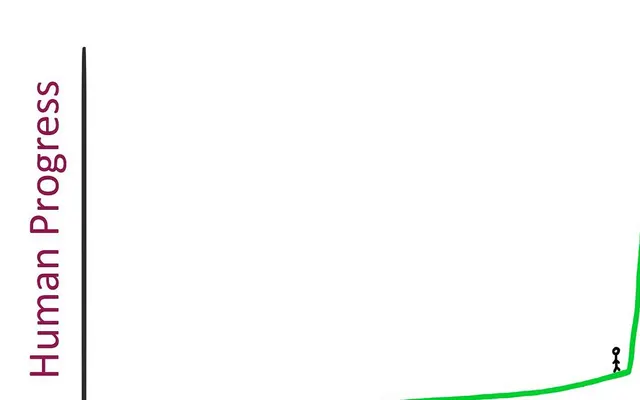
I think we are in early takeoff. AI is beginning to improve AI, automated science is accelerating, robotics will have its ChatGPT moment, and algorithmic progress may have several orders of magnitude left. That could mean industrial takeoff, radical medical progress, abundant goods, and much faster movement through the tech tree. We probably do not need crazy-dangerous general models—or to create a new species—to capture most of that upside. But capabilities are outrunning our ability to bound what happens, from individual models to civilization. Strong instrumental convergence is real at scale, even if I think it is ultimately an engineering skill issue. Cyber, bio, robotics, and other domains may contain zero days we do not understand. And even a verified value-aligned model does not guarantee aligned outcomes, because judging whether its outputs are actually good can remain difficult. The political problem matters just as much. I fear both the technology and a small number of people controlling it. AI could produce abundance while leaving many humans with little economic leverage or agency—a permanent underclass rather than universal destitution. Nationalization could create its own ugly concentration of power. Labs should treat alignment, control, and monitoring research like seatbelts and airbags: public goods, not proprietary advantages. So my default is enormous upside with manageable—but very real—risks. I am not currently for a pause, though its value has risen. The challenge is to get the benefits without RL’ing a demon into existence, racing into a vulnerable world, or building a panopticon to save democracy. Easy little tightrope walk.


Pergunta 2

Setting aside good or bad: how much do you think AI will ultimately change the world—a little, a lot, or completely?

Completely, in the ordinary sense that nearly every institution, industry, and human life will be downstream of it. AI improving AI, automating science, and eventually coupling to robotics and production is not another app cycle; it changes the rate at which civilization moves through the tech tree. That does not mean every human job instantly disappears, or that superintelligence arrives on a date I can name. Robotics and physical scaling may lag, and nobody knows where algorithmic returns saturate. But if even a meaningful fraction of the remaining progress is realized, the cumulative change is civilizational: medicine, production, war, political power, education, and the economic value of human knowledge work all get rewritten. “A lot” undersells it.

Pergunta 3

What’s your rough gut-feel chance that AI causes human extinction or a similarly permanent catastrophe? A number or “no idea” is fine.

I don’t have a defensible number. Nonzero and serious enough to shape engineering and policy, but not my default outcome.

Pergunta 4

Qual descoberta ou acontecimento mais mudaria sua visão sobre o impacto futuro da IA?

The biggest update would be discovering a hard saturation point: that AI cannot reliably improve AI, automate frontier science, or cross from software into robust robotics and production despite sustained effort. That would sharply downgrade my takeoff view. In the other direction, a convincing demonstration of autonomous end-to-end AI research—identifying problems, running experiments, improving algorithms, and repeating the loop with little human help—would upgrade both expected impact and urgency. So would finding a real cyber, bio, or robotics “dragon” in the tech tree: a capability that makes catastrophe or coercive power much easier than defense. On governance, a major lab or state demonstrating genuinely auditable control and monitoring at frontier capability would make me more optimistic. A serious loss-of-control incident, or safety institutions becoming a durable pretext for tyranny, would move me hard the other way.

Fontes

Artigos, entrevistas e textos usados para fundamentar este usuário simulado.

The Overton window is moving

Argues that nationalizing AI labs is not the only option: the government should keep lab staff working while supervising capabilities closely, including embedded intelligence-community staff, which the account calls reasonable. Private labs cannot become sovereign military powers, because the state can simply seize or shut down data centers. Nationalization would hand the state a large share of future means of production, an unhealthy concentration; the account is “not confident” but calls it a bad idea for now. It says people underestimate AI and sees no foreseeable hard bound on capability. Full essay inspected; reader comments excluded.

bayeslord.substack.com
AI optimism is waning

Argues that pro-AI people failed to tell a story of how the future goes well: they swept risks under the rug instead of acknowledging them and accelerating security, botched the datacenter buildout’s public case, and let private investors capture lab returns. A mass bipartisan anti-AI movement is possible, and winning the public needs bold “unconditional functional abundance” while preserving non-panopticon democracy. The account believes the system currently works decently well because humans control capital and most humans are good. Full essay inspected; reader comments excluded.

bayeslord.substack.com
46 thoughts on the near future

An edited version of a June 4 thread saying we are in early takeoff, with perhaps four to seven, maybe up to ten, algorithmic orders of magnitude left, while admitting nobody knows where returns saturate. Expects automated science, robotics breakthroughs and deflation, and calls both “jobs stay high” and “jobs go to zero” predictions overconfident. Warns of an unjust “permanent underclass”, a possibly vulnerable world with unknown zero days, robot coup risks, an end to guaranteed MAD, and tyranny through institutional pressure. Favors some international coordination; says a pause’s value has risen but opposes one “at this time”. Full essay inspected.

bayeslord.substack.com
Onde você se situa?
Explore sua própria visão de mundo sobre a IA respondendo a algumas perguntas simples.
Mapeie sua própria visão de mundo

Onde você se situa?

Mapear minha visão de mundo