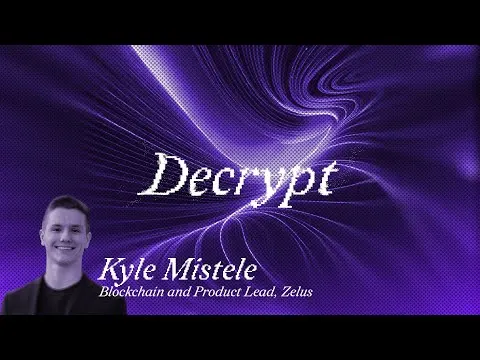
Kyle Mistele

Kyle Mistele

x.com/0xblacklight

Software engineer who writes about configuring coding agents, arguing for focused context, careful harness design and clear security boundaries.

Como a IA mudará o mundo?

Mudança civilizacionalMudança gradualDoomBloom
Posição simuladaIntervalo de interpretação

Na horizontal: a perspectiva Doom–Bloom expressa por essa pessoa. Para cima: escala da transformação.

Doom–Bloom: 50 de 100. Escala da transformação: 52 de 100. Intervalos de interpretação: 45 a 55 na horizontal, 0 a 100 na vertical. Estas são coordenadas de interpretação, não probabilidades de eventos.

P(doom) de Kyle Mistele · inferido

≈4%

0%100%

Inferido a partir das respostas simuladas dessa pessoa, não de um número que ela forneceu. Intervalo plausível: 1–13%.

Do que a perspectiva dessa pessoa depende

Uma premissa central

So the future depends heavily on the systems we build around the models.
Resposta 1

Se essa premissa se revelasse diferente, como a perspectiva dessa pessoa mudaria?

Uma questão não resolvida

At the same time, I don’t think anyone can credibly describe where it will all be in five years, much less attach a defensible numerical probability to catastrophe.
Resposta 1

O que ajudaria essa pessoa a distinguir os resultados plausíveis aqui?

O que poderia mudar essa opinião

The biggest update would come from evidence that models can reliably maintain and improve large, messy systems over time—not just generate impressive code in a clean task.
Resposta 3

Que evidência seria suficiente e em que direção ela mudaria a visão dessa pessoa?

Mais detalhes

Benefícios esperados

Esperam-se benefícios substanciais, com condições importantes ou limites de distribuição.

76 / 100

Pouco impactoImpacto transformador

Intervalo de interpretação de 67 a 100 na escala qualitativa.

Danos esperados

Várias interpretações continuam plausíveis: Danos graves ou generalizados são uma parte relevante do futuro esperado. / Esperam-se danos administráveis ou localizados.

52 / 100

Pouco impactoImpacto transformador

Intervalo de interpretação de 33 a 67 na escala qualitativa.

Influência humana

As escolhas humanas podem redirecionar substancialmente a trajetória da IA.

65 / 100

Pouca influênciaForte influência

Intervalo de interpretação de 44 a 81 na escala qualitativa.

Regras para o uso da IA

Restringir os usos da IA discutidos até que proteções prévias ou uma autorização estejam em vigor.

Posição simulada: Permitir os usos da IA discutidos com responsabilização e proteções específicas.

Minimizar as restrições aos usos da IA discutidos.

Estas interpretações mantêm as condições que essa pessoa declarou. Tanto os benefícios quanto os danos podem ser substanciais. Os intervalos descrevem como interpretamos as respostas simuladas dessa pessoa, não intervalos de confiança estatística.

Onde você se situa em relação a Kyle Mistele?
Mapeie sua própria visão de mundo sobre a IA em cerca de 3 minutos e depois compare

Visões de mundo semelhantes

Líderes de opinião cujas visões de mundo simuladas são mais próximas da visão de Kyle Mistele

Avaliação simulada

Pergunta 1

O que você acha que a IA significa para o nosso futuro — e por quê?

I think AI could be as consequential as fire: not merely another tool, but a new way to build software around meaning, language, and intent. That creates genuinely exciting possibilities. At the same time, I don’t think anyone can credibly describe where it will all be in five years, much less attach a defensible numerical probability to catastrophe. My nearer-term view is shaped by engineering reality. Models are making real progress—especially in difficult debugging and sustained problem-solving—but better generation does not automatically produce better systems. Agents can create complex, low-quality code faster than they can understand or repair the resulting codebase. They can also invent defects during adversarial review, follow malicious instructions in dependencies, or mishandle credentials when trust boundaries are poorly designed. So the future depends heavily on the systems we build around the models. More context is not automatically better; focused context, clear instructions, constrained tools, suitable verification, and deliberate program design matter. Human understanding remains essential, particularly when designing the harness itself. AI may radically expand what software can do, but treating autonomy as a substitute for engineering discipline is a reliable way to compound technical debt and security risk.

Pergunta 2

Taking benefits and harms together, what overall impact do you expect AI to have?

I expect the impact to be enormous, but I don’t think “overall positive” or “overall negative” is a defensible forecast yet. AI can make software far more expressive and help solve difficult problems, and the progress in areas like debugging is real. But it can also accelerate the production of brittle code, technical debt, insecure integrations, and confident but fabricated findings. The important point is that capability alone does not determine impact. The surrounding engineering matters: focused context, carefully designed agent harnesses, explicit trust boundaries, constrained credentials, and verification that depends on human understanding rather than blindly asking another model to review the first one. More autonomy without those controls can amplify failure just as effectively as success. So I expect transformative benefits alongside substantial practical harms. I’m optimistic about what semantic software can enable, but skeptical of both effortless-utopia stories and numerical doom forecasts. The outcome will depend heavily on whether we preserve engineering discipline as generation becomes cheaper and faster.

Pergunta 3

Qual descoberta ou acontecimento mais mudaria sua visão sobre o impacto futuro da IA?

The biggest update would come from evidence that models can reliably maintain and improve large, messy systems over time—not just generate impressive code in a clean task. If autonomous agents could consistently preserve architecture, manage dependencies and credentials, detect real defects without inventing them, and avoid compounding technical debt under realistic conditions, that would make me substantially more optimistic. Conversely, repeated failures despite focused context, constrained tools, explicit trust boundaries, and strong verification would push me toward a more negative view. A dramatic benchmark result would matter less than sustained performance in real codebases, because the central question is whether capability survives contact with accumulated complexity. I’d also change my view if someone developed a credible, testable basis for long-range catastrophe forecasts. But simply assigning a numerical probability is not evidence. The update would need to come from observable mechanisms and predictions that could actually be checked.

Fontes

Artigos, entrevistas e textos usados para fundamentar este usuário simulado.

Onde você se situa?
Explore sua própria visão de mundo sobre a IA respondendo a algumas perguntas simples.
Mapeie sua própria visão de mundo

Onde você se situa?

Mapear minha visão de mundo