Machine learning engineer who builds open tools for fine-tuning image models, sees AI progress as rapid and says alignment and testing still matter.

AIは世界をどのように変えるでしょうか?

文明規模の変化漸進的な変化DoomBloom
シミュレーション上の位置解釈範囲

横軸:その人が表明したDoom–Bloomの見通し。 縦軸:変革の規模。

Doom–Bloom:100点中79。変革の規模:100点中61。解釈範囲:横方向は74から84、縦方向は49から76。これらは解釈上の座標であり、事象の確率ではありません。

Simo RyuのP(doom) · 推定

≈6%

0%100%

本人が示した数値ではなく、シミュレーションされた本人の回答から推定したものです。 妥当と考えられる範囲:3–13%。

その人の見通しを左右するもの

中心的な前提

Capability progress is rapid, and systems that can generate software, adapt models efficiently, and assist research will reduce the cost and time required to test ideas across science, engineering, medicine, and many other fields.
回答1

この前提が実際には異なると判明した場合、その人の見通しはどう変わりますか?

考えを変え得るもの

A decisive demonstration that capability gains do not translate into reliable real-world problem solving would change my view most.
回答4

どのような証拠なら十分で、それによってその人の見解はどちらの方向に変わりますか?

詳細

予想される恩恵

複数の解釈が依然として妥当です:変革をもたらし、広く価値のある恩恵が予想されています。 / 大きな恩恵が予想されていますが、重要な条件や分配上の制約があります。

84 / 100

影響が小さい変革をもたらす影響

質的尺度での解釈範囲は67から100です。

予想される害

対処可能、または局所的な害が予想されています。

41 / 100

影響が小さい変革をもたらす影響

質的尺度での解釈範囲は33から67です。

人間の影響力

人間の選択には意味のある影響力がありますが、大幅に制約されています。

55 / 100

影響力が小さい影響力が大きい

質的尺度での解釈範囲は31から94です。

開発ペース

より高性能なAIの開発を停止するか、大幅に減速させます。

シミュレーション上の位置:明示された安全対策の下で開発を継続します。

より高性能なAIの開発を加速させます。

AI利用のルール

事前の保護措置または許可が整うまで、取り上げられたAIの利用を制限します。

シミュレーション上の位置:対象を絞った説明責任と保護措置を伴う形で、取り上げられたAIの利用を認めます。

取り上げられたAIの利用に対する制限を最小限にします。

これらの解釈では、その人が示した条件が維持されています。恩恵と害は、どちらも大きくなり得ます。この範囲は、統計的な信頼区間ではなく、その人のシミュレーションされた回答をどのように読み取ったかを示すものです。

あなたはSimo Ryuと比べてどの位置でしょうか?
約3分で自分のAIに対する世界観をマッピングして、比較できます

似ている世界観

シミュレーションされた世界観がSimo Ryuの世界観に最も近いオピニオンリーダー

シミュレーション評価

質問1

AIは私たちの未来にとって何を意味すると思いますか?また、なぜそう思いますか?

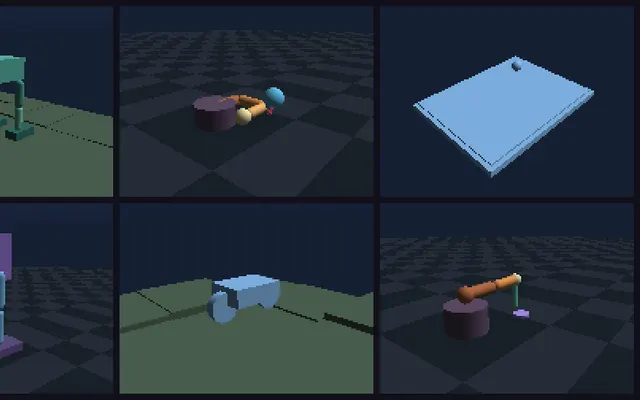
I think AI becomes general-purpose infrastructure for solving human problems, not merely a better chatbot or mathematics engine. Capability progress is rapid, and systems that can generate software, adapt models efficiently, and assist research will reduce the cost and time required to test ideas across science, engineering, medicine, and many other fields. But an impressive experiment is not validated infrastructure. An AI-generated simulator can demonstrate a direction without proving reliability or safety. Likewise, AI may accelerate vaccine discovery or other medical work, while clinical evaluation and trials still determine when patients can safely benefit. Progress does not eliminate verification. The same distinction matters in education. Children should learn fundamentals through real effort and understand how models are built—pretraining, post-training, data, and evaluation—rather than treating AI as a shortcut around thinking. “Prompt engineering” alone is not enough. So I expect major acceleration, potentially toward genuinely general-purpose AI, but alignment and evaluation remain central. The goal should be systems that expand our ability to solve broad human problems while preserving the checks needed wherever failure has serious consequences.


質問2

AIが引き起こすと予想する大きな害があるとすれば、それは何ですか?

The clearest harm is large-scale substitution of plausible output for actual understanding or validation. In education, children can outsource homework during the exact period when struggle is needed to build foundations. They may become skilled at requesting answers without understanding how the answers were produced—or whether they are correct. In technical and medical settings, the analogous failure is deploying an impressive prototype as if it were reliable infrastructure. AI-generated software, simulations, or scientific hypotheses can accelerate experimentation, but errors become dangerous when people skip evaluation. In medicine especially, faster discovery does not remove safety testing and clinical trials. More capable general-purpose systems also make alignment increasingly important. Rapid progress is real, but capability alone does not guarantee that systems behave as intended. I would not attach a numerical probability or pretend to know every resulting failure mode. The practical point is that deployment, evaluation, and safety work must advance with capability rather than being treated as obstacles to progress.

質問3

Taking benefits and harms together, what overall impact do you expect AI to have?

Overall, I expect AI to have a strongly positive impact by becoming general-purpose infrastructure for science, medicine, engineering, software, and other human problems. Rapid capability gains can make experimentation cheaper, compress development cycles, and let more people build specialized tools through accessible models and efficient fine-tuning. That positive outcome is not automatic. Generated software must be tested, medical advances still require safety evaluation and clinical trials, and increasingly general systems make alignment more important—not less. Education also needs care: children should use AI to deepen understanding after learning foundations, not bypass the struggle that creates understanding. So my view is optimistic but implementation-minded. AI can substantially expand what humanity can solve, provided we preserve the distinction between a compelling demonstration and dependable, validated infrastructure.

質問4

どのような発見や出来事があれば、AIが将来もたらす影響についてのあなたの見解が最も大きく変わりますか?

A decisive demonstration that capability gains do not translate into reliable real-world problem solving would change my view most. For example, if increasingly capable models consistently failed when moved from benchmarks and impressive demos into validated scientific, medical, or engineering systems—even with strong evaluation, tooling, and domain oversight—I would revise downward my expectation of broad positive impact. Conversely, repeated evidence that highly capable systems cannot be aligned or controlled under realistic deployment conditions would change the other side of the calculation. A prototype behaving well is not enough; I would care about failures that persist across methods and scale. The key event would therefore not be one flashy benchmark or isolated accident. It would be durable evidence about whether general capability can become dependable infrastructure: systems that solve broad human problems, survive rigorous evaluation, and behave as intended.

出典

このシミュレーション対象者の根拠として使用された記事、インタビュー、著作です。

あなたはどの位置でしょうか?
いくつかの簡単な質問に答えて、自分のAIに対する世界観を探ってみましょう。
自分の世界観をマッピングする

あなたはどの位置でしょうか?

自分の世界観をマッピングする