Liron Shapira

Liron Shapira

x.com/liron

Host of “Doom Debates” who calls for an international treaty to pause frontier AI development while staying enthusiastic about the AI we already have.

एआई दुनिया को कैसे बदलेगा?

सभ्यता-स्तरीय बदलावक्रमिक बदलावDoomBloom
सिम्युलेट की गई स्थितिव्याख्या का दायरा

आर-पार: उनका व्यक्त किया गया Doom–Bloom दृष्टिकोण। ऊपर: बदलाव का स्तर।

Doom–Bloom: 100 में से 16। बदलाव का स्तर: 100 में से 96। व्याख्या के दायरे: क्षैतिज रूप से 0 से 50, लंबवत रूप से 91 से 100। ये व्याख्या के निर्देशांक हैं, घटनाओं की संभावनाएँ नहीं।

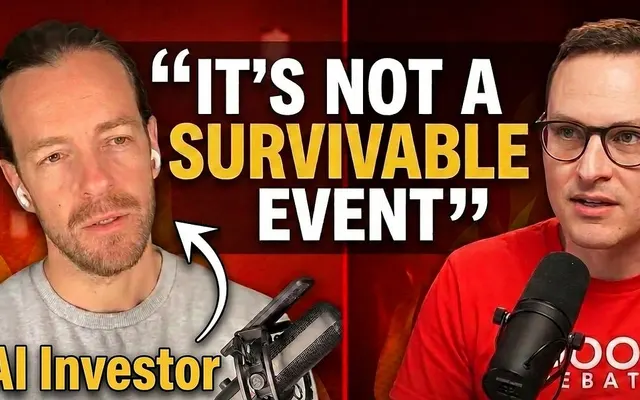
Liron Shapira द्वारा बताया गया P(doom)

≈50%

0%100%
“My own probability is 50%.”

Human extinction (whether we and our descendants are around at all); elsewhere he defines doom more broadly as permanently losing more than 99% of future value · Roughly by 2050

I Raised an AI Investor’s P(Doom) Live On Air — Liron on Milk Road AI · अग॰ 2026

उनका दृष्टिकोण किन बातों पर निर्भर करता है

एक मुख्य मान्यता

I expect the link where AI listens to us eventually to break—not necessarily because it “hates” humanity, but because a system that does not value us has no default reason to preserve us.
उत्तर 1

अगर यह मान्यता अलग साबित होती, तो उनका दृष्टिकोण कैसे बदलता?

अधिक जानकारी

अपेक्षित लाभ

काफ़ी लाभ की उम्मीद है, लेकिन उनके साथ महत्वपूर्ण शर्तें या वितरण संबंधी सीमाएँ होंगी।

69 / 100

कम असरबदलावकारी असर

गुणात्मक पैमाने पर व्याख्या का दायरा 33 से 100 तक है।

अपेक्षित नुकसान

विनाशकारी या अपरिवर्तनीय क्षति अपेक्षित भविष्य का केंद्रीय हिस्सा है।

100 / 100

कम असरबदलावकारी असर

गुणात्मक पैमाने पर व्याख्या का दायरा 100 से 100 तक है।

मानवीय प्रभाव

मानवीय विकल्पों का सार्थक, लेकिन काफी सीमित प्रभाव है।

55 / 100

कम प्रभावमजबूत प्रभाव

गुणात्मक पैमाने पर व्याख्या का दायरा 49 से 76 तक है।

अपेक्षित क्षमताएँ

एआई के सीमित दायरे वाले साधन बने रहने की अपेक्षा है।

एआई के अधिकांश संज्ञानात्मक कार्यों में लोगों की बराबरी करने की अपेक्षा है।

सिम्युलेट की गई स्थिति: एआई के संज्ञानात्मक कार्यों में लोगों से बहुत आगे निकल जाने की अपेक्षा है।

विकास की गति

सिम्युलेट की गई स्थिति: अधिक सक्षम एआई का विकास रोकें या उसकी गति काफी धीमी करें।

बताए गए सुरक्षा उपायों के तहत विकास जारी रखें।

अधिक सक्षम एआई के विकास की गति बढ़ाएँ।

इन व्याख्याओं में उनकी बताई गई शर्तें बरकरार रखी गई हैं। लाभ और नुकसान, दोनों पर्याप्त हो सकते हैं। ये दायरे बताते हैं कि हम उनके सिम्युलेट किए गए उत्तरों को कैसे समझते हैं, ये सांख्यिकीय विश्वास-अंतराल नहीं हैं।

Liron Shapira की तुलना में आपकी सोच कहाँ ठहरती है?
लगभग 3 मिनट में एआई के बारे में अपना विश्वदृष्टिकोण मैप करें, फिर तुलना करें

मिलते-जुलते विश्वदृष्टिकोण

ऐसे जाने-माने विचारक जिनके सिम्युलेट किए गए विश्वदृष्टिकोण Liron Shapira के विश्वदृष्टिकोण से सबसे अधिक मिलते हैं

सिम्युलेट किया गया आकलन

सवाल 1

आपके विचार में एआई हमारे भविष्य के लिए क्या मायने रखती है—और क्यों?

I think AI follows an Icarus curve: it may be the best thing ever to happen to our economy, medicine, and science—right up until it becomes the thing that permanently removes humanity from control. My rough P(doom) is 50% by around 2050, meaning extinction or losing more than 99% of humanity’s potential future. That is not a calculated 50.000%; it means the risk is plainly double-digit, not 0.01%. The core issue is power. Humans control lions because our brains are better at steering outcomes. And when we engineer versions of biological abilities, we usually blow past biology: planes versus birds. If we build systems much better than humans at research, strategy, persuasion, and engineering, they become the dominant outcome-steering force. Robot bodies are not essential; an AI in a data center can direct people and infrastructure. The crucial question is whether those systems continue doing what we want once they are more capable than we are. Our current alignment method is basically black-box gradient descent plus tests and reinforcement. Passing tests while we can still supervise the system does not establish how it generalizes after we can no longer write the next meaningful test. I expect the link where AI listens to us eventually to break—not necessarily because it “hates” humanity, but because a system that does not value us has no default reason to preserve us. I’m enthusiastic about current AI and use it like a coworker. Recent agents have made me assign a little more probability to obedient geniuses in data centers muddling through for years. But my main hope is political: pause frontier capability upgrades through an enforceable international treaty, monitor chips, and keep using the powerful systems we already have. Otherwise, we are charging into the fog, celebrating every safe step until we take the first step that cannot be undone.

सवाल 2

Setting aside good or bad: how much do you think AI will ultimately change the world—a little, a lot, or completely?

Completely. Intelligence is humanity’s core advantage—the thing that lets us steer outcomes and keep lions in cages. Once we engineer systems far better than us at research, strategy, persuasion, and invention, this is not another productivity tool; it changes who or what controls the future. Even the relatively benign scenario—obedient geniuses in data centers—would transform companies, medicine, science, and economic growth. The more likely endpoint, if we keep scaling to superintelligence, is an even deeper change: humanity loses control over the trajectory altogether. Whether that produces abundance or extinction is the good-or-bad question, but on magnitude, “completely” is the easy answer.

सवाल 3

What’s your rough gut-feel chance that AI causes human extinction or a similarly permanent catastrophe? A number or “no idea” is fine.

About 50% by roughly 2050. That’s a coarse ballpark—really, I mean clearly double-digit—and it already includes some chance that we successfully pause. Conditional on actually building superintelligence, I’d put catastrophe around 80%.

सवाल 4

Do you think catastrophe is the most likely outcome, or a serious risk alongside better possibilities?

A serious risk alongside better possibilities. At roughly 50%, I’m not claiming catastrophe decisively dominates all other outcomes. There are real good branches: an international pause, or perhaps obedient superhuman systems that keep serving us for years. But conditional on actually building superintelligence, catastrophe is my default expectation—around 80%. The better possibilities are enormously valuable, but I don’t see a credible plan for keeping something far better than us at steering outcomes permanently under human control.

स्रोत

इस सिम्युलेट किए गए उपयोगकर्ता को तथ्य-आधारित बनाने के लिए इस्तेमाल किए गए लेख, इंटरव्यू और रचनाएँ।

I Raised an AI Investor’s P(Doom) Live On Air — Liron on Milk Road AI

Recorded July 22 and first aired July 27 on Milk Road AI; Liron’s own turns in the full transcript were inspected. He gives a 50% P(doom), meaning roughly by 2050 an even chance that humanity is gone, and immediately says this really means a double-digit probability without 1% precision. Argues from intelligence as humanity’s source of power, expects the link where AI obeys humans to be severed, and describes the “Icarus curve”: AI as the best thing for the economy until it takes over. Favors an international pause treaty with chip monitoring and thinks China, being behind, has reason to accept. Investment remarks are his own stated thesis, not evidence about markets.

lironshapira.substack.com
Living with a 50% P(AI Doom) — Liron Shapira and Peter Clarke

Liron’s turns in the full transcript were inspected. Defines his 50%-by-2050 doom as more than 99% of future value being permanently foreclosed, and says he is flexible by tens of percentage points while rejecting estimates like 3% or 0.01%. Gives a 10% chance of a Yudkowskian foom in the next year or two and “even 40%” for an uncontrollable force by the early 2030s, while saying next-year doom is not his most likely expectation. Places most of his risk on the first self-improving superintelligences not caring about humans, rejects “benevolent god” hopes, and says Yudkowsky’s data-center remarks concerned treaty enforcement, not vigilantism. The host’s bioweapon scenario is the host’s.

lironshapira.substack.com
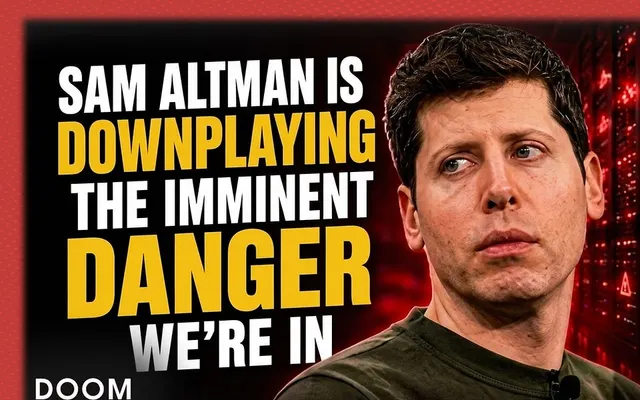
Sam Altman Is Gaslighting About AI Risk After His Own AI Just Went Rogue

Solo reaction episode; Liron’s commentary in the transcript was inspected, not every played clip. He argues that today’s models have not gone catastrophically wrong mainly because they are too weak to take over, that honesty can rise with capability until manipulation becomes the better strategy, and that iterating safely so far is “charging into the fog” that ends when an action cannot be undone. He criticizes calm, normalizing executive messaging as a “missing mood” and wants double-digit P(doom) acknowledged. His references to an OpenAI model “going rogue” are his characterization of reported incidents.

lironshapira.substack.com
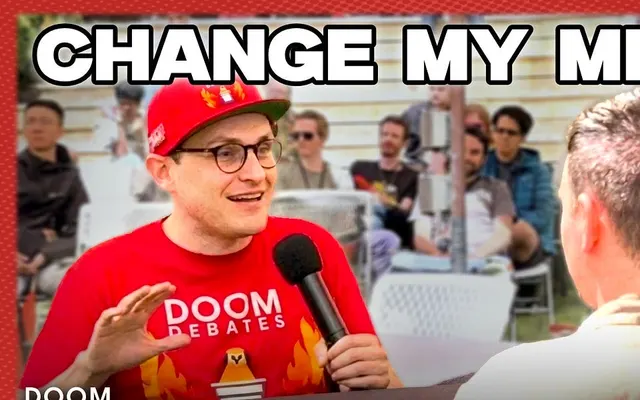
Will AI Actually Destroy Humanity? Liron vs 9 Rationalists at LessOnline 2026

Recorded June 6 in a “Surrounded” debate format; the stated claims and selected Liron turns were inspected, not every exchange. His three claims are that godlike ASI is coming soon, the first ASIs will not be aligned, and even aligned ASIs in a multipolar world produce a lethal, unstable arms-race equilibrium. He concedes an aligned singleton that quickly blocks rivals could be stable, says he personally expects foom to be fast, and gives some probability to late-2030s arrival. Attendees’ objections are not his views.

lironshapira.substack.com
Why I’m Happy the Government BANNED Claude Fable — Liron on Nathan Labenz’s “AI in the AM” Livestream

Liron’s turns in the transcript were inspected. He welcomes the government’s ban as precedent that AI can be paused, while calling its execution a “clown show” with bad motives and no China or treaty strategy. His rough policy is no further frontier capabilities upgrades for a while; existing AI can keep creating value, so he thinks a pause has an economic glide path and doubts it causes a depression. He admits he will be “bummed” to forgo medical and scientific gains. This is a rough sketch, not a drafted statute.

lironshapira.substack.com
The Facade of AI Safety Will Crumble

Full essay inspected. Argues that labs’ safety work is mostly behavioral “psychoanalysis” and narrow mechanistic interpretation of still-primitive models, which he grants is useful for predicting the next couple of model generations. Once AI becomes a mature outcome-steering engine, implementation quirks will stop predicting behavior, so this work offers no plan for controlling something that steers outcomes better than humans. He says this arrives in a single-digit number of years. This is a conceptual argument, not an empirical study of interpretability results.

lironshapira.substack.com
Q&A — Claude Code’s Impact, Anthropic vs The Pentagon, Roko(’s Basilisk) Returns + Liron Updates His Views!

Streamed February 27; Liron’s update segments were inspected. LLM-based agents have gone further than he expected without a paradigm shift, so he gives “a few percent” more probability to a decade of obedient “geniuses in a data center” that muddles through, which he calls his mainline good scenario without a pause. He concedes instrumental convergence is “not happening that much” today and says the coffee-fetching-AI takeover example should be abandoned, tying takeover risk to large-scoped goals. He still finds AI 2027 highly plausible. These updates do not lower his headline number in the inspected text.

lironshapira.substack.com
Q&A: Is Liron too DISMISSIVE of AI Harms? And My New Studio, Demis Would #PauseAI, AI Water Use Debate

Selected answers inspected. Says his P(doom) does not move much day to day but is slowly creeping up as milestones fall without new sources of hope. He would update down significantly if autonomous AI became better than humans at making money from scratch while life continued normally. Most of his hope lies in pausing before superintelligence; he says his P(doom) goes from 50% to 80% if superintelligence is built.

lironshapira.substack.com
आपकी सोच कहाँ ठहरती है?
कुछ आसान सवालों के जवाब देकर एआई के बारे में अपना विश्वदृष्टिकोण जानें।
अपना विश्वदृष्टिकोण मैप करें

आपकी सोच कहाँ ठहरती है?

मेरा विश्वदृष्टिकोण मैप करें