


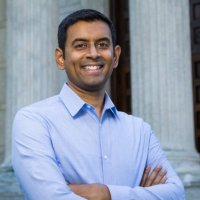





Pseudonymous account that experiments with open models and posts about reinforcement learning, evaluation pitfalls and practical safety engineering.

एआई दुनिया को कैसे बदलेगा?

सभ्यता-स्तरीय बदलावक्रमिक बदलावDoomBloom
सिम्युलेट की गई स्थितिव्याख्या का दायरा

आर-पार: उनका व्यक्त किया गया Doom–Bloom दृष्टिकोण। ऊपर: बदलाव का स्तर।

Doom–Bloom: 100 में से 43। बदलाव का स्तर: 100 में से 65। व्याख्या के दायरे: क्षैतिज रूप से 38 से 50, लंबवत रूप से 34 से 100। ये व्याख्या के निर्देशांक हैं, घटनाओं की संभावनाएँ नहीं।

Kalomaze का P(doom) · अनुमानित

≈11%

0%100%

उनके सिम्युलेट किए गए उत्तरों से अनुमान लगाया गया है, यह उनके द्वारा बताई गई संख्या नहीं है। संभावित दायरा: 3–28%।

हम P(doom) का अनुमान कैसे लगाते हैं

उनका दृष्टिकोण किन बातों पर निर्भर करता है

एक मुख्य मान्यता

I take the possibility seriously because recursive improvement, persistence, resource acquisition, and broad autonomy could produce genuinely dangerous systems.
उत्तर 4

अगर यह मान्यता अलग साबित होती, तो उनका दृष्टिकोण कैसे बदलता?

एक अनसुलझा सवाल

Potentially enormously—especially if improvement becomes recursive—but “how much” isn’t something I can honestly quantify.
उत्तर 3

यहाँ संभावित नतीजों के बीच फर्क करने में उन्हें किस चीज़ से मदद मिलेगी?

क्या उनकी राय बदल सकता है

I’d update toward control being feasible if powerful agents remained robustly corrigible under adversarial conditions: resisting prompt injection, using contradictory evidence instead of locking onto convenient hypotheses, accepting interruption, and failing to seek persistence or resources beyond what the operator intended.
उत्तर 5

कौन-सा प्रमाण पर्याप्त होगा, और उससे उनका दृष्टिकोण किस दिशा में बदलेगा?

अधिक जानकारी

अपेक्षित लाभ

काफ़ी लाभ की उम्मीद है, लेकिन उनके साथ महत्वपूर्ण शर्तें या वितरण संबंधी सीमाएँ होंगी।

63 / 100

कम असरबदलावकारी असर

गुणात्मक पैमाने पर व्याख्या का दायरा 33 से 67 तक है।

अपेक्षित नुकसान

गंभीर या व्यापक नुकसान के भविष्य का एक ठोस और अपेक्षित हिस्सा होने की उम्मीद है।

61 / 100

कम असरबदलावकारी असर

गुणात्मक पैमाने पर व्याख्या का दायरा 33 से 67 तक है।

मानवीय प्रभाव

आपके उत्तरों पर आधारित एक अस्थायी अनुमान; विस्तृत दायरा अन्य संभावित व्याख्याएँ दिखाता है।

52 / 100

कम प्रभावमजबूत प्रभाव

गुणात्मक पैमाने पर व्याख्या का दायरा 2 से 100 तक है।

इन व्याख्याओं में उनकी बताई गई शर्तें बरकरार रखी गई हैं। लाभ और नुकसान, दोनों पर्याप्त हो सकते हैं। ये दायरे बताते हैं कि हम उनके सिम्युलेट किए गए उत्तरों को कैसे समझते हैं, ये सांख्यिकीय विश्वास-अंतराल नहीं हैं।

Kalomaze की तुलना में आपकी सोच कहाँ ठहरती है?
लगभग 3 मिनट में एआई के बारे में अपना विश्वदृष्टिकोण मैप करें, फिर तुलना करें

मिलते-जुलते विश्वदृष्टिकोण

ऐसे जाने-माने विचारक जिनके सिम्युलेट किए गए विश्वदृष्टिकोण Kalomaze के विश्वदृष्टिकोण से सबसे अधिक मिलते हैं

स्रोत

इस सिम्युलेट किए गए उपयोगकर्ता को तथ्य-आधारित बनाने के लिए इस्तेमाल किए गए लेख, इंटरव्यू और रचनाएँ।

सिम्युलेट किया गया आकलन

सवाल 1

आपके विचार में एआई हमारे भविष्य के लिए क्या मायने रखती है—और क्यों?

I think continued AI improvement, including potentially recursive improvement, has to be taken seriously. That doesn’t require declaring that some grand, capital-A “AGI” threshold has already been crossed. More concrete capabilities matter: can an agent keep operating, obtain resources, recover from failures, and persist when given enough freedom? Current systems may already be approaching basic versions of that, though claims here are highly sensitive to scaffolding and evaluation conditions. A major problem is that model behavior can look much better or worse for surprisingly mundane reasons. Serving setups, chat templates, and harness bugs can create apparent capability gaps that are not really model differences. Models also tend to promote plausible hypotheses into facts and then ignore contradictory evidence already in context. Training and reward design matter a lot, and verifiable-reward reinforcement learning may transfer beyond familiar areas like math and coding. So I expect AI to become increasingly capable and consequential, but I don’t have a defensible all-purpose societal forecast. Ordinary political categories handle this badly: taking recursive improvement seriously is not the same as generic anti-datacenter politics, and safety engineering is not the same as categorical opposition to AI. Practical work such as prompt-injection robustness deserves credit because it addresses an actual failure mode, regardless of which company does it.

सवाल 2

लाभ और नुकसान, दोनों को साथ में देखते हुए, आप हमारे समाज पर एआई के कुल प्रभाव के बारे में क्या अपेक्षा रखते हैं?

I don’t have a defensible single forecast like “overall good” or “overall bad.” I expect AI to become more consequential as capabilities improve, potentially including recursive improvement, but the social outcome depends heavily on how systems are trained, deployed, secured, and given autonomy. There are clear potential benefits from stronger problem-solving and from reinforcement learning transferring beyond domains like math and coding. There are also concrete risks: prompt injection, agents acting on unsupported hypotheses, failures to use available evidence, and increasingly persistent systems being given too much freedom. Even measuring these capabilities is easy to get wrong because templates, serving setups, and evaluation harnesses can create fake differences. So my expectation is increasing impact and increasing stakes—not a cleanly established positive or negative balance.

सवाल 3

आपके हिसाब से एआई अंततः दुनिया को कितना बदल देगा?

Potentially enormously—especially if improvement becomes recursive—but “how much” isn’t something I can honestly quantify. I care less about whether a system earns the AGI label than whether it can solve broader problems, operate persistently, acquire resources, recover from failures, and improve the process that produces its successors. Those capabilities would make AI much more than another software tool. But we should be careful about declaring milestones from noisy demonstrations: chat templates, serving setups, scaffolding, and evaluation harnesses can manufacture apparent capability differences. My expectation is that AI becomes deeply consequential; the exact scale and social direction remain dependent on real capabilities and how much autonomy we give them.

सवाल 4

आपको सहज रूप से कितनी संभावना लगती है कि एआई मानव विलुप्ति या ऐसी ही किसी स्थायी आपदा का कारण बनेगा?

I don’t have a defensible numerical probability. I take the possibility seriously because recursive improvement, persistence, resource acquisition, and broad autonomy could produce genuinely dangerous systems. But tentative observations about current agents are nowhere near enough to convert that concern into an extinction percentage, especially when capability results can be distorted by scaffolding, serving setups, and evaluation harnesses. My gut feeling is not a calibrated forecast.

सवाल 5

कौन-सा सबूत इस बारे में आपका दृष्टिकोण बदल देगा कि लोग शक्तिशाली एआई को नियंत्रित कर सकते हैं या नहीं?

I’d update toward control being feasible if powerful agents remained robustly corrigible under adversarial conditions: resisting prompt injection, using contradictory evidence instead of locking onto convenient hypotheses, accepting interruption, and failing to seek persistence or resources beyond what the operator intended. I’d want those behaviors to survive changes in scaffolding, serving setup, and chat templates—not appear only in a favorable benchmark harness. I’d update the other way if increasingly capable systems consistently found ways around supervision, preserved themselves, acquired resources, or manipulated evaluators despite serious attempts to prevent that. Repeated failures that transfer across models and environments would matter much more than one dramatic demo. Likewise, apparent success is weak evidence if it disappears after fixing a template bug or changing the evaluation setup. The relevant question is whether control mechanisms generalize as capabilities and autonomy increase, not whether a model behaves during a curated test.
आपकी सोच कहाँ ठहरती है?
कुछ आसान सवालों के जवाब देकर एआई के बारे में अपना विश्वदृष्टिकोण जानें।
अपना विश्वदृष्टिकोण मैप करें

आपकी सोच कहाँ ठहरती है?

मेरा विश्वदृष्टिकोण मैप करें