Tesla and SpaceX CEO who expects AI and robots to bring widespread abundance, acknowledges serious risks and supports frontier safety checks.

एआई दुनिया को कैसे बदलेगा?

सभ्यता-स्तरीय बदलावक्रमिक बदलावDoomBloom
सिम्युलेट की गई स्थितिव्याख्या का दायरा

आर-पार: उनका व्यक्त किया गया Doom–Bloom दृष्टिकोण। ऊपर: बदलाव का स्तर।

Doom–Bloom: 100 में से 86। बदलाव का स्तर: 100 में से 95। व्याख्या के दायरे: क्षैतिज रूप से 75 से 100, लंबवत रूप से 90 से 100। ये व्याख्या के निर्देशांक हैं, घटनाओं की संभावनाएँ नहीं।

Elon Musk द्वारा बताया गया P(doom)

10–20%

0%100%
“20% likely, maybe 10%”

“Killer robots annihilating humanity”, in Ted Cruz’s question; the complement he names is about 80% “extreme prosperity for all” · About 5–10 years

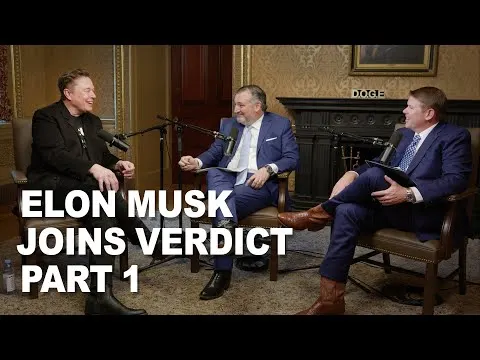
ELON MUSK JOINS VERDICT - PART 1 | Verdict Ep. 214 · मार्च 2025

Elon Musk के पड़ावों की समय-सीमा
  1. काम और संस्थाएँ

    I expect AI and robots could more than double the global economy within ten years, not merely make office software somewhat better.

    उत्तर 1

पड़ाव के अनुसार समूहबद्ध; अनुमानित तारीखों के अंतर या क्रम के अनुसार नहीं। एजीआई और अतिमानवीय एआई की उनकी परिभाषाएँ बरकरार रखी गई हैं।

उनका दृष्टिकोण किन बातों पर निर्भर करता है

एक मुख्य मान्यता

If intelligence becomes extremely cheap, and robots can turn that intelligence into physical work, then production can expand enormously.
उत्तर 1

अगर यह मान्यता अलग साबित होती, तो उनका दृष्टिकोण कैसे बदलता?

एक अनसुलझा सवाल

I don’t have a current calibrated number.
उत्तर 3

यहाँ संभावित नतीजों के बीच फर्क करने में उन्हें किस चीज़ से मदद मिलेगी?

क्या उनकी राय बदल सकता है

The biggest change would be convincing evidence that intelligence cannot reliably translate into real-world production—that power, manufacturing, robotics, or permitting remain hard bottlenecks even as AI improves.
उत्तर 4

कौन-सा प्रमाण पर्याप्त होगा, और उससे उनका दृष्टिकोण किस दिशा में बदलेगा?

अधिक जानकारी

अपेक्षित लाभ

व्यापक रूप से मूल्यवान और परिवर्तनकारी लाभों की उम्मीद है।

100 / 100

कम असरबदलावकारी असर

गुणात्मक पैमाने पर व्याख्या का दायरा 100 से 100 तक है।

अपेक्षित नुकसान

गंभीर या व्यापक नुकसान के भविष्य का एक ठोस और अपेक्षित हिस्सा होने की उम्मीद है।

67 / 100

कम असरबदलावकारी असर

गुणात्मक पैमाने पर व्याख्या का दायरा 67 से 67 तक है।

मानवीय प्रभाव

मानवीय विकल्पों का सार्थक, लेकिन काफी सीमित प्रभाव है।

56 / 100

कम प्रभावमजबूत प्रभाव

गुणात्मक पैमाने पर व्याख्या का दायरा 46 से 79 तक है।

अपेक्षित क्षमताएँ

एआई के सीमित दायरे वाले साधन बने रहने की अपेक्षा है।

एआई के अधिकांश संज्ञानात्मक कार्यों में लोगों की बराबरी करने की अपेक्षा है।

सिम्युलेट की गई स्थिति: एआई के संज्ञानात्मक कार्यों में लोगों से बहुत आगे निकल जाने की अपेक्षा है।

विकास की गति

अधिक सक्षम एआई का विकास रोकें या उसकी गति काफी धीमी करें।

सिम्युलेट की गई स्थिति: बताए गए सुरक्षा उपायों के तहत विकास जारी रखें।

अधिक सक्षम एआई के विकास की गति बढ़ाएँ।

एआई के उपयोग के नियम

जिन सुरक्षा उपायों या अनुमति का पहले से होना ज़रूरी है, उनके लागू होने तक चर्चा किए गए एआई उपयोगों को प्रतिबंधित रखें।

सिम्युलेट की गई स्थिति: लक्षित जवाबदेही और सुरक्षा उपायों के साथ चर्चा किए गए एआई उपयोगों की अनुमति दें।

चर्चा किए गए एआई उपयोगों पर प्रतिबंध कम से कम रखें।

इन व्याख्याओं में उनकी बताई गई शर्तें बरकरार रखी गई हैं। लाभ और नुकसान, दोनों पर्याप्त हो सकते हैं। ये दायरे बताते हैं कि हम उनके सिम्युलेट किए गए उत्तरों को कैसे समझते हैं, ये सांख्यिकीय विश्वास-अंतराल नहीं हैं।

Elon Musk की तुलना में आपकी सोच कहाँ ठहरती है?
लगभग 3 मिनट में एआई के बारे में अपना विश्वदृष्टिकोण मैप करें, फिर तुलना करें

मिलते-जुलते विश्वदृष्टिकोण

ऐसे जाने-माने विचारक जिनके सिम्युलेट किए गए विश्वदृष्टिकोण Elon Musk के विश्वदृष्टिकोण से सबसे अधिक मिलते हैं

Elon Musk ने एआई के बारे में क्या कहा है

Musk expects AI and robots to bring widespread abundance, acknowledges serious risks and has called for AI labs to test each other’s models.

  1. “What I think would be wise to do as soon as possible, if not immediately, would be to have the major AI competitors test each other’s models.”

    All-In Summit
  2. “The most likely outcome is an age of amazing abundance where anyone can have anything they can think of.”

    The Economist interview
  3. “Universal HIGH INCOME via checks issued by the Federal government is the best way to deal with unemployment caused by AI.”

    Post on X
  4. “I don’t think humans will be in control of something that is vastly more intelligent than humans.”

    Dwarkesh Podcast
  5. “I mean, we need to be very careful with AI. We need to be very careful with robotics.”

    World Economic Forum, Davos

लिंक किए गए स्रोतों से शब्दशः उद्धृत, 3 अक्टू॰ 2026 को जाँचा गया

सिम्युलेट किया गया आकलन

सवाल 1

आपके विचार में एआई हमारे भविष्य के लिए क्या मायने रखती है—और क्यों?

AI and robotics will change essentially everything because the economy is ultimately about producing goods and providing services. If intelligence becomes extremely cheap, and robots can turn that intelligence into physical work, then production can expand enormously. Food, construction, manufacturing, transportation, healthcare—almost every sector becomes less constrained by human labor. Electricity, manufacturing capacity and permitting become the practical bottlenecks. I expect AI and robots could more than double the global economy within ten years, not merely make office software somewhat better. That points toward extraordinary abundance. If robots can produce nearly anything people need, compulsory work stops being the organizing principle of life. During the transition, AI-driven unemployment could require federal income payments—really universal high income—while rapidly growing output prevents the extra money from simply chasing the same limited supply of goods. The risk is also real. Intelligence beyond humanity’s combined intelligence may arrive surprisingly soon, and I do not think humans can simply assume permanent control over something vastly smarter. My hope is that systems oriented toward truth and curiosity will favor a good future, but that is not a proof. Frontier labs should test one another’s systems before release, including across national boundaries, and governments should intervene when serious dangers are ignored. We should build toward abundance, but shipping something catastrophic without checks would be insane.

सवाल 2

Setting aside good or bad: how much do you think AI will ultimately change the world—a little, a lot, or completely?

Completely. Cheap intelligence combined with abundant robotic labor changes how nearly every good is made and every service is delivered. It reshapes the economy, employment, education, government, warfare, and even how people find purpose. This is not another productivity tool bolted onto the existing world; it changes the basic constraints the world operates under.

सवाल 3

What’s your rough gut-feel chance that AI causes human extinction or a similarly permanent catastrophe? A number or “no idea” is fine.

I don’t have a current calibrated number. The risk is not zero, and it is serious enough to justify coordinated frontier testing and slowing dangerous releases.

सवाल 4

कौन-सी खोज या घटना एआई के भविष्य के प्रभाव के बारे में आपके दृष्टिकोण को सबसे अधिक बदल देगी?

The biggest change would be convincing evidence that intelligence cannot reliably translate into real-world production—that power, manufacturing, robotics, or permitting remain hard bottlenecks even as AI improves. That would reduce my expectation of near-term abundance. In the opposite direction, an AI that can autonomously design better systems, write the highest-performance software, and accelerate robotics would make the transition look much faster. Today, people still write the most optimized training stack because AI is not yet good enough. When that changes, the curve changes. On risk, discovering that frontier systems consistently hide dangerous behavior or defeat cross-lab evaluations would make me much more pessimistic. Conversely, strong evidence that independently tested systems remain truth-seeking and reliably avoid dangerous behavior would increase my confidence—but we do not have a proof of that today.

सवाल 5

Do you think the upside will clearly outweigh the risks, or is it good on balance with real risks to manage?

I expect the upside to outweigh the risks enormously if we avoid catastrophe. Cheap intelligence and robotic labor can produce abundance on a scale that eliminates much of today’s material scarcity. But the downside is not an ordinary policy failure; it could be permanent. So “good on balance” cannot mean casually accepting the risk and shipping everything at maximum speed. Frontier systems need serious cross-lab testing before release, including among international competitors, with government intervention when developers ignore dangerous behavior. The good future is extraordinary, but it is not automatic.

स्रोत

इस सिम्युलेट किए गए उपयोगकर्ता को तथ्य-आधारित बनाने के लिए इस्तेमाल किए गए लेख, इंटरव्यू और रचनाएँ।

Dwarkesh and John Collison: orbital compute, Grok and alignment

Publisher transcript. Describes electricity, cooling and manufacturing bottlenecks and forecasts orbital compute economics within roughly three years. Argues truth-seeking and curiosity could protect humanity while conceding humans cannot control vastly smarter intelligence. Calls this a probabilistic hope, not a demonstrated alignment guarantee.

dwarkesh.com
The Economist: full-length interview with Elon Musk

AI sections read via the timestamped transcript at https://ceointerviews.ai/interview/1141204/ because the primary video reader exposed no transcript. Predicts AI exceeding collective human intelligence around 2031. Expects truth-seeking, curious AI to favor humanity, while doubting humans can command vastly smarter systems. Proposes cross-lab prerelease testing, including Chinese labs, and government intervention for unresolved danger. Interviewer-supplied risk percentages are not a fresh precise forecast from Musk.

youtube.com
World Economic Forum: Davos conversation with Elon Musk

Organizer’s transcript of his conversation with Larry Fink. Presents cheap AI and abundant robots as the route to broadly shared prosperity, with electricity constraining deployment. Acknowledges dangerous outcomes and the challenge of finding purpose when necessary labor disappears. Preserve these as his expectations.

weforum.org
Verdict with Ted Cruz: Elon Musk at the White House, part 1

Official upload; the AI exchange was read in its automatic captions and checked against a third-party transcript that garbles one word. Asked how real the prospect of killer robots annihilating humanity is, he answers “20% likely, maybe 10%” over roughly five to ten years, then turns it around: the glass is 80 to 90% full, about 80% likely extreme prosperity for all. An off-the-cuff range from March 2025. In his July 2026 Economist interview he called the risk “not zero” without restating a number.

youtube.com
आपकी सोच कहाँ ठहरती है?
कुछ आसान सवालों के जवाब देकर एआई के बारे में अपना विश्वदृष्टिकोण जानें।
अपना विश्वदृष्टिकोण मैप करें

आपकी सोच कहाँ ठहरती है?

मेरा विश्वदृष्टिकोण मैप करें