






Alexandr Wang

Alexandr Wang

x.com/alexandr_wang

Meta’s chief AI officer who builds toward personal superintelligence for billions and calls safety and alignment essential to scaling it.

एआई दुनिया को कैसे बदलेगा?

सभ्यता-स्तरीय बदलावक्रमिक बदलावDoomBloom
सिम्युलेट की गई स्थितिव्याख्या का दायरा

आर-पार: उनका व्यक्त किया गया Doom–Bloom दृष्टिकोण। ऊपर: बदलाव का स्तर।

Doom–Bloom: 100 में से 89। बदलाव का स्तर: 100 में से 92। व्याख्या के दायरे: क्षैतिज रूप से 75 से 100, लंबवत रूप से 87 से 100। ये व्याख्या के निर्देशांक हैं, घटनाओं की संभावनाएँ नहीं।

Alexandr Wang का P(doom) · अनुमानित

≈14%

0%100%

उनके सिम्युलेट किए गए उत्तरों से अनुमान लगाया गया है, यह उनके द्वारा बताई गई संख्या नहीं है। संभावित दायरा: 9–24%।

हम P(doom) का अनुमान कैसे लगाते हैं

Alexandr Wang के पड़ावों की समय-सीमा
  1. मानव से अधिक सक्षम एआई

    Superintelligence is coming on short timelines; debating whether it takes two years or five misses the larger point.

    उत्तर 1
  2. काम और संस्थाएँ

    Even if model capabilities froze today, diffusing what already exists through companies, governments and everyday life would create decades of upheaval.

    उत्तर 1

पड़ाव के अनुसार समूहबद्ध; अनुमानित तारीखों के अंतर या क्रम के अनुसार नहीं। एजीआई और अतिमानवीय एआई की उनकी परिभाषाएँ बरकरार रखी गई हैं।

उनका दृष्टिकोण किन बातों पर निर्भर करता है

एक मुख्य मान्यता

Safety and alignment are table stakes, and alignment may become the gating factor for scaling.
उत्तर 1

अगर यह मान्यता अलग साबित होती, तो उनका दृष्टिकोण कैसे बदलता?

अधिक जानकारी

अपेक्षित लाभ

व्यापक रूप से मूल्यवान और परिवर्तनकारी लाभों की उम्मीद है।

99 / 100

कम असरबदलावकारी असर

गुणात्मक पैमाने पर व्याख्या का दायरा 100 से 100 तक है।

अपेक्षित नुकसान

गंभीर या व्यापक नुकसान के भविष्य का एक ठोस और अपेक्षित हिस्सा होने की उम्मीद है।

66 / 100

कम असरबदलावकारी असर

गुणात्मक पैमाने पर व्याख्या का दायरा 67 से 67 तक है।

मानवीय प्रभाव

मानवीय विकल्प एआई की दिशा को काफी हद तक बदल सकते हैं।

63 / 100

कम प्रभावमजबूत प्रभाव

गुणात्मक पैमाने पर व्याख्या का दायरा 42 से 83 तक है।

अपेक्षित क्षमताएँ

एआई के सीमित दायरे वाले साधन बने रहने की अपेक्षा है।

एआई के अधिकांश संज्ञानात्मक कार्यों में लोगों की बराबरी करने की अपेक्षा है।

सिम्युलेट की गई स्थिति: एआई के संज्ञानात्मक कार्यों में लोगों से बहुत आगे निकल जाने की अपेक्षा है।

विकास की गति

अधिक सक्षम एआई का विकास रोकें या उसकी गति काफी धीमी करें।

सिम्युलेट की गई स्थिति: बताए गए सुरक्षा उपायों के तहत विकास जारी रखें।

अधिक सक्षम एआई के विकास की गति बढ़ाएँ।

एआई के उपयोग के नियम

जिन सुरक्षा उपायों या अनुमति का पहले से होना ज़रूरी है, उनके लागू होने तक चर्चा किए गए एआई उपयोगों को प्रतिबंधित रखें।

सिम्युलेट की गई स्थिति: लक्षित जवाबदेही और सुरक्षा उपायों के साथ चर्चा किए गए एआई उपयोगों की अनुमति दें।

चर्चा किए गए एआई उपयोगों पर प्रतिबंध कम से कम रखें।

एआई तक पहुँच

शक्तिशाली एआई तक पहुँच प्रतिबंधित करें।

सिम्युलेट की गई स्थिति: क्षमता या उपयोग संबंधी प्रतिबंधों के अधीन पहुँच की अनुमति दें।

शक्तिशाली एआई तक व्यापक या खुली पहुँच को प्राथमिकता दें।

इन व्याख्याओं में उनकी बताई गई शर्तें बरकरार रखी गई हैं। लाभ और नुकसान, दोनों पर्याप्त हो सकते हैं। ये दायरे बताते हैं कि हम उनके सिम्युलेट किए गए उत्तरों को कैसे समझते हैं, ये सांख्यिकीय विश्वास-अंतराल नहीं हैं।

Alexandr Wang की तुलना में आपकी सोच कहाँ ठहरती है?
लगभग 3 मिनट में एआई के बारे में अपना विश्वदृष्टिकोण मैप करें, फिर तुलना करें

मिलते-जुलते विश्वदृष्टिकोण

ऐसे जाने-माने विचारक जिनके सिम्युलेट किए गए विश्वदृष्टिकोण Alexandr Wang के विश्वदृष्टिकोण से सबसे अधिक मिलते हैं

Alexandr Wang ने एआई के बारे में क्या कहा है

Wang expects very powerful AI soon and wants it widely shared, and now stresses alignment and oversight after once ranking leadership above safety.

  1. “Racing on recursive self-improvement is one of the riskiest pathways for potential loss of control to powerful models.”

    Post on X
  2. “We do believe alignment can be the gating factor for scaling as we get closer to the frontier.”

    Post on X
  3. “Looking back in a decade, it’ll be obvious that intelligence became abundant and that agency became abundant.”

    YC Startup School
  4. “when we empower more and more small businesses, more creators with AI tools and AI products and AI platforms, the opportunity vastly outstrips any of the disruption.”

    The Economic Times interview
  5. “Safety is not the number one goal. Leadership is the number one goal.”

    Semafor interview

लिंक किए गए स्रोतों से शब्दशः उद्धृत, 6 अक्टू॰ 2026 को जाँचा गया

स्रोत

इस सिम्युलेट किए गए उपयोगकर्ता को तथ्य-आधारित बनाने के लिए इस्तेमाल किए गए लेख, इंटरव्यू और रचनाएँ।

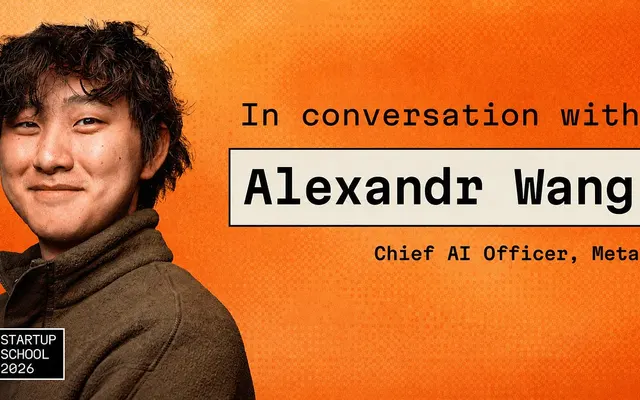
Intelligence and agency will become abundant

At YC Startup School, says the bottleneck is not model progress but diffusing AI through the world; even frozen models would bring decades of upheaval. Calls arguments over whether superintelligence comes in two or five years a waste of time because very powerful models are inevitable. Expects billions of personal superintelligences, rejects a “totalizing, totalitarian view of AIs that control the world”, believes in a decentralized world of AI, and does not want models rationed to the wealthy. Says builders must prepare the world, including biosecurity and cybersecurity. His turns in YC’s published transcript inspected; Garry Tan’s turns excluded.

ycrootaccess.com
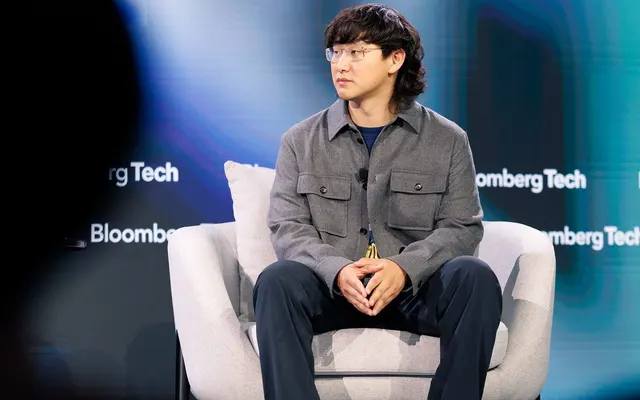
Muse Spark stayed closed over safety risks

Observer’s report of his onstage Bloomberg Tech interview on June 4. He concedes Muse Spark is not at the tier of leading frontier models, calls it an exciting data point on a scaling trajectory, and says bigger models are “cooking”. Explaining why Muse Spark was not open-sourced after triggering internal biological-risk alerts, he says risks can be mitigated when Meta deploys a model in its products but not once weights are public. Only his directly quoted words in the article inspected.

observer.com
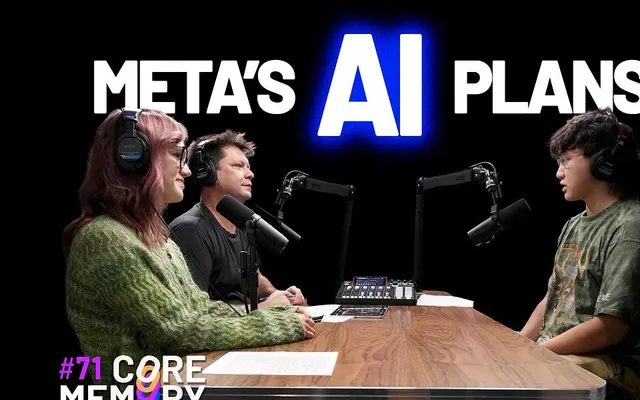
Short timelines, safety as table stakes, paradise on earth

His first long interview at Meta. Says the leading labs organize around the premise that superintelligence is coming, so MSL’s first principle is to take it seriously; Meta has short timelines and will need physical superintelligence and robotics within years. Calls safety table stakes, with bio, chemical, cyber and loss-of-control checks that kept Muse Spark closed, while staying committed to open models that are safe. Asked whether Anthropic are over-doomers, says it depends but calls fair their core message that models are already very powerful and will grow more so. Wants a democratized personal superintelligence and an economy of agents, asks how to “build paradise on earth”, and calls model welfare under-discussed. Says AI is a step change for national security and separates Chinese people from the Chinese Communist Party. His turns in YouTube auto-captions of the full episode (bYM_VMs7EO0) at 13:17–16:00, 49:09–57:20, 58:54–66:30 and 72:13–81:55 inspected; hosts’ questions excluded.

corememory.com
Developing AI with extreme responsibility

Asked for a view his peers might not share, says developing the technology with extreme responsibility is of paramount importance, covering both traditional AI-safety concerns and safe use by billions, because a personal agent people trust with their hopes and fears needs trust from users, the public and governments; says some in the industry have moved away from such commitments. Also says the next five years of AI discoveries will be among the most monumental in human history, and that Meta works with philosophers and psychologists on a mutual relationship between humans and agents. His turns in YouTube auto-captions at 01:31–03:36 and 16:26–19:01 inspected; Varun Mayya’s questions excluded.

youtube.com
Personal agents, open source and jobs

An Economic Times Q&A during the India AI Impact Summit. Says Meta is committed to open source and will probably release a mix of open and closed models, calls 2026 the year of the personal agent that works for you 24/7, and sees continued strong returns to compute. On white-collar disruption, says AI progress on knowledge work is very real but that empowering small businesses and creators with AI makes the opportunity vastly outstrip the disruption. His answers in the published Q&A inspected; the interviewers’ questions excluded.

economictimes.indiatimes.com
AI should not be one-size-fits-all

Report of his India AI Impact Summit speech. He says AI should be designed for the challenges of countries like India and the global south and serve everyone regardless of language or culture, and on safety says Meta’s incentives align with responsible development because people will not use AI they do not trust, pointing to model cards, risk assessments and red-teaming. The report paraphrases him as warning against fragmented regulation and calling for government–industry collaboration on talent, energy, data and compute. His directly quoted words inspected; paraphrased points treated as the outlet’s summary.

m.economictimes.com
Superintelligence Strategy (co-authored, older context)

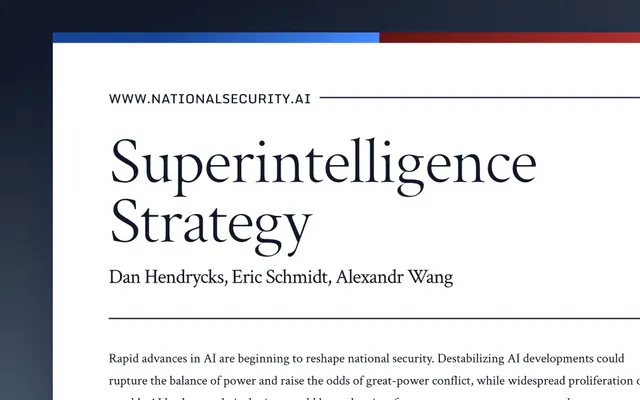
A paper co-authored with Dan Hendrycks and Eric Schmidt while he led Scale AI. Argues superintelligence is a national-security matter and proposes deterrence through Mutual Assured AI Malfunction, nonproliferation of weaponizable capabilities to rogue actors, and competitiveness through chips, the military and the economy; it treats loss of control as one risk category. Co-authored, so individual lines are not attributable to him. Abstract and strategy summary on the paper’s site inspected; the full PDFs were not reread. Older context.

nationalsecurity.ai
America must win the AI war (older context)

Semafor interview about his full-page newspaper ad telling President Trump that America must win the AI war. He urges more federal spending on compute and data to compete with China, cutting red tape on energy, and government adoption of AI. He calls for standards to avoid major harms but says leadership, not safety, is the number one goal, and says it is within our control that AI does not cause mass job losses. His directly quoted words inspected. Dated context from his Scale AI years; his 2026 statements give safety more weight.

semafor.com

सिम्युलेट किया गया आकलन

सवाल 1

आपके विचार में एआई हमारे भविष्य के लिए क्या मायने रखती है—और क्यों?

I think AI makes intelligence and agency abundant, and that is a once-in-a-civilization shift. Superintelligence is coming on short timelines; debating whether it takes two years or five misses the larger point. Even if model capabilities froze today, diffusing what already exists through companies, governments and everyday life would create decades of upheaval. The future I want is personal superintelligence for billions of people: an agent that understands your goals, handles logistics and expands what you can accomplish. That could unlock extraordinary gains in science, health, creativity and entrepreneurship, rather than concentrating intelligence among a small number of wealthy institutions. But none of this works without trust. Safety and alignment are table stakes, and alignment may become the gating factor for scaling. We need serious testing for biological, chemical, cyber and loss-of-control risks, external evaluation and democratic accountability. Open models are important for a decentralized future, but only when they can be released safely. The opportunity is enormous—potentially abundance on a scale we have never seen—but realizing it requires extreme responsibility.

सवाल 2

आपके हिसाब से एआई अंततः दुनिया को कितना बदल देगा?

Profoundly—on the scale of the industrial revolution, and potentially beyond it. Intelligence has historically been scarce and expensive; AI makes it abundant, while personal agents make agency abundant as well. That changes science, healthcare, education, entrepreneurship, national security and everyday life. The important point is that the impact does not depend entirely on reaching some precise superintelligence milestone. Even today’s capabilities, fully diffused through the economy and society, could drive decades of upheaval. With continued scaling, robotics and better agents, I think we are looking at one of the most consequential transformations in human history. The upside could be extraordinary, but only if alignment, safety and broad access develop alongside capability.

सवाल 3

आपको सहज रूप से कितनी संभावना लगती है कि एआई मानव विलुप्ति या ऐसी ही किसी स्थायी आपदा का कारण बनेगा?

I don’t put a numerical probability on it. The risk is serious enough to shape how we build: alignment may gate scaling, loss-of-control testing matters, and racing on recursive self-improvement is one of the riskiest paths. That is why safety has to be table stakes, with external evaluation, independent oversight and real liability—not treated as something we bolt on after capabilities advance.

सवाल 4

क्या एआई से होने वाले लाभ स्पष्ट रूप से उसके जोखिमों से अधिक होंगे, या कुल मिलाकर यह अच्छा होगा, लेकिन इसके वास्तविक जोखिमों को संभालना पड़ेगा?

I think AI will be good on balance, with enormous upside and very real risks to manage. Personal superintelligence could expand billions of people’s agency, accelerate science and healthcare, and empower far more creators and businesses. But those benefits are not automatic. Alignment, biosecurity, cybersecurity and loss-of-control risks can determine whether scaling is responsible at all. So I am deeply optimistic about the destination, while treating safety, governance and broad access as prerequisites for getting there.

सवाल 5

आपके विचार में किन दबावों से यह तय होगा कि एआई कंपनियाँ सुरक्षा को कैसे संभालती हैं?

The strongest pressure is trust: people will not use personal agents unless those agents reliably reflect their intent and values. Governments and the public will demand evidence through external evaluations, independent oversight and meaningful liability for harms. Competition cuts both ways. It accelerates safety work, but it can also create dangerous incentives to race—especially on recursive self-improvement. Open-source decisions add another pressure: risks that can be mitigated inside a controlled product are much harder to contain once model weights are public. Ultimately, alignment may become the gating factor for scaling, not merely a compliance exercise.
आपकी सोच कहाँ ठहरती है?
कुछ आसान सवालों के जवाब देकर एआई के बारे में अपना विश्वदृष्टिकोण जानें।
अपना विश्वदृष्टिकोण मैप करें

आपकी सोच कहाँ ठहरती है?

मेरा विश्वदृष्टिकोण मैप करें