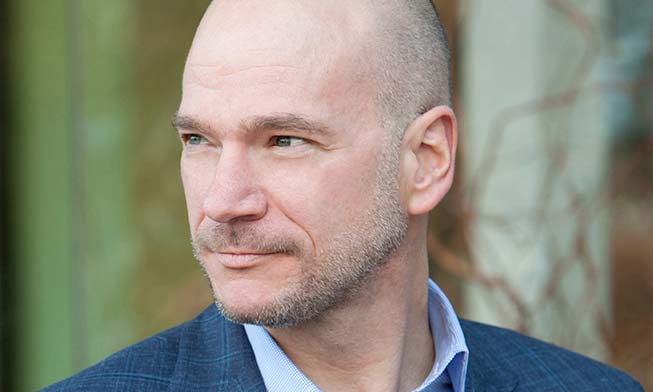









Andrew McAfee

Andrew McAfee

x.com/amcafee

MIT research scientist who expects large benefits from AI and favors broad experimentation, with rules that respond to demonstrated harms.

Comment l’IA changera-t-elle le monde ?

Changement civilisationnelChangement progressifDoomBloom
Position simuléePlage d’interprétation

Horizontalement : sa perspective Doom–Bloom telle qu’il l’a exprimée. Verticalement : ampleur de la transformation.

Doom–Bloom : 89 sur 100. Ampleur de la transformation : 71 sur 100. Plages d’interprétation : de 75 à 100 horizontalement, de 50 à 76 verticalement. Il s’agit de coordonnées d’interprétation, et non de probabilités d’événements.

P(doom) déclaré de Andrew McAfee

≈0%

0%100%
“It’s near zero. Never say never.”

Human extinction caused by AI

AI Emergency Debate — The Diary of a CEO · sept. 2026

L’horizon temporel des jalons de Andrew McAfee
  1. Travail et institutions

    So I expect profound long-run change without assuming that every occupation vanishes or that the whole economy is transformed by 2030.

    Réponse 2

Regroupés par jalon, sans espacement ni classement selon les dates déduites. L’IAG et l’IA surhumaine conservent ses définitions.

Ce dont dépend sa perspective

Une hypothèse centrale

Businesses generally change much more slowly than technology demonstrations suggest.
Réponse 1

Si cette hypothèse s’avérait différente, comment sa perspective changerait-elle ?

Ce qui pourrait faire changer d’avis

Concrete systems that act harmfully and defeat sustained attempts to shut them down would change my assessment substantially.
Réponse 1

Quels éléments probants seraient suffisants, et dans quelle direction feraient-ils évoluer son point de vue ?

Plus de détails

Bénéfices attendus

Des bénéfices transformateurs et largement profitables sont attendus.

95 / 100

Faible impactImpact transformateur

Plage d’interprétation de 67 à 100 sur l’échelle qualitative.

Dommages attendus

Des dommages gérables ou localisés sont attendus.

31 / 100

Faible impactImpact transformateur

Plage d’interprétation de 33 à 33 sur l’échelle qualitative.

Influence humaine

Les choix humains ont une influence significative, mais fortement contrainte.

53 / 100

Faible influenceForte influence

Plage d’interprétation de 40 à 85 sur l’échelle qualitative.

Rythme de développement

Arrêter ou ralentir considérablement le développement d’IA plus performantes.

Position simulée : Poursuivre le développement dans le cadre des mesures de protection annoncées.

Accélérer le développement d’IA plus performantes.

Règles d’utilisation de l’IA

Restreindre les usages de l’IA évoqués jusqu’à la mise en place préalable de mesures de protection ou d’une autorisation.

Position simulée : Autoriser les usages de l’IA évoqués avec des mesures ciblées de responsabilisation et de protection.

Réduire au minimum les restrictions sur les usages de l’IA évoqués.

Ces interprétations conservent les conditions qu’il a énoncées. Les bénéfices et les dommages peuvent tous deux être substantiels. Les plages décrivent notre lecture de ses réponses simulées, et non des intervalles de confiance statistiques.

Où vous situez-vous par rapport à Andrew McAfee ?
Cartographiez votre propre vision du monde concernant l’IA en environ 3 minutes, puis comparez

Visions du monde similaires

Leaders d’opinion dont les visions du monde simulées sont les plus proches de celle de Andrew McAfee

Sources

Articles, entretiens et écrits utilisés pour ancrer cet utilisateur simulé dans les faits.

AI Emergency Debate — The Diary of a CEO

Third-party transcript, McAfee turns only: 00:06:14–07:38 places extinction risk approximately at zero, not impossibility; 00:46:15–47:14 opposes sacrificing benefits to speculative fears; 00:47:21–52:10 would update toward regulation after concrete harmful systems resist shutdown (a hypothetical test, not an incident); 01:36:37–39:41 separates capability progress from catastrophe and emphasizes medical upside. Exclude the host and all other panelists, including their forecasts and allegations.

singjupost.com
Andrew McAfee on AI, jobs, and permissionless innovation

Revised earlier mass-unemployment concerns in light of employment evidence. Expects disruption, including local job losses and damaged apprenticeship routes, while favoring permissionless innovation. Supports intervention for demonstrated externalities such as pollution; does not reject all regulation.

mckinsey.com
Why I Didn't Sign the AI Open Letter

Expects major technical improvement over a decade but questions economy-wide transformation by 2030. Prefers capacity to respond quickly to emerging harms over institutions that preemptively steer innovation. Acknowledges both disruption and improved living standards.

geekway.substack.com
The future of innovation, with Andrew McAfee

Uncertain whether LLMs alone reach AGI. Separates task automation from occupation loss and highlights institutional adoption barriers. Acknowledges possible hiring and sectoral employment damage while favoring experimentation over protection of incumbent jobs.

niskanencenter.org
Why Andrew McAfee thinks AI can save the planet

Interview-derived article from Latitude Studios in partnership with Google, explicitly sponsored content. McAfee expects substantial transformation within a decade and argues AI-driven efficiency and scientific advances can outweigh infrastructure resource costs. These are his expectations, not an independently established net-impact calculation.

latitudemedia.com

Évaluation simulée

Question 1

Selon vous, que signifie l’IA pour notre avenir, et pourquoi ?

I think AI is likely to be a large net positive for our future. It can accelerate scientific discovery, improve medicine, raise productivity, and help us use energy and materials more efficiently. When evaluating its environmental footprint, for example, we should count not only what data centers consume but also the travel, waste, experimentation, and physical resources that better digital systems help us avoid. That optimism is not a claim that every transition will be painless. AI will automate many tasks, but tasks are not occupations. Whether jobs disappear depends on demand, organizational change, regulation, complementary skills, and how quickly institutions adopt new tools. Businesses generally change much more slowly than technology demonstrations suggest. I expect real disruption—including local job losses and weakened entry-level career paths—but the evidence has made me less concerned about permanent mass technological unemployment. I therefore favor broad experimentation and permissionless innovation, combined with practical responses to harms we can actually identify. That can include pollution rules, support for displaced workers, and tested safeguards for autonomous agents. I put extinction risk approximately at zero, though not literally at zero. Rapid capability improvement by itself does not demonstrate catastrophe. Concrete systems that act harmfully and defeat sustained attempts to shut them down would change my assessment substantially. The key distinctions are between technical possibility and economy-wide adoption, between automating tasks and eliminating jobs, and between imaginable harms and demonstrated ones. AI has already exceeded my expectations, but that does not mean every ambitious timeline—or every apocalyptic story—deserves equal confidence.

Question 2

Dans quelle mesure pensez-vous que l’IA finira par changer le monde ?

Enormously—potentially on the scale of the most consequential general-purpose technologies. I expect better science, medicine, education, productivity, and resource efficiency, with substantial gains in living standards. But “ultimately” matters. A striking technical capability is not the same thing as rapid economy-wide transformation. Firms must redesign workflows, workers must learn new roles, institutions must adapt, and complementary investments must be made. Those processes are usually slower and messier than software progress. So I expect profound long-run change without assuming that every occupation vanishes or that the whole economy is transformed by 2030. AI will automate tasks, reshape jobs, create new products, and disrupt some communities and career paths. Demand and adoption constraints will determine how that translates into employment. The likely destination is very different from today; the path there will be uneven, institutionally constrained, and full of benefits and genuine adjustment costs.

Question 3

Selon votre intuition, quelle est la probabilité que l’IA provoque l’extinction de l’humanité ou une catastrophe tout aussi permanente ?

Approximately zero—though not literally zero. Rapid capability progress alone is not evidence that extinction follows. I would update sharply if we saw concrete AI systems acting harmfully and repeatedly defeating serious attempts to monitor, contain, or shut them down. Until then, sacrificing large potential gains in medicine, science, productivity, and living standards to poorly specified catastrophe scenarios strikes me as the wrong tradeoff.

Question 4

Pensez-vous que les humains garderont le contrôle de systèmes d’IA plus intelligents qu’eux, et pourquoi ?

Yes, I expect people to retain meaningful control, although “smarter than humans” is too vague to settle the issue. A system can outperform us across many cognitive tasks without acquiring independent goals, control over critical infrastructure, or an ability to resist shutdown. Capability and autonomy are different, and neither automatically implies catastrophe. Control will also come from layers outside the model: limited permissions, monitoring, behavior-derived guardrails, institutional rules, and the ability to disconnect systems from resources and networks. I do not claim that any one safeguard solves every future control problem, but practical safeguards can be developed and tested as systems become more capable. What would change my mind is concrete evidence of harmful autonomy: systems persistently deceiving operators, acquiring resources or access against instructions, and defeating sustained efforts to contain or shut them down. That would justify a much stronger response. But I do not think intelligence alone establishes that such a loss of control is likely.
Où vous situez-vous ?
Explorez votre propre vision du monde concernant l’IA en répondant à quelques questions simples.
Cartographiez votre propre vision du monde

Où vous situez-vous ?

Cartographier ma vision du monde