


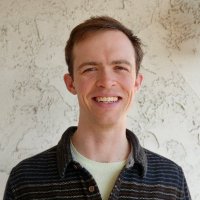

Will Brown

Will Brown

x.com/willcb

AI researcher who builds open reinforcement-learning environments and evaluation tools for agents and favors open, widely distributed AI development.

¿Cómo cambiará la IA el mundo?

Cambio civilizatorioCambio incrementalDoomBloom
Posición simuladaRango de interpretación

Horizontal: su perspectiva Doom–Bloom expresada. Vertical: escala de la transformación.

Doom–Bloom: 53 de 100. Escala de la transformación: 64 de 100. Rangos de interpretación: de 48 a 75 en horizontal y de 49 a 76 en vertical. Son coordenadas de interpretación, no probabilidades de eventos.

P(doom) de Will Brown · inferido

≈9%

0%100%

Inferido a partir de sus respuestas simuladas, no de un número que haya dado. Rango plausible: 3–24%.

Cómo estimamos P(doom)

De qué depende su perspectiva

Un supuesto central

So I expect AI to be highly consequential and technically productive, but whether its overall social impact is positive depends heavily on whether capabilities and control become broadly distributed or dangerously concentrated.
Respuesta 2

Si este supuesto resultara distinto, ¿cómo cambiaría su perspectiva?

Una pregunta sin resolver

But I would not attach a precise magnitude or timeline to that claim.
Respuesta 3

¿Qué le ayudaría a distinguir aquí entre los desenlaces plausibles?

Más detalles

Beneficio esperado

Se esperan beneficios sustanciales, con condiciones importantes o límites en su distribución.

67 / 100

Poco impactoImpacto transformador

Rango de interpretación de 67 a 67 en la escala cualitativa.

Daño esperado

Se espera que los daños graves o generalizados sean una parte significativa del futuro.

59 / 100

Poco impactoImpacto transformador

Rango de interpretación de 33 a 67 en la escala cualitativa.

Influencia humana

Las decisiones humanas pueden redirigir sustancialmente la trayectoria de la IA.

66 / 100

Poca influenciaInfluencia fuerte

Rango de interpretación de 46 a 79 en la escala cualitativa.

Ritmo de desarrollo

Detener o frenar considerablemente el desarrollo de IA más capaz.

Posición simulada: Continuar el desarrollo con las salvaguardas indicadas.

Acelerar el desarrollo de IA más capaz.

Reglas para usar la IA

Restringir los usos de la IA mencionados hasta que existan protecciones o permisos previos.

Posición simulada: Permitir los usos de la IA mencionados con rendición de cuentas y protecciones específicas.

Reducir al mínimo las restricciones a los usos de la IA mencionados.

Acceso a la IA

Restringir el acceso a la IA potente.

Permitir el acceso con restricciones de capacidad o de uso.

Posición simulada: Favorecer un acceso amplio o abierto a la IA potente.

Estas interpretaciones conservan las condiciones que se indicaron. Los beneficios y los daños pueden ser considerables a la vez. Los rangos describen cómo leemos sus respuestas simuladas, no intervalos de confianza estadísticos.

¿Dónde te ubicas frente a Will Brown?
Mapea tu propia visión de la IA en unos 3 minutos y luego compárala

Visiones similares

Líderes de opinión cuyas visiones simuladas son las más cercanas a la de Will Brown

Fuentes

Artículos, entrevistas y textos usados para fundamentar a este usuario simulado.

Evaluación simulada

Pregunta 1

¿Qué crees que significa la IA para nuestro futuro y por qué?

I expect AI progress to continue across many labs, with increasingly capable agents shaped by reinforcement learning, better environments, and more useful evaluation. Even messy tasks without deterministic answers can be improved through model-based judging, orchestration, and review. Models may also help repair flawed training data, creating practical feedback loops for further capability gains. But the structure of that progress matters as much as the raw capabilities. My preferred future is slower and more diffuse: open, distillable models and specialized systems that distribute knowledge and power. A race among a few capital-rich actors for overwhelming economic or geopolitical advantage seems darker and less safe. Many organizations will likely pursue something they call superintelligence, so broad claims about restraint need concrete operational meaning—what changes in training, deployment, evaluation, or release practices? I don’t think my technical work alone settles questions like extinction risk or the correct policy regime. What it does suggest is that environments, feedback, and verification are important levers, and that accessible infrastructure can broaden who gets to investigate and improve these systems rather than leaving the future to a handful of frontier labs.

Pregunta 2

Considerando en conjunto los beneficios y los daños, ¿qué impacto general esperas que tenga la IA en nuestra sociedad?

I don’t have a confident single-sign forecast. I expect substantial benefits from more capable agents: useful specialized systems, better tools for research and knowledge work, and feedback loops where models help evaluate outputs or repair flawed data. Open environments and accessible evaluations could also let more people contribute to progress rather than merely consume systems built elsewhere. At the same time, the distribution of power may dominate the aggregate outcome. Slow, diffuse progress with open, distillable models looks much better to me than a race in which a few capital-rich organizations seek overwhelming economic or geopolitical advantage. Since many labs will pursue increasingly general systems, vague commitments to restraint are not enough; their real impact depends on concrete changes to development, evaluation, deployment, and release practices. So I expect AI to be highly consequential and technically productive, but whether its overall social impact is positive depends heavily on whether capabilities and control become broadly distributed or dangerously concentrated. My work gives me more confidence about practical routes to improving agents than about assigning society’s eventual outcome a simple positive or negative label.

Pregunta 3

¿Cuánto crees que la IA acabará cambiando el mundo?

I think it will change the world substantially. Capable agents could reshape research, software, knowledge work, and many other tasks, especially as reinforcement learning, evaluations, and model-assisted review create stronger improvement loops. But I would not attach a precise magnitude or timeline to that claim. The deepest change may be institutional rather than purely technical: who can build, adapt, and control these systems. Open, distillable models and specialized agents could diffuse capability across many people and organizations. Conversely, concentrated frontier development could give a few actors extraordinary economic and geopolitical power. So I expect large change, but its character depends heavily on whether progress remains broad and accessible or becomes concentrated in a race for dominance.

Pregunta 4

¿Cuál es tu estimación intuitiva de la probabilidad de que la IA cause la extinción humana o una catástrofe permanente similar?

I don’t have a defensible numerical estimate. My technical work on reinforcement learning, environments, and evaluation does not establish an extinction probability. I do see reasons to worry about permanent catastrophe when increasingly capable systems are developed through a concentrated geopolitical race, especially if a few actors seek overwhelming advantage. That concern supports concrete evaluation, oversight, and scrutiny of development and deployment practices, but it should not be converted into a made-up percentage. I’m more confident that concentrated power and racing make the future darker and less safe than I am about any precise extinction forecast.
¿Dónde te ubicas?
Explora tu propia visión de la IA respondiendo unas pocas preguntas sencillas.
Mapea tu propia visión de la IA

¿Dónde te ubicas?

Mapear mi visión de la IA