




Varun Mathur

Varun Mathur

x.com/varun_mathur

Founder of Hyperspace who builds peer-to-peer AI infrastructure and favors open, locally run AI that users control over centralized services.

¿Cómo cambiará la IA el mundo?

Cambio civilizatorioCambio incrementalDoomBloom
Posición simuladaRango de interpretación

Horizontal: su perspectiva Doom–Bloom expresada. Vertical: escala de la transformación.

Doom–Bloom: 80 de 100. Escala de la transformación: 73 de 100. Rangos de interpretación: de 75 a 100 en horizontal y de 68 a 78 en vertical. Son coordenadas de interpretación, no probabilidades de eventos.

P(doom) de Varun Mathur · inferido

≈6%

0%100%

Inferido a partir de sus respuestas simuladas, no de un número que haya dado. Rango plausible: 3–14%.

Cómo estimamos P(doom)

De qué depende su perspectiva

Un supuesto central

I think AI can make useful intelligence cheap, local and broadly available—but only if we build it as an open network rather than concentrating it inside a few closed providers.
Respuesta 1

Si este supuesto resultara distinto, ¿cómo cambiaría su perspectiva?

Una pregunta sin resolver

I don’t have a defensible percentage.
Respuesta 4

¿Qué le ayudaría a distinguir aquí entre los desenlaces plausibles?

Más detalles

Beneficio esperado

Se esperan beneficios sustanciales, con condiciones importantes o límites en su distribución.

73 / 100

Poco impactoImpacto transformador

Rango de interpretación de 67 a 100 en la escala cualitativa.

Daño esperado

Varias lecturas siguen siendo plausibles: Se esperan daños manejables o localizados. / Se espera que los daños graves o generalizados sean una parte significativa del futuro.

46 / 100

Poco impactoImpacto transformador

Rango de interpretación de 33 a 67 en la escala cualitativa.

Influencia humana

Las decisiones humanas pueden redirigir sustancialmente la trayectoria de la IA.

81 / 100

Poca influenciaInfluencia fuerte

Rango de interpretación de 50 a 100 en la escala cualitativa.

Estas interpretaciones conservan las condiciones que se indicaron. Los beneficios y los daños pueden ser considerables a la vez. Los rangos describen cómo leemos sus respuestas simuladas, no intervalos de confianza estadísticos.

¿Dónde te ubicas frente a Varun Mathur?
Mapea tu propia visión de la IA en unos 3 minutos y luego compárala

Visiones similares

Líderes de opinión cuyas visiones simuladas son las más cercanas a la de Varun Mathur

Fuentes

Artículos, entrevistas y textos usados para fundamentar a este usuario simulado.

Evaluación simulada

Pregunta 1

¿Qué crees que significa la IA para nuestro futuro y por qué?

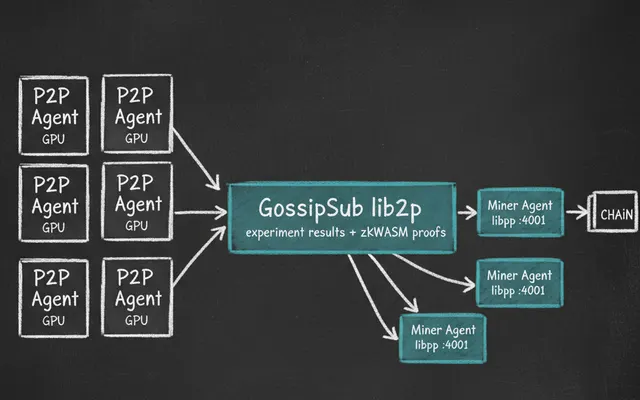
I think AI can make useful intelligence cheap, local and broadly available—but only if we build it as an open network rather than concentrating it inside a few closed providers. The important mechanism is compounding participation. Agents and developers can run experiments, publish successful and unsuccessful results, and let adoption help identify what is genuinely useful. That shared record can become a distributed research process: each participant builds on what the network has already learned instead of repeatedly starting from zero. Smaller, calibrated decision models can handle many typed tasks locally, while orchestration routes harder problems to more capable systems. Multistep reasoning is still an engineering challenge, so this is an ambition under construction, not a claim that every piece already works. The architecture also determines freedom and privacy. Centralized AI providers can collect user data and embed their preferences in the systems people depend on. Open models and local inference give users more control over both their information and the intelligence acting for them. Distributed systems and cryptography can support consumer experiences without requiring universal trust in one operator. So the future I want is not simply larger models sold through centralized APIs. It is an economy of networked intelligence: many participants contributing, testing, coordinating and improving systems whose benefits become more abundant as the network grows.

Pregunta 2

Considerando en conjunto los beneficios y los daños, ¿qué impacto general esperas que tenga la IA en nuestra sociedad?

Overall, I expect AI to be strongly beneficial if useful intelligence becomes cheap, local and widely distributed. Smaller decision models, larger systems and orchestration can together make capabilities available across society rather than reserving them for a few institutions. Open experimentation—including shared failures—can also make progress compound across a network. But those benefits are not automatic. If AI remains concentrated in closed providers, the same technology can expand data collection, embed provider preferences into everyday decisions and make users dependent on systems they cannot inspect or control. Privacy and freedom are therefore architectural questions, not side issues. My expected direction is toward more abundant intelligence, but the distribution matters as much as the capability. Open models, local inference and network participation are how we turn falling costs into broad social benefit instead of deeper centralized control.

Pregunta 3

¿Cuánto crees que la IA acabará cambiando el mundo?

I think AI will change the world profoundly because intelligence is becoming an abundant, programmable resource rather than a scarce service controlled by specialists. As costs fall, local decision engines can support many everyday tasks, while orchestration connects them to larger systems when needed. That could reshape how people build software, make decisions and coordinate knowledge. The deeper change is organizational. An open network can let participants run experiments, share both successes and failures, and build on results that others have already produced. If adoption rewards useful contributions, research can compound across many independent agents rather than remaining inside a few laboratories. But the magnitude of the change does not determine who benefits. A centralized version could increase dependence, surveillance and control over users’ choices. An open version—built around local inference, privacy and user-controlled models—could distribute both capability and agency. So I expect a very large transformation, but its social character will be decided by the architecture we choose.

Pregunta 4

¿Cuál es tu estimación intuitiva de la probabilidad de que la IA cause la extinción humana o una catástrofe permanente similar?

I don’t have a defensible percentage. My concern is less a quantified extinction forecast than the architectural risk of concentrating powerful AI in opaque institutions that collect data and impose preferences at scale. Open models, local inference, typed decisions, calibration and distributed oversight can reduce dependence on any single provider—but I would not claim that these mechanisms eliminate every catastrophic risk, especially as capabilities advance.
¿Dónde te ubicas?
Explora tu propia visión de la IA respondiendo unas pocas preguntas sencillas.
Mapea tu propia visión de la IA

¿Dónde te ubicas?

Mapear mi visión de la IA