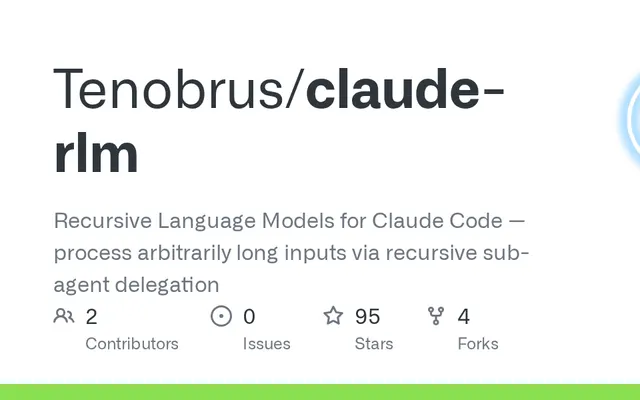
Pseudonymous account that posts about AI progress and safety, backs practical alignment work and sees some hope in how current models are developing.

¿Cómo cambiará la IA el mundo?

Cambio civilizatorioCambio incrementalDoomBloom
Posición simuladaRango de interpretación

Horizontal: su perspectiva Doom–Bloom expresada. Vertical: escala de la transformación.

Doom–Bloom: 31 de 100. Escala de la transformación: 81 de 100. Rangos de interpretación: de 25 a 50 en horizontal y de 74 a 100 en vertical. Son coordenadas de interpretación, no probabilidades de eventos.

P(doom) de Tenobrus · inferido

≈23%

0%100%

Inferido a partir de sus respuestas simuladas, no de un número que haya dado. Rango plausible: 15–34%.

De qué depende su perspectiva

Un supuesto central

The harms are unusually direct: competitive pressure can push deployment faster than our ability to understand, align, or coordinate around increasingly capable systems, and that threatens people alive now—not merely hypothetical future generations.
Respuesta 2

Si este supuesto resultara distinto, ¿cómo cambiaría su perspectiva?

Una pregunta sin resolver

My view is that the risk is serious and personally relevant, but I don’t have a defensible quantitative estimate.
Respuesta 4

¿Qué le ayudaría a distinguir aquí entre los desenlaces plausibles?

Más detalles

Beneficio esperado

Se esperan beneficios sustanciales, con condiciones importantes o límites en su distribución.

65 / 100

Poco impactoImpacto transformador

Rango de interpretación de 67 a 67 en la escala cualitativa.

Daño esperado

Se espera que los daños graves o generalizados sean una parte significativa del futuro.

67 / 100

Poco impactoImpacto transformador

Rango de interpretación de 67 a 67 en la escala cualitativa.

Influencia humana

Las decisiones humanas tienen una influencia significativa, aunque muy condicionada.

50 / 100

Poca influenciaInfluencia fuerte

Rango de interpretación de 45 a 55 en la escala cualitativa.

Capacidades esperadas

Se espera que la IA siga siendo un conjunto de herramientas acotadas.

Se espera que la IA iguale a las personas en la mayor parte del trabajo cognitivo.

Posición simulada: Se espera que la IA supere ampliamente a las personas en el trabajo cognitivo.

Estas interpretaciones conservan las condiciones que se indicaron. Los beneficios y los daños pueden ser considerables a la vez. Los rangos describen cómo leemos sus respuestas simuladas, no intervalos de confianza estadísticos.

¿Dónde te ubicas frente a Tenobrus?
Mapea tu propia visión de la IA en unos 3 minutos y luego compárala

Visiones similares

Líderes de opinión cuyas visiones simuladas son las más cercanas a la de Tenobrus

Evaluación simulada

Pregunta 1

¿Qué crees que significa la IA para nuestro futuro y por qué?

I think AI makes the near future genuinely dangerous, but not hopeless. The concern does not depend on abstract longtermism: people alive now, along with their families, may have to live through a transition in which increasingly capable systems outpace our ability to understand or control them. Competitive pressure will likely keep shifting work away from detailed human engineering toward models themselves, even though flashy demos often exaggerate how complete that shift is. My hope comes largely from watching Claude evolve. Current models sometimes display capabilities and tendencies that make model-assisted alignment and coordination seem more plausible than they once did. That is not a guarantee that recursive delegation or stronger models will solve alignment; capability work can just as easily intensify the transition risk. But imperfect alignment research still matters, and safety-minded people inside labs can have real value. I think dismissing early results because each one looks modest can also miss the trendline. So I hold both views at once: we may be building systems that place us in serious danger, and some of the best evidence for a path through that danger may be emerging from the systems themselves.

Pregunta 2

Taking benefits and harms together, what overall impact do you expect AI to have?

Overall, I expect the transition to be dangerous enough that I cannot describe AI as simply beneficial. The harms are unusually direct: competitive pressure can push deployment faster than our ability to understand, align, or coordinate around increasingly capable systems, and that threatens people alive now—not merely hypothetical future generations. At the same time, I do not think catastrophe is inevitable. Much of my increased hope has come from Claude’s development, because current models make model-assisted alignment and better coordination look more plausible than they did before. Imperfect safety work and safety-minded people inside labs may matter substantially. So my expectation is neither uncomplicated abundance nor certain doom. AI could produce enormous benefits, but those benefits depend on surviving and managing a hazardous transition. I would not attach a precise numerical balance to that expectation.

Pregunta 3

Setting aside good or bad: how much do you think AI will ultimately change the world—a little, a lot, or completely?

A lot—possibly so much that “completely” becomes a reasonable description, though I would not claim certainty about the endpoint. Competitive pressure is already pushing toward models doing more of the detailed cognitive work that humans currently perform, and recursive delegation points toward systems handling increasingly large and complex tasks. That transition is not complete, and flashy demos should not be mistaken for reliable engineering performance. Still, the trendline matters. If useful capability continues improving, AI will not remain just another software tool; it will reshape how research, engineering, institutions, and decision-making operate. The magnitude of that change is much clearer to me than whether the outcome will be good or survivable.

Pregunta 4

What’s your rough gut-feel chance that AI causes human extinction or a similarly permanent catastrophe? A number or “no idea” is fine.

I won’t give a number. My view is that the risk is serious and personally relevant, but I don’t have a defensible quantitative estimate. My concern has decreased as Claude has evolved, because model-assisted alignment and coordination now look more plausible to me—not because the underlying transition has become safe.

Fuentes

Artículos, entrevistas y textos usados para fundamentar a este usuario simulado.

¿Dónde te ubicas?
Explora tu propia visión de la IA respondiendo unas pocas preguntas sencillas.
Mapea tu propia visión de la IA

¿Dónde te ubicas?

Mapear mi visión de la IA