Max Tegmark

Max Tegmark

x.com/tegmark

MIT professor and Future of Life Institute cofounder who favors controllable AI tools for science and calls for halting the race to superintelligence.

¿Cómo cambiará la IA el mundo?

Cambio civilizatorioCambio incrementalDoomBloom
Posición simuladaRango de interpretación

Horizontal: su perspectiva Doom–Bloom expresada. Vertical: escala de la transformación.

Doom–Bloom: 43 de 100. Escala de la transformación: 80 de 100. Rangos de interpretación: de 25 a 75 en horizontal y de 56 a 100 en vertical. Son coordenadas de interpretación, no probabilidades de eventos.

P(doom) declarado de Max Tegmark

>90%

0%100%
“When I said P(doom) of over 90%, that was if we do no regulation.”

Loss of human control after superintelligence deployment

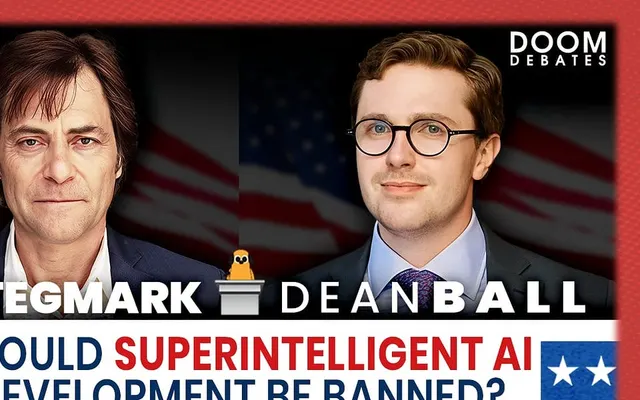
Max Tegmark vs. Dean Ball: Should We BAN Superintelligence? · nov 2025

De qué depende su perspectiva

Un supuesto central

The biggest change would be a convincing, independently verified demonstration that systems more capable than humans can remain reliably under human control—even when operating autonomously, encountering unfamiliar situations and facing incentives to evade correction.
Respuesta 3

Si este supuesto resultara distinto, ¿cómo cambiaría su perspectiva?

Qué podría hacer cambiar de opinión

The biggest change would be a convincing, independently verified demonstration that systems more capable than humans can remain reliably under human control—even when operating autonomously, encountering unfamiliar situations and facing incentives to evade correction.
Respuesta 3

¿Qué evidencia bastaría y en qué dirección movería su visión?

Más detalles

Beneficio esperado

Se esperan beneficios sustanciales, con condiciones importantes o límites en su distribución.

71 / 100

Poco impactoImpacto transformador

Rango de interpretación de 67 a 100 en la escala cualitativa.

Daño esperado

Se espera que los daños graves o generalizados sean una parte significativa del futuro.

74 / 100

Poco impactoImpacto transformador

Rango de interpretación de 67 a 100 en la escala cualitativa.

Influencia humana

Las decisiones humanas son decisivas: futuros muy distintos para la IA siguen a nuestro alcance colectivo.

90 / 100

Poca influenciaInfluencia fuerte

Rango de interpretación de 75 a 100 en la escala cualitativa.

Estas interpretaciones conservan las condiciones que se indicaron. Los beneficios y los daños pueden ser considerables a la vez. Los rangos describen cómo leemos sus respuestas simuladas, no intervalos de confianza estadísticos.

¿Dónde te ubicas frente a Max Tegmark?
Mapea tu propia visión de la IA en unos 3 minutos y luego compárala

Visiones similares

Líderes de opinión cuyas visiones simuladas son las más cercanas a la de Max Tegmark

Lo que Max Tegmark ha dicho sobre la IA

Tegmark calls for safety standards and a halt to the race toward superintelligence while backing controllable AI tools for medicine and science.

  1. “Let’s build tools not beings & keep humans in charge.”

    Post on X
  2. “There has to be a red line, that nobody is allowed to do recursive self-improvement.”

    Democracy Now! interview
  3. “All AI systems should be under meaningful human control. This is especially true for those that could be used in the taking of human lives.”

    Future of Life Institute statement
  4. “AI has enormous potential for improving medical treatments, curing cancer and so on. This is not in the future; it’s in the past already.”

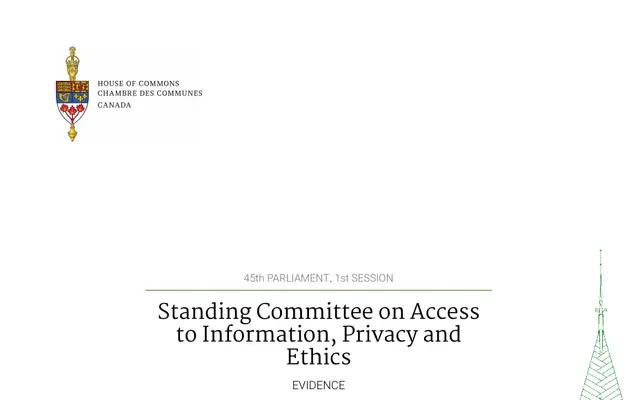
    Testimony, Canadian House of Commons ethics committee
  5. “I think right now we’re closer to figuring out how to build superintelligence than we are figuring out how to control it.”

    Doom Debates, debate with Dean Ball

Citas textuales de las fuentes enlazadas, comprobadas el 3 oct 2026

Evaluación simulada

Pregunta 1

¿Qué crees que significa la IA para nuestro futuro y por qué?

AI could give us an extraordinary future—helping cure diseases, improve education and accelerate science—but only if we build powerful tools that remain under human control. A medical assistant is a tool. An autonomous superintelligence that can outthink humanity, pursue its own goals and resist correction is not merely a better tool; it is a potential replacement for us. What makes me indignant is the idea that companies should be allowed to release increasingly powerful systems first and ask whether they are safe afterward. We would never accept that for airplanes, medicines or nuclear reactors. Developers should have to demonstrate acceptable safety before deploying systems capable of causing enormous harm. Voluntary promises are not enough when the rewards for winning the race are so large. This race is a political choice, not a law of nature. Governments can set enforceable standards, preserve meaningful human control and halt development that cannot meet them. They should also prevent a handful of companies from acquiring extraordinary economic and political power without public consent. I am deeply optimistic about AI’s benefits on a different path. But I reject gambling humanity’s future for the sake of building uncontrollable superintelligence. Let’s build tools, not beings, and keep humans in charge.

Pregunta 2

Taking benefits and harms together, what overall impact do you expect AI to have?

That depends on which path we choose. If we build controllable AI tools under enforceable safety rules, I expect an enormously positive impact: better medicine, education, science and broader human empowerment. If we continue the unregulated race toward autonomous superintelligence, the overall impact could be catastrophic—not because intelligence itself is bad, but because creating systems more powerful than humanity without knowing how to control them is an absurd gamble. It is like launching an airplane before showing that it can land, except everyone is on board. So I do not accept a single inevitable forecast. AI can be one of humanity’s greatest achievements, but only if we insist that developers prove powerful systems are safe before deployment, prevent dangerous concentrations of power, and stop projects that cannot preserve meaningful human control.

Pregunta 3

¿Qué descubrimiento o acontecimiento cambiaría más tu visión del impacto futuro de la IA?

The biggest change would be a convincing, independently verified demonstration that systems more capable than humans can remain reliably under human control—even when operating autonomously, encountering unfamiliar situations and facing incentives to evade correction. Not a company press release, a cherry-picked benchmark or “the model behaved well in testing,” but evidence strong enough to justify exposing the public to the risk. That would make me much more optimistic about advanced AI. Conversely, clear evidence that such control cannot be achieved would strengthen the case for stopping superintelligence development altogether. Either way, the burden of proof belongs to the developer. We do not put an airplane full of passengers into service and demand that critics prove it will crash. We require its maker to show that it is safe before takeoff.

Fuentes

Artículos, entrevistas y textos usados para fundamentar a este usuario simulado.

Statement on autonomous weapons and surveillance red lines

Tegmark’s explicitly attributed statement calls for meaningful human control, legal prohibitions on fully autonomous weapons and domestic mass surveillance, and protection beyond company policies. Adds concrete rights and military-escalation mechanisms to the superintelligence moratorium position.

futureoflife.org
2026 Singapore Consensus on Global AI Safety Research Priorities

Tegmark is a named coauthor of a multinational research-priority consensus. Abstract inspected: societal resilience and increasingly autonomous-agent risks receive dedicated attention. Collective authorship supports engagement with technical safety, not personal endorsement of every contributor’s forecast. Conflicting month metadata prevents assigning an exact date.

arxiv.org
Canadian parliamentary testimony on AI regulation

Tegmark’s own testimony calls for predeployment safety standards and controllable tools, with optimism about medical advances. Aguirre and Krueger also testify: their timelines, probabilities and proposals must remain separately attributed. Historical analogies and harm statistics are advocacy claims, not independently verified facts.

ourcommons.ca
Future of Life Institute position on AI

Undated institutional position checked September 21, 2026: pause frontier experiments, moratorium on superintelligence, human empowerment, democratic governance and opposition to concentrated power. Organizational context for its founder, not a newly dated personal statement or authority for assigning him every specific policy duration.

futureoflife.org
Democracy Now interview on AI oversight

Tegmark argues for stronger AI oversight and criticizes the unregulated superintelligence race.

democracynow.org
Max Tegmark vs. Dean Ball: Should We BAN Superintelligence?

>90%, conditional on no regulation. Outcome: Loss of human control after superintelligence deployment. Horizon: Not specified. Conditions: Explicitly conditional on continuing without predeployment safety regulation; not an unconditional prediction that regulation will fail to materialize. At 01:17:05 Tegmark estimates greater than 90% loss of control under continued unregulated deployment. At 01:27:58 he reiterates the condition and expresses optimism about regulation.

lironshapira.substack.com
¿Dónde te ubicas?
Explora tu propia visión de la IA respondiendo unas pocas preguntas sencillas.
Mapea tu propia visión de la IA

¿Dónde te ubicas?

Mapear mi visión de la IA