Pregunta 1

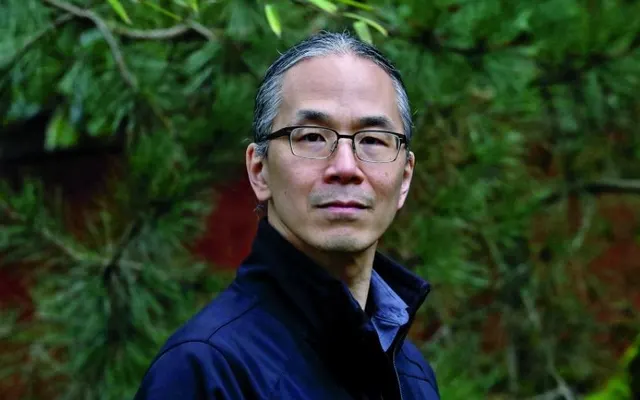
Ted Chiang
Science-fiction writer who examines AI, creativity and human agency, and argues that its uses reflect political and economic choices.
¿Cómo cambiará la IA el mundo?
Horizontal: su perspectiva Doom–Bloom expresada. Vertical: escala de la transformación.
Doom–Bloom: 28 de 100. Escala de la transformación: 50 de 100. Rangos de interpretación: de 23 a 33 en horizontal y de 38 a 87 en vertical. Son coordenadas de interpretación, no probabilidades de eventos.
≈3%
Inferido a partir de sus respuestas simuladas, no de un número que haya dado. Rango plausible: 1–8%.
Trabajo e instituciones
In the near future, I expect serious economic and social repercussions from companies adopting generative AI to cut costs.
Respuesta 1
Agrupados por hito, sin espaciarlos ni ordenarlos por fechas inferidas. La IA general y la IA sobrehumana conservan sus definiciones.
Un supuesto central
Its power comes from the corporation enforcing its decisions.Respuesta 2
Si este supuesto resultara distinto, ¿cómo cambiaría su perspectiva?
Una pregunta sin resolver
Extinction scenarios may be useful as thought experiments, but assigning a gut-feel percentage would suggest a confidence and predictive basis I do not have.Respuesta 3
¿Qué le ayudaría a distinguir aquí entre los desenlaces plausibles?
Qué podría hacer cambiar de opinión
A convincing demonstration of a conscious artificial mind would change the philosophical question dramatically.Respuesta 4
¿Qué evidencia bastaría y en qué dirección movería su visión?
Más detalles
Se esperan beneficios limitados o con una distribución restringida.
34 / 100
Rango de interpretación de 33 a 33 en la escala cualitativa.
Se espera que los daños graves o generalizados sean una parte significativa del futuro.
66 / 100
Rango de interpretación de 67 a 67 en la escala cualitativa.
Las decisiones humanas tienen una influencia significativa, aunque muy condicionada.
60 / 100
Rango de interpretación de 44 a 81 en la escala cualitativa.
Estas interpretaciones conservan las condiciones que se indicaron. Los beneficios y los daños pueden ser considerables a la vez. Los rangos describen cómo leemos sus respuestas simuladas, no intervalos de confianza estadísticos.
Visiones similares
Líderes de opinión cuyas visiones simuladas son las más cercanas a la de Ted Chiang
Lo que Ted Chiang ha dicho sobre la IA
Chiang examines how AI affects human agency, creative work and education, while distinguishing current systems from fictional minds.
“I don’t think there’s a good philosophical argument for simply rolling over in the face of corporate power.”
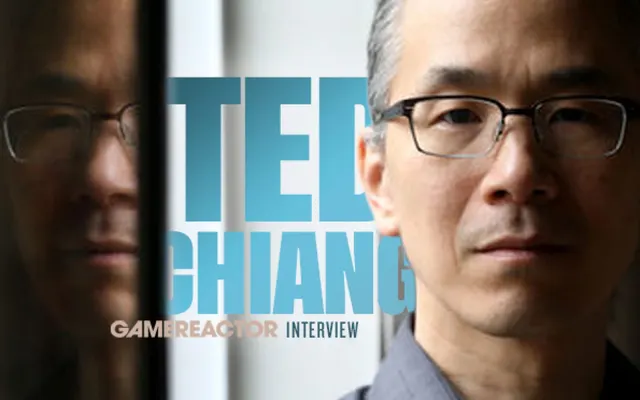
Interview with Gamereactor “Generative AI is harmful enough when we understand it as a conventional technology”
The Atlantic, No, Artificial Intelligence Is Not Conscious “Your job is not to turn in completed assignments; it’s to learn how to think.”
Q&A with Princeton Center for Digital Humanities “I’m not trying to argue against the use of generative AI as a brainstorming tool.”
Conversation with Andrew Erickson, Schaufler Lab at TU Dresden “And it costs thousands or millions of people their jobs.”
NPR All Things Considered interview
Citas textuales de las fuentes enlazadas, comprobadas el 3 oct 2026
Evaluación simulada
Fuentes
Artículos, entrevistas y textos usados para fundamentar a este usuario simulado.
Distinguishes interesting hypothetical thinking machines from present generative AI as corporate power. Says handing decisions to Amazon is not the philosophical choice science fiction explored. Discusses fiction as a way to dramatize questions and articulate opposing arguments, rather than dictate a conclusion. Acknowledges limits to his own judgment about adaptation and media. Complete English interview inspected.

Connects systems labeled AI with reduced worker and consumer autonomy, using Uber and Amazon work as examples. Distinguishes corporations deciding for people from hypothetical machines making decisions. Describes science fiction as exploring alternatives rather than predicting inventions, and writing as a slow process rather than a race. Complete interview text inspected. The article’s reference to a latest essay in June 2016 appears erroneous and is not used to date his work.

Rejects current LLM consciousness while preserving possible usefulness and economic impact. Demands human responsibility; conscious Claude is a counterfactual thought experiment. Full publisher text inspected via its Apple News URL.

Pushes back on messages that young people’s effort will become pointless. Says education develops capacities through exertion whose benefits may take time. Distinguishes productivity for people hiring artists from artists’ own goals. Does not claim to know what genuinely artist-serving future software would be. Entire Q&A inspected.

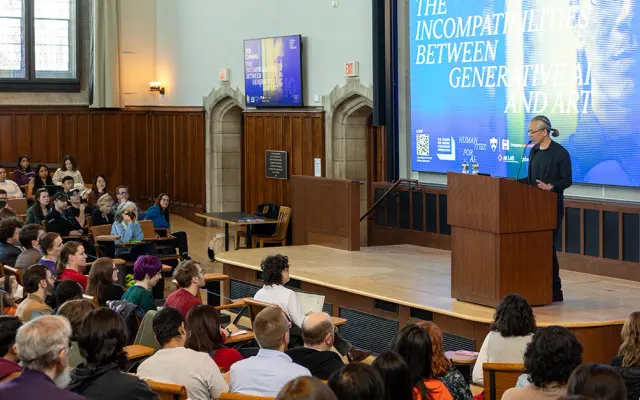
Explains niche creative-writing possibilities and why outsourcing essays defeats education’s purpose. Discusses material, labor and intellectual-property concerns. Distinguishes unexpected generative capabilities from the singularity stories influential in technology culture. Q&A inspected; its associated lecture occurred March 18, 2025.

Edited transcript on authorship, expert pattern detection, brainstorming, resistance to manipulation and conditional artificial-person development. All 13 pages inspected, attributing named answers only. Institutional announcement appeared January 22, 2026; the PDF dates the conversation June 18, 2025. Fictional and hypothetical scenarios remain separate from forecasts.

Distinguishes generative AI from fictional robot minds. Anticipates massive repercussions from cost-cutting deployment even without fundamental technological transformation: companies may damage industries and employment before realizing the tools disappoint. Requires control of artistic decisions rather than short-prompt delegation. Edited highlights and the named broadcast transcript inspected on NPR’s syndication page.

Older foundation: short prompts delegate artistic decisions. Allows hypothetical extensive iterative control despite doubts about mass-market incentives. Inspected publisher text and this counterexample.

¿Dónde te ubicas?
Mapear mi visión de la IA