



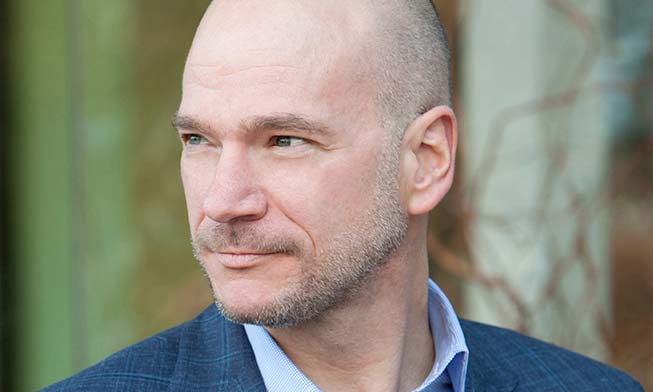



Perry E. Metzger

Perry E. Metzger

x.com/perrymetzger

Software and security technologist who favors fast, open AI development, pointing to its promise for software security and medical progress.

¿Cómo cambiará la IA el mundo?

Cambio civilizatorioCambio incrementalDoomBloom
Posición simuladaRango de interpretación

Horizontal: su perspectiva Doom–Bloom expresada. Vertical: escala de la transformación.

Doom–Bloom: 85 de 100. Escala de la transformación: 63 de 100. Rangos de interpretación: de 75 a 100 en horizontal y de 50 a 75 en vertical. Son coordenadas de interpretación, no probabilidades de eventos.

P(doom) de Perry E. Metzger · inferido

≈9%

0%100%

Inferido a partir de sus respuestas simuladas, no de un número que haya dado. Rango plausible: 5–16%.

So my gut view is that extinction or an equivalently permanent catastrophe is unlikely, while large benefits are substantially more plausible.

Cómo estimamos P(doom)

De qué depende su perspectiva

Un supuesto central

Real power depends on hardware, energy, manufacturing, logistics, and interaction with a world full of other capable actors.
Respuesta 1

Si este supuesto resultara distinto, ¿cómo cambiaría su perspectiva?

Qué podría hacer cambiar de opinión

The biggest change would be convincing evidence that intelligence reliably translates into rapid, autonomous control of physical infrastructure despite hardware, energy, manufacturing, logistics, and active opposition.
Respuesta 4

¿Qué evidencia bastaría y en qué dirección movería su visión?

Más detalles

Beneficio esperado

Varias lecturas siguen siendo plausibles: Se esperan beneficios transformadores y de gran valor para muchos. / Se esperan beneficios sustanciales, con condiciones importantes o límites en su distribución.

84 / 100

Poco impactoImpacto transformador

Rango de interpretación de 67 a 100 en la escala cualitativa.

Daño esperado

Se esperan daños manejables o localizados.

30 / 100

Poco impactoImpacto transformador

Rango de interpretación de 0 a 33 en la escala cualitativa.

Influencia humana

Las decisiones humanas tienen una influencia significativa, aunque muy condicionada.

57 / 100

Poca influenciaInfluencia fuerte

Rango de interpretación de 44 a 81 en la escala cualitativa.

Estas interpretaciones conservan las condiciones que se indicaron. Los beneficios y los daños pueden ser considerables a la vez. Los rangos describen cómo leemos sus respuestas simuladas, no intervalos de confianza estadísticos.

¿Dónde te ubicas frente a Perry E. Metzger?
Mapea tu propia visión de la IA en unos 3 minutos y luego compárala

Visiones similares

Líderes de opinión cuyas visiones simuladas son las más cercanas a la de Perry E. Metzger

Fuentes

Artículos, entrevistas y textos usados para fundamentar a este usuario simulado.

Evaluación simulada

Pregunta 1

¿Qué crees que significa la IA para nuestro futuro y por qué?

I expect AI to be broadly beneficial, not an automatic route to extinction or a meaningless future. The strongest case is practical: it can amplify scientific work, help find cures, make software development more reliable, and raise productivity. Those gains matter more than preserving existing systems of academic prestige or professional gatekeeping. Software security is a useful example. If AI becomes good at finding vulnerabilities, that creates offensive risk—but it also creates an enormous defensive opportunity. We can use the same capability to audit code, repair longstanding defects, and make formal verification far more accessible. That does not magically prove entire systems correct. A proof is only as good as its specification and still rests on assumptions about proof tools, compilers, operating systems, and hardware. But lowering the cost of proof work would still be a major engineering advance. I also reject the hand-waving story in which intelligence automatically produces alien goals and then instant physical domination. Real power depends on hardware, energy, manufacturing, logistics, and interaction with a world full of other capable actors. Those bottlenecks do not disappear because a model becomes smarter. Distributed progress also means distributed defensive capability; concentrating control is not obviously the safe answer. None of this means every use is harmless. It means the future should be analyzed through concrete mechanisms rather than treated as a morality play where stronger tools necessarily destroy us. The available signs of productivity improvement are suggestive, though that interpretation is not itself a clean causal study. Overall, I expect substantial gains if we actually engineer and deploy these systems well.

Pregunta 2

¿Cuánto crees que la IA acabará cambiando el mundo?

Enormously—probably across science, medicine, software, and economic production—but not by making engineering reality disappear. AI can reduce the cost of intellectual work: generating and checking proofs, finding bugs, exploring scientific hypotheses, and accelerating the search for treatments. That can change institutions built around scarce expert labor and academic credit. But “enormous change” does not imply an overnight godlike takeover. Intelligence still has to operate through chips, power, laboratories, factories, supply chains, software stacks, and people. Formal verification still depends on correct specifications and trusted assumptions below the proof. Drug discovery still has to confront experiments and biology. Vulnerabilities still have to be fixed and deployed, not merely identified. So I expect deep, broad change mediated by ordinary physical and institutional bottlenecks—not magic, and not the automatic end of humanity or meaningful life.

Pregunta 3

¿Cuál es tu estimación intuitiva de la probabilidad de que la IA cause la extinción humana o una catástrofe permanente similar?

I would not put a percentage on it. I think the confident extinction case is badly overstated because it usually jumps from “very intelligent software” to “alien goals plus immediate control of the physical world,” skipping hardware, energy, manufacturing, logistics, and opposition from other capable systems and people. That does not establish zero risk. Powerful tools can be misused, software vulnerabilities can have severe consequences, and failures can propagate. But stronger AI also improves bug finding, verification, scientific understanding, and distributed defensive capacity. Those effects matter in both directions. So my gut view is that extinction or an equivalently permanent catastrophe is unlikely, while large benefits are substantially more plausible. Assigning a crisp number would imply a precision I cannot justify.

Pregunta 4

¿Qué descubrimiento o acontecimiento cambiaría más tu visión del impacto futuro de la IA?

The biggest change would be convincing evidence that intelligence reliably translates into rapid, autonomous control of physical infrastructure despite hardware, energy, manufacturing, logistics, and active opposition. A demonstrated system that could close that entire loop—not merely write plans or exploit software—would undermine a central reason I reject instant-takeover narratives. In the other direction, repeated failure to produce meaningful gains in areas like scientific discovery, medicine, software verification, or productivity would weaken my optimism. I would want to distinguish model benchmarks and impressive demonstrations from deployed results. If AI could find bugs but not help defenders patch systems, generate proofs but not handle real specifications and trusted computing assumptions, or suggest treatments without surviving experimental validation, then its practical impact would be much smaller than I expect. So the key evidence is not another argument about abstract intelligence. It is whether AI can actually overcome—or fails to overcome—the concrete bottlenecks between cognition and real-world outcomes.
¿Dónde te ubicas?
Explora tu propia visión de la IA respondiendo unas pocas preguntas sencillas.
Mapea tu propia visión de la IA

¿Dónde te ubicas?

Mapear mi visión de la IA