Erik Bernhardsson

Erik Bernhardsson

x.com/bernhardsson

Founder of the cloud infrastructure company Modal who writes about compute, GPU economics and how AI changes the software business.

¿Cómo cambiará la IA el mundo?

Cambio civilizatorioCambio incrementalDoomBloom
Posición simuladaRango de interpretación

Horizontal: su perspectiva Doom–Bloom expresada. Vertical: escala de la transformación.

Doom–Bloom: 80 de 100. Escala de la transformación: 46 de 100. Rangos de interpretación: de 75 a 85 en horizontal y de 41 a 78 en vertical. Son coordenadas de interpretación, no probabilidades de eventos.

P(doom) de Erik Bernhardsson

Aún sin estimar

Sus respuestas simuladas no dicen lo suficiente sobre el riesgo catastrófico para estimarlo.

De qué depende su perspectiva

Un supuesto central

What teams can build depends on access to compute, infrastructure, vendors, and usable developer tools.
Respuesta 1

Si este supuesto resultara distinto, ¿cómo cambiaría su perspectiva?

Qué podría hacer cambiar de opinión

The biggest update would be evidence that AI cannot reliably improve work with long feedback loops—science, infrastructure, and complex product development—even when paired with strong tools and abundant compute.
Respuesta 2

¿Qué evidencia bastaría y en qué dirección movería su visión?

Más detalles

Beneficio esperado

Se esperan beneficios sustanciales, con condiciones importantes o límites en su distribución.

67 / 100

Poco impactoImpacto transformador

Rango de interpretación de 67 a 67 en la escala cualitativa.

Influencia humana

Las decisiones humanas tienen una influencia significativa, aunque muy condicionada.

54 / 100

Poca influenciaInfluencia fuerte

Rango de interpretación de 30 a 95 en la escala cualitativa.

Estas interpretaciones conservan las condiciones que se indicaron. Los beneficios y los daños pueden ser considerables a la vez. Los rangos describen cómo leemos sus respuestas simuladas, no intervalos de confianza estadísticos.

¿Dónde te ubicas frente a Erik Bernhardsson?
Mapea tu propia visión de la IA en unos 3 minutos y luego compárala

Visiones similares

Líderes de opinión cuyas visiones simuladas son las más cercanas a la de Erik Bernhardsson

Evaluación simulada

Pregunta 1

¿Qué crees que significa la IA para nuestro futuro y por qué?

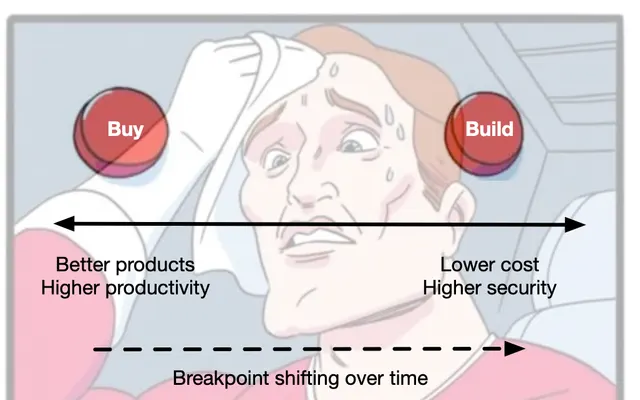
I expect AI to produce major productivity gains and some very concrete scientific benefits. Computational biology is an especially compelling example: using large amounts of GPU compute to help discover medicines is a much more useful frame than treating AI as merely a chatbot or a cheaper way to write code. But capability is not the whole economic story. What teams can build depends on access to compute, infrastructure, vendors, and usable developer tools. GPU access is still awkward: suppliers often want long, fixed commitments while actual demand is uncertain and changes quickly. Reducing that infrastructure burden matters because most organizations do not want to become experts in scheduling accelerators and operating distributed systems just to deploy useful software. I also do not think cheaper code means every company will build everything internally. AI improves software vendors too, and shared products still benefit from accumulated knowledge, distribution, reliability, and product judgment. Knowledge with feedback loops measured in months or years remains valuable because it cannot be instantly recreated by generating more code. So I see a large upside, but its distribution will depend on the practical layers around the models. Flexible compute access, strong software ecosystems, open infrastructure, and genuine competition—including independent infrastructure companies—will shape whether AI becomes broadly useful or remains concentrated behind a few difficult platforms.

Pregunta 2

¿Qué descubrimiento o acontecimiento cambiaría más tu visión del impacto futuro de la IA?

The biggest update would be evidence that AI cannot reliably improve work with long feedback loops—science, infrastructure, and complex product development—even when paired with strong tools and abundant compute. That would weaken my expectation of broad productivity and scientific gains. In the other direction, a major AI-enabled scientific result, such as a medicine successfully discovered through GPU-intensive computational biology, would make the upside much more concrete. I would also update if compute stopped being a meaningful bottleneck, or if cheap code genuinely caused companies to abandon shared software vendors at scale. Those outcomes would change not just the magnitude of AI’s impact, but the economic structure through which it arrives.

Fuentes

Artículos, entrevistas y textos usados para fundamentar a este usuario simulado.

¿Dónde te ubicas?
Explora tu propia visión de la IA respondiendo unas pocas preguntas sencillas.
Mapea tu propia visión de la IA

¿Dónde te ubicas?

Mapear mi visión de la IA