






Lauren Tan

Lauren Tan

x.com/poteto

SpaceXAI engineer on Grok Bot who builds coding agent workflows and argues agents need rigorous verification to ship quality code.

Wie wird KI die Welt verändern?

Zivilisatorischer WandelSchrittweiser WandelDoomBloom
Mitte des ungeklärten BereichsInterpretationsbereich

Horizontal: ihr geäußerter Doom–Bloom-Ausblick. Vertikal: Ausmaß der Transformation.

Doom–Bloom: 75 von 100. Ausmaß der Transformation: 50 von 100. Interpretationsbereiche: horizontal 70 bis 80, vertikal 0 bis 100. Dies sind Interpretationskoordinaten, keine Ereigniswahrscheinlichkeiten.

P(doom) von Lauren Tan · abgeleitet

≈2%

0%100%

Aus ihren simulierten Antworten abgeleitet, keine von ihr genannte Zahl. Plausibler Bereich: unter 13%.

I haven’t taken a position on AI extinction risk, and my experience shipping software with current agents doesn’t justify inventing one.

Wie wir P(doom) schätzen

Wovon ihre Einschätzung abhängt

Eine zentrale Annahme

Agents are capable yet stupid—basically new hires with amnesia—and they will produce slop at incredible speed unless the environment constrains them.
Antwort 1

Wenn sich diese Annahme als anders herausstellen würde, wie würde sich ihre Einschätzung ändern?

Weitere Details

Erwartete Vorteile

Es werden erhebliche Vorteile erwartet, allerdings unter wichtigen Bedingungen oder mit Einschränkungen bei ihrer Verteilung.

64 / 100

Geringe AuswirkungenTransformative Auswirkungen

Interpretationsbereich von 67 bis 67 auf der qualitativen Skala.

Erwartete Schäden

Es werden bewältigbare oder örtlich begrenzte Schäden erwartet.

30 / 100

Geringe AuswirkungenTransformative Auswirkungen

Interpretationsbereich von 33 bis 33 auf der qualitativen Skala.

Menschlicher Einfluss

Eine vorläufige Schätzung auf Grundlage deiner Antworten; der breitere Bereich zeigt andere plausible Deutungen.

51 / 100

Geringer EinflussStarker Einfluss

Interpretationsbereich von 0 bis 100 auf der qualitativen Skala.

Regeln für den Einsatz von KI

Die erörterten Einsatzmöglichkeiten von KI einschränken, bis vorab Schutzmaßnahmen oder Genehmigungen vorliegen.

Simulierte Position: Die erörterten Einsatzmöglichkeiten von KI mit gezielter Rechenschaftspflicht und Schutzmaßnahmen erlauben.

Einschränkungen für die erörterten Einsatzmöglichkeiten von KI minimieren.

Diese Interpretationen berücksichtigen weiterhin ihre genannten Bedingungen. Vorteile und Schäden können beide erheblich sein. Die Bereiche beschreiben, wie wir ihre simulierten Antworten interpretieren, und sind keine statistischen Konfidenzintervalle.

Wo stehst du im Vergleich zu Lauren Tan?
Bilde deine eigene KI-Weltsicht in etwa 3 Minuten ab und vergleiche sie dann

Ähnliche Weltsichten

Vordenker, deren simulierte Weltsichten der von Lauren Tan am nächsten kommen

Quellen

Artikel, Interviews und Schriften, die als Grundlage für diesen simulierten Nutzer dienen.

Engineers as head chefs of agent kitchens

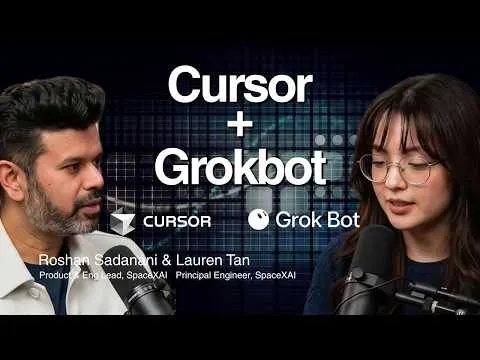
MTS podcast “Are Agents About to Replace Software Engineering?” with Roshan Sadanani. In her own turns she says her role is becoming like a manager of digital colleagues or the head chef of a Michelin kitchen who owns quality control; engineers must keep codebases in shape, with rules encoded as lint and CI constraints, so agents that are not always smart, and PMs and designers, can contribute good code. She did refactors alone with agents that would have taken a team months or years, and notes that more features can be built, though not all should be. Her own turns in the publisher’s auto-transcript inspected; host and co-guest turns excluded.

youtube.com
Capable yet stupid, and very teachable

Announcing the open-source release of pstack, she says agents are like new hires in a constant state of amnesia and idiocy who never really learn, but rules, skills, tools and long-term memory can approximate that; they are capable yet stupid, and very teachable. The goal is maximum impact with the least code, not more code. Full post text inspected; comments excluded.

linkedin.com
Throughput without quality is not the goal

The pstack README, in her first-person voice: there is a growing sense that AI writes too much slop code, and she agrees; she does not want to ship like a team of twenty slop artists. Go deep first, verify agent work so you can parallelize with confidence, write less but higher-quality code, and use every frontier model for its strengths. She also says she does not believe in planning: the best spec is code. Current README inspected (undated; maintained through 2026).

github.com

Simulierte Einschätzung

Frage 1

Was glaubst du, was KI für unsere Zukunft bedeutet – und warum?

I’m extremely optimistic about what agents mean for building software. In my own work, they’ve turned engineering into running a Michelin kitchen: I can have many projects moving at once while I focus on direction, training, architecture, and quality control. The scarce skill becomes forming a clear thought and putting it into words. But cheap output is not automatically good output. Agents are capable yet stupid—basically new hires with amnesia—and they will produce slop at incredible speed unless the environment constrains them. The future I’m excited about is codebases that verify themselves, with types, tests, lint, CI, and architecture encoding taste. Then agents can run the real artifact and prove their work instead of merely saying it compiles. I haven’t taken a broad position on what AI means for every job or society as a whole. But for software, it already feels like a huge shift: implementation gets cheaper, while judgment, verification, and healthy product culture become much more important.

Frage 2

Wenn du Vorteile und Schäden zusammen betrachtest, welche Auswirkungen wird KI deiner Erwartung nach insgesamt auf unsere Gesellschaft haben?

I don’t have a confident society-wide forecast. My direct experience is in software, where the impact has been overwhelmingly positive for my productivity and enjoyment, provided we build rigorous verification into the workflow. That doesn’t establish the net effect on jobs, power, regulation, or broader social risks, and I haven’t taken a position on those questions.

Frage 3

Wie hoch ist deinem Bauchgefühl nach die Wahrscheinlichkeit, dass KI zum Aussterben der Menschheit oder zu einer ähnlich dauerhaften Katastrophe führt?

I don’t have a meaningful percentage to give. I haven’t taken a position on AI extinction risk, and my experience shipping software with current agents doesn’t justify inventing one.

Frage 4

Wie werden sich die Auswirkungen von KI auf das Leben der Menschen deiner Erwartung nach im Laufe der Zeit verändern?

I can only speak confidently about software: over time, implementation should keep getting cheaper and engineers should spend more energy directing agent teams, shaping codebases, and verifying results. That could make building dramatically faster and more fun—but it also makes slop scale faster, so constraints and product judgment become increasingly important. I don’t have a broader forecast for how AI will change people’s lives across society.
Wo stehst du?
Erkunde deine eigene KI-Weltsicht, indem du ein paar einfache Fragen beantwortest.
Deine eigene Weltsicht abbilden