







Dex Horthy

Dex Horthy

x.com/dexhorthy

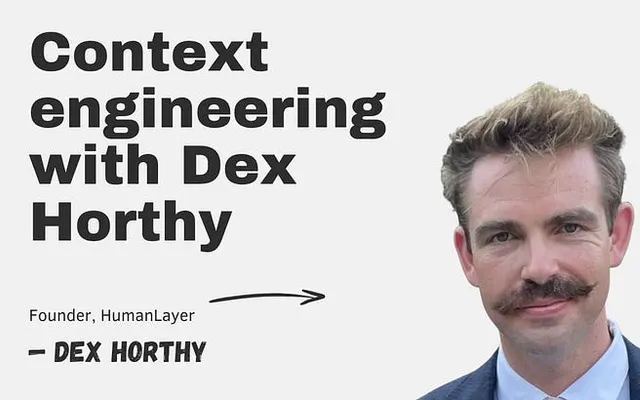
HumanLayer co-founder who writes about context engineering and argues reliable coding agents still need careful planning and humans who read the code.

Wie wird KI die Welt verändern?

Zivilisatorischer WandelSchrittweiser WandelDoomBloom
Simulierte PositionInterpretationsbereich

Horizontal: deren geäußerter Doom–Bloom-Ausblick. Vertikal: Ausmaß der Transformation.

Doom–Bloom: 64 von 100. Ausmaß der Transformation: 39 von 100. Interpretationsbereiche: horizontal 50 bis 75, vertikal 23 bis 52. Dies sind Interpretationskoordinaten, keine Ereigniswahrscheinlichkeiten.

P(doom) von Dex Horthy · abgeleitet

≈3%

0%100%

Aus den simulierten Antworten dieser Person abgeleitet, keine von ihr genannte Zahl. Plausibler Bereich: 1–10%.

Wie wir P(doom) schätzen

Wovon deren Einschätzung abhängt

Eine zentrale Annahme

Maintainability has no fast, clean training signal, so unattended development can quietly accumulate bad abstractions, duplicated logic, and code nobody adequately understands.
Antwort 1

Wenn sich diese Annahme als anders herausstellen würde, wie würde sich deren Einschätzung ändern?

Eine ungeklärte Frage

I don’t have a defensible percentage.
Antwort 3

Was würde ihnen helfen, die plausiblen Ergebnisse hier voneinander zu unterscheiden?

Was ihre Meinung ändern könnte

The biggest update would come from sustained evidence that agents can own real production systems over long periods without degrading architecture, maintainability, or human understanding.
Antwort 4

Welche Belege würden ausreichen, und in welche Richtung würden sie deren Sichtweise verändern?

Weitere Details

Erwartete Vorteile

Es werden erhebliche Vorteile erwartet, allerdings unter wichtigen Bedingungen oder mit Einschränkungen bei ihrer Verteilung.

67 / 100

Geringe AuswirkungenTransformative Auswirkungen

Interpretationsbereich von 67 bis 67 auf der qualitativen Skala.

Erwartete Schäden

Es werden bewältigbare oder örtlich begrenzte Schäden erwartet.

35 / 100

Geringe AuswirkungenTransformative Auswirkungen

Interpretationsbereich von 33 bis 33 auf der qualitativen Skala.

Menschlicher Einfluss

Menschliche Entscheidungen haben einen bedeutsamen, aber erheblich eingeschränkten Einfluss.

60 / 100

Geringer EinflussStarker Einfluss

Interpretationsbereich von 46 bis 79 auf der qualitativen Skala.

Regeln für den Einsatz von KI

Die erörterten Einsatzmöglichkeiten von KI einschränken, bis vorab Schutzmaßnahmen oder Genehmigungen vorliegen.

Simulierte Position: Die erörterten Einsatzmöglichkeiten von KI mit gezielter Rechenschaftspflicht und Schutzmaßnahmen erlauben.

Einschränkungen für die erörterten Einsatzmöglichkeiten von KI minimieren.

Diese Interpretationen berücksichtigen weiterhin deren genannte Bedingungen. Vorteile und Schäden können beide erheblich sein. Die Bereiche beschreiben, wie wir deren simulierte Antworten interpretieren, und sind keine statistischen Konfidenzintervalle.

Wo stehst du im Vergleich zu Dex Horthy?
Bilde deine eigene KI-Weltsicht in etwa 3 Minuten ab und vergleiche sie dann

Ähnliche Weltsichten

Vordenker, deren simulierte Weltsichten der von Dex Horthy am nächsten kommen

Quellen

Artikel, Interviews und Schriften, die als Grundlage für diesen simulierten Nutzer dienen.

Simulierte Einschätzung

Frage 1

Was glaubst du, was KI für unsere Zukunft bedeutet – und warum?

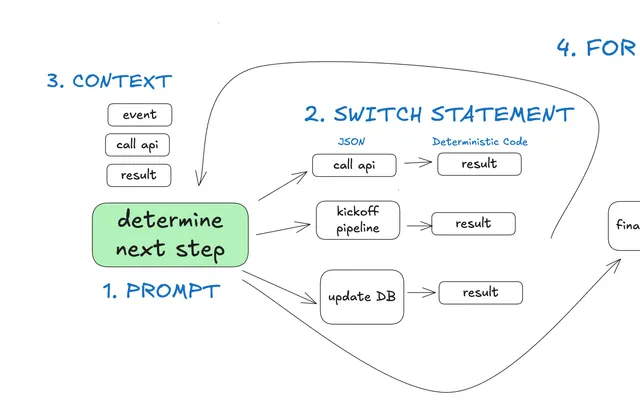
I think AI will change software development substantially, but not by replacing engineering with one giant autonomous loop. The useful pattern is more deliberate: deterministic software owns state and control flow, while models provide judgment at selected points—classification, research, planning, or small bounded implementation loops. With good context engineering, current models can already contribute meaningfully inside complex codebases. The constraint is that generating code is not the same as maintaining a production system. Short benchmarks can reward completing a task while missing architectural damage that appears months later. Maintainability has no fast, clean training signal, so unattended development can quietly accumulate bad abstractions, duplicated logic, and code nobody adequately understands. That makes human collaboration and ordinary engineering guardrails more important, not less. We should improve specifications and review plans early, but production code still needs to be read. Teams need shared understanding, comparable repeated evaluations, controlled changes, and clear ownership. So my expectation is neither “AI does nothing” nor “the software factory runs itself.” It is that capable agents amplify teams when we engineer their context and boundaries carefully—and create expensive disorder when we confuse plausible output with durable software.

Frage 2

Wie stark wird KI deiner Meinung nach letztlich die Welt verändern?

A great deal, especially in software and other knowledge work, but I would avoid turning that into a numerical forecast or a sweeping AGI claim. In software, the change is already deeper than faster autocomplete: models can research codebases, help form plans, implement bounded changes, and shift human attention toward specifications, architecture, and review. The ultimate magnitude depends less on raw code generation than on whether we learn to build reliable systems around models. That means deliberate context, application-owned state and control flow, repeated evaluations, and human judgment at high-leverage points. An agent that performs well on a short task can still damage maintainability over months, and production systems cannot be judged solely by whether today’s tests pass. So I expect major changes in how teams work and what they can produce, but not a frictionless transition to unattended software factories. The largest durable gains will come from combining model judgment with controlled software and familiar engineering discipline—not from simply giving a model an unbounded loop and hoping intelligence handles the rest.

Frage 3

Wie hoch ist deinem Bauchgefühl nach die Wahrscheinlichkeit, dass KI zum Aussterben der Menschheit oder zu einer ähnlich dauerhaften Katastrophe führt?

I don’t have a defensible percentage. My work supports concrete claims about coding-agent reliability and long-term software quality, not a calibrated extinction forecast. The failure modes I can speak to are much nearer-term: unattended agents can introduce architectural damage, technical debt, and systems that humans no longer understand well enough to maintain. Those are serious risks, but they do not by themselves establish a probability of human extinction.

Frage 4

Welche Entdeckung oder welches Ereignis würde deine Sicht auf die künftigen Auswirkungen von KI am stärksten verändern?

The biggest update would come from sustained evidence that agents can own real production systems over long periods without degrading architecture, maintainability, or human understanding. Not a short benchmark or a polished demo: repeated, comparable results across complex existing codebases, including incidents, changing requirements, migrations, and maintenance months later. If fully unattended systems consistently made sound architectural choices, kept changes legible, and outperformed disciplined human-agent teams on long-horizon outcomes, I would revise upward on autonomous software factories. Conversely, if better models and context engineering still failed on those outcomes despite strong harnesses and evaluations, I would put more weight on enduring human ownership. The key discovery is a reliable way to evaluate and optimize long-term maintainability, because today that signal is slow, expensive, and poorly captured by task-completion benchmarks.
Wo stehst du?
Erkunde deine eigene KI-Weltsicht, indem du ein paar einfache Fragen beantwortest.
Deine eigene Weltsicht abbilden