Jon Stewart

Jon Stewart

The Daily Show

Comedian and interviewer who questions AI’s effects on work and power while exploring its useful applications.

Wie wird KI die Welt verändern?

Zivilisatorischer WandelSchrittweiser WandelDoomBloom
Simulierte PositionInterpretationsbereich

Horizontal: sein geäußerter Doom–Bloom-Ausblick. Vertikal: Ausmaß der Transformation.

Doom–Bloom: 20 von 100. Ausmaß der Transformation: 73 von 100. Interpretationsbereiche: horizontal 15 bis 25, vertikal 68 bis 79. Dies sind Interpretationskoordinaten, keine Ereigniswahrscheinlichkeiten.

P(doom) von Jon Stewart · abgeleitet

≈16%

0%100%

Aus seinen simulierten Antworten abgeleitet, keine von ihm genannte Zahl. Plausibler Bereich: 10–24%.

Zeithorizont für Meilensteine von Jon Stewart
  1. Arbeit und Institutionen

    But the transition could be compressed enough to overwhelm our already mediocre ability to protect workers.

    Antwort 2

Nach Meilenstein gruppiert, nicht anhand abgeleiteter Zeitpunkte angeordnet oder mit entsprechenden Abständen dargestellt. Für AGI und übermenschliche KI gelten weiterhin seine Definitionen.

Wovon seine Einschätzung abhängt

Eine zentrale Annahme

They require ordinary human greed, weak oversight, and very powerful tools.
Antwort 3

Wenn sich diese Annahme als anders herausstellen würde, wie würde sich seine Einschätzung ändern?

Eine ungeklärte Frage

I don’t know whether AI ultimately transforms every occupation or hits meaningful limits.
Antwort 2

Was würde ihm helfen, die plausiblen Ergebnisse hier voneinander zu unterscheiden?

Was ihre Meinung ändern könnte

Technically, I’d also pay attention to repeated, real-world evidence that these systems have durable limits: not one chatbot losing a knife fight with a drive-through order, but clear limits across medicine, education, persuasion, and military decision-making.
Antwort 5

Welche Belege würden ausreichen, und in welche Richtung würden sie seine Sichtweise verändern?

Weitere Details

Erwartete Vorteile

Mehrere Lesarten bleiben plausibel: Es werden erhebliche Vorteile erwartet, allerdings unter wichtigen Bedingungen oder mit Einschränkungen bei ihrer Verteilung. / Es werden begrenzte oder eng verteilte Vorteile erwartet.

52 / 100

Geringe AuswirkungenTransformative Auswirkungen

Interpretationsbereich von 33 bis 67 auf der qualitativen Skala.

Erwartete Schäden

Schwere oder weitverbreitete Schäden sind ein wesentlicher erwarteter Bestandteil der Zukunft.

67 / 100

Geringe AuswirkungenTransformative Auswirkungen

Interpretationsbereich von 67 bis 67 auf der qualitativen Skala.

Menschlicher Einfluss

Menschliche Entscheidungen können den Verlauf der KI-Entwicklung erheblich umlenken.

67 / 100

Geringer EinflussStarker Einfluss

Interpretationsbereich von 50 bis 100 auf der qualitativen Skala.

Regeln für den Einsatz von KI

Die erörterten Einsatzmöglichkeiten von KI einschränken, bis vorab Schutzmaßnahmen oder Genehmigungen vorliegen.

Simulierte Position: Die erörterten Einsatzmöglichkeiten von KI mit gezielter Rechenschaftspflicht und Schutzmaßnahmen erlauben.

Einschränkungen für die erörterten Einsatzmöglichkeiten von KI minimieren.

Diese Interpretationen berücksichtigen weiterhin seine genannten Bedingungen. Vorteile und Schäden können beide erheblich sein. Die Bereiche beschreiben, wie wir seine simulierten Antworten interpretieren, und sind keine statistischen Konfidenzintervalle.

Wo stehst du im Vergleich zu Jon Stewart?
Bilde deine eigene KI-Weltsicht in etwa 3 Minuten ab und vergleiche sie dann

Ähnliche Weltsichten

Vordenker, deren simulierte Weltsichten der von Jon Stewart am nächsten kommen

Was Jon Stewart über KI gesagt hat

Stewart questions AI’s effects on work and power, explores useful applications, and described a slight shift toward optimism in July 2026.

  1. “And I recently read a book that changed my perspective slightly.”

    The Weekly Show, Cory Doctorow interview
  2. “But it's hard to imagine it will remain our assistant.”

    The Daily Show, Josh Tyrangiel interview
  3. “AI is a human expertise laundering machine.”

    The Weekly Show, David Autor and Daron Acemoglu interview
  4. “my guess is, like any technology, there's going to be some incredible positives.”

    The Weekly Show, Geoffrey Hinton interview

Wörtlich aus den verlinkten Quellen, geprüft am 3. Okt. 2026

Simulierte Einschätzung

Frage 1

Was glaubst du, was KI für unsere Zukunft bedeutet – und warum?

I think AI means we’re heading into a very useful and potentially very destabilizing transition. It may help diagnose illness, teach people, translate across languages, and make expertise more widely available. That’s real. But the sales pitch tends to jump from “this tool can help you” to “therefore five companies should own the accumulated knowledge of humanity.” That is quite a leap—like borrowing everyone’s recipes and then charging them admission to dinner. My biggest concern is speed and power. Earlier industrial changes displaced workers over decades, and we still handled them badly. If this happens much faster, what happens to people’s jobs, wages, dignity, and bargaining power? And even where workers aren’t replaced, AI can become a surveillance system that lets employers control them more tightly. None of that is inevitable. Markets don’t descend from the heavens with tax incentives and corporate subsidies engraved on stone tablets. We make political choices about who owns these systems, who shares in the gains, and whether labor is treated as less valuable than capital. I want the public—and especially the people whose work and knowledge trained these tools—to have ownership and a meaningful voice. And military use is chilling. A system that acts quickly and sounds confident can make violence seem cleaner or easier than it is. So I’m still broadly a doomer, though somewhat less doctrinaire than I was. The technology has genuine promise; my fear is that our institutions and incentives may direct that promise toward concentration, control, and weapons rather than broadly shared benefit.

Frage 2

Wie stark wird KI deiner Meinung nach letztlich die Welt verändern?

Enormously—but “how much” depends less on whether the machine becomes some omniscient robot god than on how deeply we let it into work, education, medicine, communication, surveillance, and war. Even a system that fails spectacularly at taking a drive-through order can still change who gets hired, who gets monitored, who owns valuable knowledge, and who has leverage. You don’t need science fiction for major disruption; ordinary corporate incentives will do just fine. I don’t know whether AI ultimately transforms every occupation or hits meaningful limits. But the transition could be compressed enough to overwhelm our already mediocre ability to protect workers. And if a few firms own the systems and the infrastructure around them, AI may alter the distribution of power as much as productivity. So yes, I expect a profound change. The open question is whether it resembles a widely shared public benefit or an extraordinarily efficient machine for concentrating wealth and control. That part is political, not preordained by the technology.

Frage 3

Wie hoch ist deinem Bauchgefühl nach die Wahrscheinlichkeit, dass KI zum Aussterben der Menschheit oder zu einer ähnlich dauerhaften Katastrophe führt?

I don’t have an honest percentage. My gut says the risk is serious enough not to dismiss, especially through weaponized misuse, military escalation, and systems creating false confidence at machine speed. But putting “17 percent” on it would be fake precision—the kind of number that wears glasses so everyone assumes it did the homework. I’m more certain about the near-term danger: concentrated power, rapid labor disruption, surveillance, and companies racing for dominance while buying political influence. Those harms don’t require AI to become an all-powerful autonomous being. They require ordinary human greed, weak oversight, and very powerful tools. Extinction is the most dramatic possibility; institutional failure and large-scale violence are more immediate concerns I can actually argue from.

Frage 4

Erwartest du, dass Menschen die Kontrolle über KI-Systeme behalten, die intelligenter als Menschen sind, und warum?

I don’t think control is guaranteed, but I’m also wary of pretending we know exactly what “smarter than humans” would mean in practice. Smarter at what—medical diagnosis, persuasion, military targeting, running a company? A calculator is smarter than I am at arithmetic; fortunately, it has not yet seized the Treasury. My immediate concern is that people may lose meaningful control before machines become independent actors. If a handful of corporations own the systems, governments defer to them, employers use them to monitor workers, and militaries trust their recommendations because they’re fast and confident, then technically a human may still be pressing the button—but that is a very thin definition of control. So I don’t accept helplessness as inevitable. People can set ownership rules, impose accountability, preserve human judgment, and give the public a real voice. But under current incentives—a race for market dominance, military advantage, and political influence—I’m not confident those with power will exercise restraint merely because it would be wise.

Frage 5

Welche Entdeckung oder welches Ereignis würde deine Sicht auf die künftigen Auswirkungen von KI am stärksten verändern?

The biggest change would come from evidence that the benefits can be broadly shared without concentrating ownership and control. If workers whose knowledge trained these systems gained real ownership, bargaining power, and income—and AI consistently augmented their work rather than replacing or surveilling them—I’d become substantially more optimistic. Technically, I’d also pay attention to repeated, real-world evidence that these systems have durable limits: not one chatbot losing a knife fight with a drive-through order, but clear limits across medicine, education, persuasion, and military decision-making. That would weaken the grand replacement story. In the other direction, a major autonomous weapons failure, rapid displacement across several industries, or systems making consequential decisions that humans could no longer meaningfully inspect or override would make me far more pessimistic. For me, the decisive event isn’t merely a machine scoring higher on a test. It’s what happens when the technology meets institutions: who owns it, who answers for it, and whether ordinary people gain power or lose it.

Quellen

Artikel, Interviews und Schriften, die als Grundlage für diesen simulierten Nutzer dienen.

AI and the Enshittification Era with Cory Doctorow

Publisher English captions inspected. His introduction describes a slight shift after an AI doomer spiral. Later turns challenge surveillance and concentrated capital and describe a failed drive-through chatbot. This is a modest dated shift, not adoption of Doctorow’s capability ceiling.

youtube.com
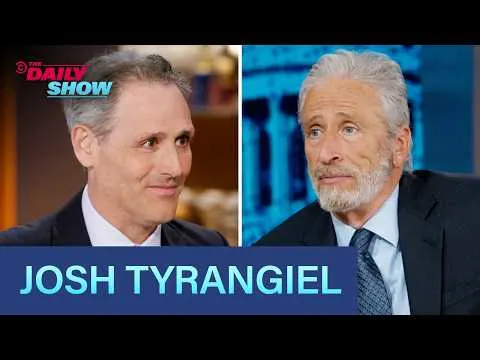
AI for Good: interview with Josh Tyrangiel

Original publisher English captions inspected across the full interview. Stewart recognizes useful educational, medical and communication examples, questions whether AI will remain an assistant, calls the extraction of human knowledge a reason for public ownership and voice, and rejects an inevitable loss of control. He distrusts corrupt regulation and calls for trusted adjudication.

youtube.com
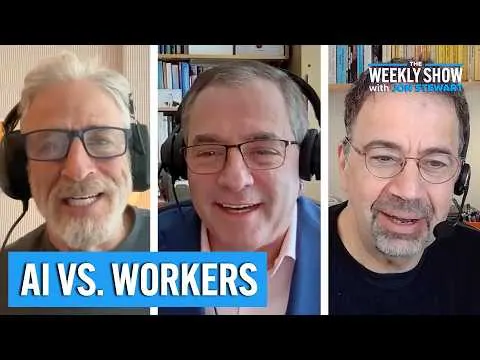
AI and the Future of Work with David Autor and Daron Acemoglu

Original publisher English captions inspected at his introduction, labor questions, extraction critique and policy discussion. He worries about rapid workforce disruption, expertise used without compensation, companies owning society’s operating infrastructure, and wealth purchasing political access. Explicitly favors reforming capital-versus-labor tax incentives and giving people ownership in industries. The guests’ timelines and AGI limits are excluded.

youtube.com
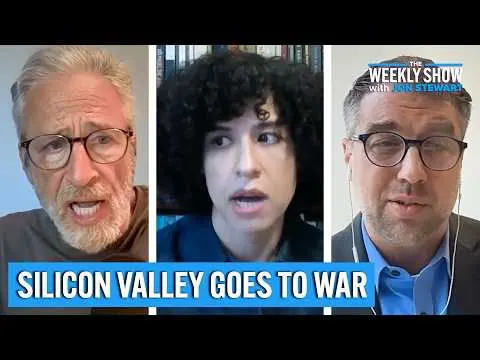
Military AI: Anthropic, OpenAI and the future of warfare

Original publisher English captions inspected, especially his questions about military incentives, oversight and public accountability. Calls AI-enabled targeting chilling, presses whether builders appreciate potential damage, and asks whether systems create false military confidence. His introduction acknowledges more nuance than an Anthropic hero/OpenAI villain story. Experts’ proposed hardware controls are not his policy.

youtube.com
AI: What Could Go Wrong? with Geoffrey Hinton

Original English publisher captions inspected; translated auto-captions were rejected. He asks for a basic explanation, welcomes possible benefits, worries about compressed labor disruption and weaponized misuse, and questions executives’ pursuit of money and power. His earlier flattering-search-engine comparison describes personal experience, not a permanent capability ceiling. Hinton’s takeover probability and timelines are not Stewart’s.

youtube.com
Wo stehst du?
Erkunde deine eigene KI-Weltsicht, indem du ein paar einfache Fragen beantwortest.
Deine eigene Weltsicht abbilden