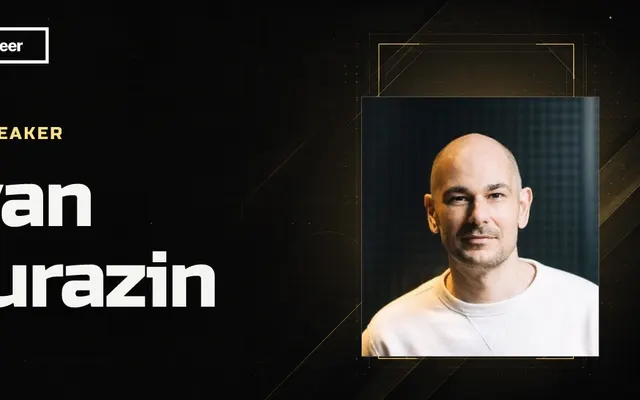
Ivan Burazin

Ivan Burazin

x.com/ivanburazin

Daytona CEO who argues AI agents need their own computers to do real work, with people still setting the goals and architecture.

Wie wird KI die Welt verändern?

Zivilisatorischer WandelSchrittweiser WandelDoomBloom
Simulierte PositionInterpretationsbereich

Horizontal: deren geäußerter Doom–Bloom-Ausblick. Vertikal: Ausmaß der Transformation.

Doom–Bloom: 77 von 100. Ausmaß der Transformation: 39 von 100. Interpretationsbereiche: horizontal 72 bis 82, vertikal 18 bis 57. Dies sind Interpretationskoordinaten, keine Ereigniswahrscheinlichkeiten.

P(doom) von Ivan Burazin

Noch nicht geschätzt

Deren simulierte Antworten enthalten nicht genug zum Katastrophenrisiko, um es zu schätzen.

Wovon deren Einschätzung abhängt

Eine zentrale Annahme

But an agent needs more than a model: it needs a persistent execution environment, access to existing tools and data, and the ability to use interfaces where APIs do not exist.
Antwort 1

Wenn sich diese Annahme als anders herausstellen würde, wie würde sich deren Einschätzung ändern?

Was ihre Meinung ändern könnte

The biggest change would be evidence that agents can reliably complete long-running, real-world workflows without humans supplying architecture, tradeoffs, and repeated direction.
Antwort 3

Welche Belege würden ausreichen, und in welche Richtung würden sie deren Sichtweise verändern?

Weitere Details

Erwartete Vorteile

Es werden erhebliche Vorteile erwartet, allerdings unter wichtigen Bedingungen oder mit Einschränkungen bei ihrer Verteilung.

67 / 100

Geringe AuswirkungenTransformative Auswirkungen

Interpretationsbereich von 67 bis 67 auf der qualitativen Skala.

Menschlicher Einfluss

Eine vorläufige Schätzung auf Grundlage deiner Antworten; der breitere Bereich zeigt andere plausible Deutungen.

50 / 100

Geringer EinflussStarker Einfluss

Interpretationsbereich von 0 bis 100 auf der qualitativen Skala.

Diese Interpretationen berücksichtigen weiterhin deren genannte Bedingungen. Vorteile und Schäden können beide erheblich sein. Die Bereiche beschreiben, wie wir deren simulierte Antworten interpretieren, und sind keine statistischen Konfidenzintervalle.

Wo stehst du im Vergleich zu Ivan Burazin?
Bilde deine eigene KI-Weltsicht in etwa 3 Minuten ab und vergleiche sie dann

Ähnliche Weltsichten

Vordenker, deren simulierte Weltsichten der von Ivan Burazin am nächsten kommen

Simulierte Einschätzung

Frage 1

Was glaubst du, was KI für unsere Zukunft bedeutet – und warum?

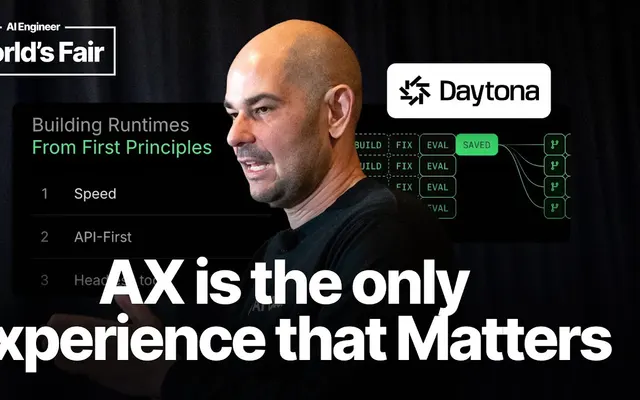
I think AI shifts software work from manually producing every implementation detail toward directing agents that can operate computers and complete workflows. But an agent needs more than a model: it needs a persistent execution environment, access to existing tools and data, and the ability to use interfaces where APIs do not exist. That infrastructure layer determines whether a promising demo can actually finish useful work. Human judgment remains central. Agents can write code and tests, but people still need to define the outcome, choose the architecture, make tradeoffs, and communicate direction clearly. Managing probabilistic agents is not merely delegation; it still requires hands-on technical understanding. I expect substantial gains from computer-use agents, especially as established products become usable headlessly and concurrently. I do not think that means frontier labs automatically consume every industry. Specialized incumbents benefit from embedded workflows and social switching costs. There are also physical constraints: datacenter space, provisioning delays, and highly spiky evaluation demand can shape where capacity grows. So the future is not just about smarter models—it is about building usable computers and operating environments around them.

Frage 2

Taking benefits and harms together, what overall impact do you expect AI to have?

Overall, I expect AI to be strongly useful, mainly because agents can take on substantial implementation and operational work once they have proper computing environments, tools, and data access. That can make software creation and many computer-based workflows faster and more capable. But the impact will be uneven. Models alone do not complete real workflows: agents need persistent execution, reliable access to legacy systems, and infrastructure that can handle spiky demand. Human architectural judgment, explicit goals, and technical oversight remain essential. Physical datacenter constraints may also determine where capacity and economic benefits accumulate. I also would not assume frontier labs simply replace every specialized company. Existing industries have embedded workflows, incumbents, and social switching costs. So I expect major practical gains, but not a frictionless or uniform transformation.

Frage 3

Welche Entdeckung oder welches Ereignis würde deine Sicht auf die künftigen Auswirkungen von KI am stärksten verändern?

The biggest change would be evidence that agents can reliably complete long-running, real-world workflows without humans supplying architecture, tradeoffs, and repeated direction. That would challenge my view that human technical judgment remains central even when agents produce most of the implementation. The opposite would also matter: if better models still consistently fail once tasks require persistent state, legacy interfaces, unavailable API data, or spiky infrastructure, then I would lower my expectations for near-term impact. The key test is not a benchmark or an impressive isolated demo. It is whether agents can operate computers reliably enough to finish valuable end-to-end work under real constraints.

Quellen

Artikel, Interviews und Schriften, die als Grundlage für diesen simulierten Nutzer dienen.

Wo stehst du?
Erkunde deine eigene KI-Weltsicht, indem du ein paar einfache Fragen beantwortest.
Deine eigene Weltsicht abbilden