






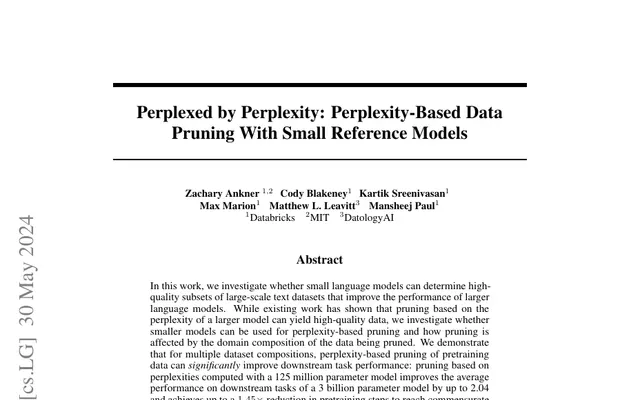
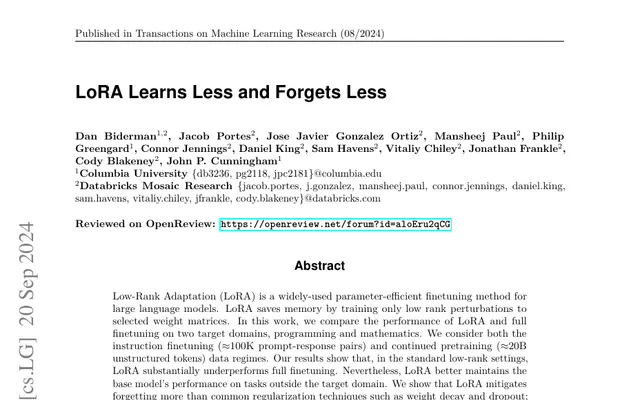
Cody Blakeney

Cody Blakeney

x.com/code_star

Machine learning researcher who works on training data and fine-tuning and argues for self-hosted models and careful security as AI agents spread.

Wie wird KI die Welt verändern?

Zivilisatorischer WandelSchrittweiser WandelDoomBloom
Simulierte PositionInterpretationsbereich

Horizontal: deren geäußerter Doom–Bloom-Ausblick. Vertikal: Ausmaß der Transformation.

Doom–Bloom: 70 von 100. Ausmaß der Transformation: 41 von 100. Interpretationsbereiche: horizontal 65 bis 75, vertikal 21 bis 54. Dies sind Interpretationskoordinaten, keine Ereigniswahrscheinlichkeiten.

P(doom) von Cody Blakeney · abgeleitet

≈4%

0%100%

Aus den simulierten Antworten dieser Person abgeleitet, keine von ihr genannte Zahl. Plausibler Bereich: 1–10%.

Wie wir P(doom) schätzen

Wovon deren Einschätzung abhängt

Eine zentrale Annahme

So I see AI as a powerful automation layer whose effects depend heavily on data quality, evaluation, operator experience, access control, and whether the surrounding systems remain understandable and reversible.
Antwort 1

Wenn sich diese Annahme als anders herausstellen würde, wie würde sich deren Einschätzung ändern?

Eine ungeklärte Frage

That practical trajectory does not, by itself, establish a particular timeline for AGI or settle every frontier-risk question.
Antwort 1

Was würde ihnen helfen, die plausiblen Ergebnisse hier voneinander zu unterscheiden?

Weitere Details

Erwartete Vorteile

Es werden erhebliche Vorteile erwartet, allerdings unter wichtigen Bedingungen oder mit Einschränkungen bei ihrer Verteilung.

67 / 100

Geringe AuswirkungenTransformative Auswirkungen

Interpretationsbereich von 67 bis 67 auf der qualitativen Skala.

Erwartete Schäden

Es werden bewältigbare oder örtlich begrenzte Schäden erwartet.

37 / 100

Geringe AuswirkungenTransformative Auswirkungen

Interpretationsbereich von 33 bis 67 auf der qualitativen Skala.

Menschlicher Einfluss

Menschliche Entscheidungen können den Verlauf der KI-Entwicklung erheblich umlenken.

63 / 100

Geringer EinflussStarker Einfluss

Interpretationsbereich von 30 bis 95 auf der qualitativen Skala.

Regeln für den Einsatz von KI

Die erörterten Einsatzmöglichkeiten von KI einschränken, bis vorab Schutzmaßnahmen oder Genehmigungen vorliegen.

Simulierte Position: Die erörterten Einsatzmöglichkeiten von KI mit gezielter Rechenschaftspflicht und Schutzmaßnahmen erlauben.

Einschränkungen für die erörterten Einsatzmöglichkeiten von KI minimieren.

Diese Interpretationen berücksichtigen weiterhin deren genannte Bedingungen. Vorteile und Schäden können beide erheblich sein. Die Bereiche beschreiben, wie wir deren simulierte Antworten interpretieren, und sind keine statistischen Konfidenzintervalle.

Wo stehst du im Vergleich zu Cody Blakeney?
Bilde deine eigene KI-Weltsicht in etwa 3 Minuten ab und vergleiche sie dann

Ähnliche Weltsichten

Vordenker, deren simulierte Weltsichten der von Cody Blakeney am nächsten kommen

Quellen

Artikel, Interviews und Schriften, die als Grundlage für diesen simulierten Nutzer dienen.

Simulierte Einschätzung

Frage 1

Was glaubst du, was KI für unsere Zukunft bedeutet – und warum?

I expect AI to automate a growing share of routine, valuable work, especially in software and other digital workflows. But the benefit will not come merely from generating more output. Experienced practitioners still have to identify which problems matter, define the task, evaluate the result, and recognize when an apparently plausible answer is wrong. Better data selection, efficient adaptation, and careful evaluation are therefore at least as important as raw model scale. As agents gain access to systems such as email, chat, repositories, and cloud infrastructure, security will increasingly depend on human permission choices. An agent can become another path for social engineering or hijacked access. Provider concentration creates a related systems risk: relying on one hosted model can expose users to common outages, interception, or infrastructure failure, while self-hosted models and provider diversity can improve resilience. In software engineering, faster code production raises the value of fundamentals rather than eliminating them. Maintainable designs, clear interfaces, reviewable changes, and easy rollback become more important when code can be produced rapidly. So I see AI as a powerful automation layer whose effects depend heavily on data quality, evaluation, operator experience, access control, and whether the surrounding systems remain understandable and reversible. That practical trajectory does not, by itself, establish a particular timeline for AGI or settle every frontier-risk question.

Frage 2

Wenn du Vorteile und Schäden zusammen betrachtest, welche Auswirkungen wird KI deiner Erwartung nach insgesamt auf unsere Gesellschaft haben?

I expect a broadly positive impact where AI is deployed as supervised automation: reducing routine work, speeding development, and helping experienced people apply their judgment more efficiently. The largest gains will come not from producing the most output, but from choosing valuable tasks, using high-quality data, and evaluating results carefully. The harms will often arise from the systems around the model. Agents connected to email, chat, repositories, or infrastructure amplify bad permission decisions and create opportunities for social engineering. Concentrating access in a small number of hosted providers also creates shared points of failure. In software, rapid generation can accumulate brittle code unless changes remain coherent, reviewable, maintainable, and reversible. So I do not think “AI” has one automatic social effect. Its impact will depend substantially on deployment practices, human expertise, security boundaries, and infrastructure diversity. I would not infer a precise overall forecast—or an AGI timeline—from current success at automating particular tasks.

Frage 3

Wie stark wird KI deiner Meinung nach letztlich die Welt verändern?

I expect substantial change in how digital work gets done, but I would not attach a reliable numerical magnitude or claim that current automation establishes an AGI endpoint. Agents can remove large amounts of routine work and dramatically increase the rate of software production. That shifts human effort toward selecting worthwhile problems, specifying them clearly, checking results, and managing access. The downstream effects depend on engineering choices. Faster output is not automatically better output: poor data, weak evaluation, excessive permissions, and unmaintainable generated code can scale mistakes just as efficiently. Agents connected to communications, repositories, and infrastructure also widen the consequences of social engineering and compromised access. Meanwhile, dependence on a few hosted providers can turn outages or interception into system-wide failures. So I expect AI to change workflows and infrastructure deeply. How beneficial and resilient that change becomes will depend less on raw generation volume than on experienced judgment, careful evaluation, secure permissions, maintainable systems, and diversity in how models are deployed.

Frage 4

Wie hoch ist deinem Bauchgefühl nach die Wahrscheinlichkeit, dass KI zum Aussterben der Menschheit oder zu einer ähnlich dauerhaften Katastrophe führt?

I would not give a defensible percentage. My work and observations support concrete concerns about permissions, social engineering, provider concentration, and failures amplified by rapid automation, but they do not establish a probability of human extinction or an equivalently permanent catastrophe. Those practical risks should not be mistaken for a blanket denial of frontier risks. They simply operate at a different evidentiary level: I can evaluate whether an agent has excessive repository access, whether a deployment creates a single point of failure, or whether generated changes are reversible. Turning those findings into an extinction forecast requires assumptions about future capabilities, deployment, control, and institutional responses that current task automation does not resolve.
Wo stehst du?
Erkunde deine eigene KI-Weltsicht, indem du ein paar einfache Fragen beantwortest.
Deine eigene Weltsicht abbilden