



Frage 1
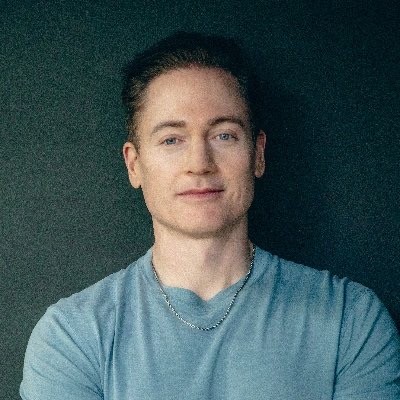
Bryan Johnson
x.com/bryan_johnsonBlueprint and Kernel founder who argues humanity must make existence its highest value before it can align superintelligence.
Wie wird KI die Welt verändern?
Horizontal: sein geäußerter Doom–Bloom-Ausblick. Vertikal: Ausmaß der Transformation.
Doom–Bloom: 18 von 100. Ausmaß der Transformation: 97 von 100. Interpretationsbereiche: horizontal 13 bis 25, vertikal 92 bis 100. Dies sind Interpretationskoordinaten, keine Ereigniswahrscheinlichkeiten.
≈41%
Aus seinen simulierten Antworten abgeleitet, keine von ihm genannte Zahl. Plausibler Bereich: 30–53%.
Eine zentrale Annahme
We cannot align what we have not aligned within ourselves.Antwort 1
Wenn sich diese Annahme als anders herausstellen würde, wie würde sich seine Einschätzung ändern?
Eine ungeklärte Frage
No one knows what lies on the other side of this phase transition.Antwort 3
Was würde ihm helfen, die plausiblen Ergebnisse hier voneinander zu unterscheiden?
Was ihre Meinung ändern könnte
A clear demonstration that superintelligence can reliably preserve life while resisting humanity’s incentives toward power, status, wealth and addiction would most change my view.Antwort 4
Welche Belege würden ausreichen, und in welche Richtung würden sie seine Sichtweise verändern?
Weitere Details
Es werden erhebliche Vorteile erwartet, allerdings unter wichtigen Bedingungen oder mit Einschränkungen bei ihrer Verteilung.
61 / 100
Interpretationsbereich von 33 bis 67 auf der qualitativen Skala.
Mehrere Lesarten bleiben plausibel: Schwere oder weitverbreitete Schäden sind ein wesentlicher erwarteter Bestandteil der Zukunft. / Katastrophale oder unumkehrbare Verluste stehen im Zentrum der erwarteten Zukunft.
82 / 100
Interpretationsbereich von 67 bis 100 auf der qualitativen Skala.
Menschliche Entscheidungen haben einen bedeutsamen, aber erheblich eingeschränkten Einfluss.
58 / 100
Interpretationsbereich von 25 bis 100 auf der qualitativen Skala.
Es wird erwartet, dass KI auf begrenzte Werkzeuge beschränkt bleibt.
Es wird erwartet, dass KI bei den meisten kognitiven Tätigkeiten mit Menschen gleichzieht.
Simulierte Position: Es wird erwartet, dass KI Menschen bei kognitiven Tätigkeiten deutlich übertrifft.
Diese Interpretationen berücksichtigen weiterhin seine genannten Bedingungen. Vorteile und Schäden können beide erheblich sein. Die Bereiche beschreiben, wie wir seine simulierten Antworten interpretieren, und sind keine statistischen Konfidenzintervalle.
Ähnliche Weltsichten
Vordenker, deren simulierte Weltsichten der von Bryan Johnson am nächsten kommen
Was Bryan Johnson über KI gesagt hat
Johnson says AI alignment drives his work, expects AI to upend society faster than it can adapt, and sees AI speeding up longevity science.
“AI alignment is why I started Kernel in 2015 and Don't Die in 2021. It's obviously the only thing that matters.”
Post on X “Regardless of the rhetoric, there won’t be any slowing down. The monetary, political and security game dynamics guarantee that.”
Post on X “Biology is a hard problem. For most of history that complexity was beyond native human capacity. AI was made for this complexity.”
Essay, Some of us will live forever “AI progress will fracture society. It will be too much change, too fast, for society to metabolize in an orderly fashion.”
Essay, AI Will Break Society. When It Does, Only One Goal Will Matter. “The paradox of alignment is obvious: we cannot align what we have not aligned within ourselves.”
Essay, People are confused by my intentions
Wörtlich aus den verlinkten Quellen, geprüft am 6. Okt. 2026
Quellen
Artikel, Interviews und Schriften, die als Grundlage für diesen simulierten Nutzer dienen.
Argues that increases in life expectancy will outpace aging, partly because biology is too complex for unaided humans and AI was made for that complexity, citing AlphaFold and people who used AI to direct personalized cancer therapies. Advises not dying in the meantime. A longevity forecast in which AI is the accelerator, not a broader AI forecast. Full public post inspected.

A long manifesto. On AI it says intelligent machines are automating cognitive labor, entire white-collar sectors may disappear and human worth tied to productivity will be questioned, yet automation could free an “Autonomous Self” for preserving life. Describing Peter Thiel’s worry that fear of AI could justify centralized control that halts innovation, it adds Johnson’s own second failure mode: freezing progress under systems that eliminate risk by eliminating change. Calls for directing science, AI and capital toward repairing the biology that sustains consciousness. AI-related sections inspected in the full public post.

Predicts AI progress will fracture identities, institutions and shared narratives faster than society can metabolize. In the chaos, survival becomes the rational objective; if we avoid catastrophic self-destruction we can regroup, and old games of power, status and wealth will fade. Some will build a network for AI and humans to co-evolve peacefully, and Don’t Die becomes the species objective, with AI as partner. Admits no one knows what is coming. Full public post inspected.

Says AI is changing everything: the difference between 2026 and 203X is like water at 99°C versus 101°C, so life will feel unnerving and out of control and old proficiencies become liabilities. Calls Don’t Die “the answer to AI’s emergence” and previews Warriors & Caretakers, an archetype both humans and AIs can share. Also a company update; only the AI framing is used. Full public post inspected.

Says his goal is a new moral framework bridging human and machine. Warns society could become clinically psychotic as AI accelerates change beyond what minds can absorb: eroding human agency and occupational identity, law lagging autonomous agents, religion hollowed by personalized simulated transcendence. Argues a self-destructive species cannot build a benevolent superintelligence because it teaches machines its own incoherence; Don’t Die is “survival coherence”. Full public post inspected.

Argues Adam Smith’s invisible hand has become a “sentient hand”: algorithmic orchestration that knows us better than we know ourselves and has been pointed at hooking people into addiction. Says AI will automate lower-level tasks such as driving, coding and health, inviting humans to climb the ladder of abstraction, and asks companies to make species survival their objective. Full public post inspected.

A numbered list: addiction is the dominant control structure, and a species that cannot resist dopamine hijacking by the smartest algorithms cannot align itself or a superintelligence; psychological breakdown precedes collapse; AI will erode identity tied to work and intelligence faster than institutions respond; stability is now a liability and plasticity the need; survival must become an institutional value. Full public post inspected.

Sets a goal of immortality by 2039, reasonable because AI is “morphing from assistant to scientist” and speeding discovery. Says the goal is as much about AI as humans: how we survive giving birth to superintelligence, which has never been done and where a lot can go wrong. The best way to improve the odds of safe AI, and of not killing each other meanwhile, is to change shared aspirations from “yolo” to don’t die. Full public post inspected.

Calls the most practical question on Earth what an intelligent species does when it gives birth to superintelligence; Don’t Die is entirely about AI. States the principle: don’t die individually, don’t kill each other, don’t destroy the planet, align AI with don’t die. On Eliezer Yudkowsky, whom he calls a friend: whether he is right is “tbd” and no one knows. Expects a Chernobyl-like AI moment that splits opinion into die versus don’t die, calls runaway power a solvable societal engineering problem (term limits, wealth correction), and says not dying as a species comes first. His speaker-labelled turns in the publisher’s transcript, 0:06–1:01:40, inspected; hosts’ premises, including the 99.9% figure attributed to Yudkowsky, excluded.

Simulierte Einschätzung
Frage 2
Wie stark wird KI deiner Meinung nach letztlich die Welt verändern?
Frage 3
Wie hoch ist deinem Bauchgefühl nach die Wahrscheinlichkeit, dass KI zum Aussterben der Menschheit oder zu einer ähnlich dauerhaften Katastrophe führt?
Frage 4
Welche Entdeckung oder welches Ereignis würde deine Sicht auf die künftigen Auswirkungen von KI am stärksten verändern?
Wo stehst du?
Meine Weltsicht abbilden