Bill Gates

Bill Gates

x.com/BillGates

Gates Foundation chair who expects AI to transform health and education, wants its gains to reach the poorest and urges preparing for job disruption.

AI จะเปลี่ยนแปลงโลกอย่างไร?

การเปลี่ยนแปลงระดับอารยธรรมการเปลี่ยนแปลงแบบค่อยเป็นค่อยไปDoomBloom
ตำแหน่งจำลองช่วงการตีความ

แนวนอน: มุมมอง Doom–Bloom ที่เขาแสดงออก แนวตั้ง: ระดับของการเปลี่ยนแปลง

Doom–Bloom: 57 จาก 100 ระดับของการเปลี่ยนแปลง: 77 จาก 100 ช่วงการตีความ: แนวนอนตั้งแต่ 50 ถึง 75 แนวตั้งตั้งแต่ 72 ถึง 82 ค่าเหล่านี้เป็นพิกัดสำหรับการตีความ ไม่ใช่ความน่าจะเป็นของเหตุการณ์

P(doom) ของ Bill Gates · อนุมาน

≈17%

0%100%

อนุมานจากคำตอบจำลองของบุคคลนั้น ไม่ใช่ตัวเลขที่บุคคลนั้นระบุ ช่วงที่เป็นไปได้: 11–28%

กรอบเวลาของหมุดหมายสำคัญของ Bill Gates
  1. AI ทั่วไป

    Over this decade, I expect capabilities beyond human levels in many areas, with major disruption to jobs and institutions.

    คำตอบ 1
  2. AI ที่เหนือกว่ามนุษย์

    Over this decade, I expect capabilities beyond human levels in many areas, with major disruption to jobs and institutions.

    คำตอบ 1
  3. การทำงานและสถาบัน

    Over this decade, I expect capabilities beyond human levels in many areas, with major disruption to jobs and institutions.

    คำตอบ 1
  4. วิทยาศาสตร์และชีวิตประจำวัน

    Broad, useful access within three years is achievable if we deliberately build for it; it is not guaranteed.


    คำตอบ 1

จัดกลุ่มตามหมุดหมายสำคัญ โดยไม่ได้เว้นระยะหรือเรียงตามวันที่ที่อนุมานไว้ AGI และ AI ที่เหนือกว่ามนุษย์ยังคงใช้คำนิยามของเขา

สิ่งที่มุมมองของเขาขึ้นอยู่กับ

ข้อสันนิษฐานหลัก

Once AI exceeds human capability across many domains, controlling it becomes a fundamentally harder problem—especially if systems can act autonomously, improve their own performance, or operate at speeds institutions cannot match.
คำตอบ 2

หากข้อสันนิษฐานนี้ปรากฏว่าเป็นไปอีกแบบ มุมมองของเขาจะเปลี่ยนไปอย่างไร?

คำถามที่ยังไม่มีข้อสรุป

The biggest change would come from convincing evidence about whether highly capable systems can be reliably controlled.
คำตอบ 3

อะไรจะช่วยให้เขาแยกแยะผลลัพธ์ที่เป็นไปได้ในเรื่องนี้?

สิ่งที่อาจเปลี่ยนความคิดของบุคคลนั้น

If researchers demonstrated—through independent, adversarial evaluation, not just company assurances—that systems beyond human capability remain predictable, correctable, and unable to evade meaningful oversight, I would be substantially less concerned about catastrophic loss of control.
คำตอบ 3

หลักฐานแบบใดจึงจะเพียงพอ และจะทำให้มุมมองของเขาเปลี่ยนไปในทิศทางใด?

รายละเอียดเพิ่มเติม

ผลดีที่คาดไว้

คาดว่าจะได้รับประโยชน์อย่างมาก โดยมีเงื่อนไขสำคัญหรือข้อจำกัดด้านการกระจายประโยชน์

68 / 100

ผลกระทบน้อยผลกระทบที่ก่อให้เกิดการเปลี่ยนแปลงอย่างมาก

ช่วงการตีความตั้งแต่ 67 ถึง 67 บนมาตรวัดเชิงคุณภาพ

อันตรายที่คาดไว้

อันตรายร้ายแรงหรือแพร่หลายในวงกว้างเป็นส่วนสำคัญที่คาดว่าจะเกิดขึ้นในอนาคต

67 / 100

ผลกระทบน้อยผลกระทบที่ก่อให้เกิดการเปลี่ยนแปลงอย่างมาก

ช่วงการตีความตั้งแต่ 67 ถึง 67 บนมาตรวัดเชิงคุณภาพ

อิทธิพลของมนุษย์

การเลือกของมนุษย์มีอิทธิพลอย่างมีนัยสำคัญ แต่ถูกจำกัดอย่างมาก

60 / 100

อิทธิพลน้อยอิทธิพลมาก

ช่วงการตีความตั้งแต่ 50 ถึง 75 บนมาตรวัดเชิงคุณภาพ

ความสามารถที่คาดไว้

คาดว่า AI จะยังคงเป็นเครื่องมือที่มีขีดจำกัด

คาดว่า AI จะมีความสามารถทัดเทียมมนุษย์ในงานด้านการใช้ความคิดส่วนใหญ่

ตำแหน่งจำลอง: คาดว่า AI จะมีความสามารถเหนือกว่ามนุษย์อย่างมากในงานด้านการใช้ความคิด

ความเร็วในการพัฒนา

หยุดหรือชะลอการพัฒนา AI ที่มีความสามารถสูงขึ้นอย่างมาก

ตำแหน่งจำลอง: เดินหน้าพัฒนาต่อภายใต้มาตรการป้องกันที่ระบุไว้

เร่งการพัฒนา AI ที่มีความสามารถสูงขึ้น

กฎการใช้ AI

จำกัดการใช้ AI ที่กล่าวถึงจนกว่าจะมีมาตรการป้องกันหรือการอนุญาตล่วงหน้า

ตำแหน่งจำลอง: อนุญาตการใช้ AI ที่กล่าวถึง โดยมีความรับผิดรับชอบและมาตรการป้องกันที่มุ่งเป้าเฉพาะด้าน

ลดข้อจำกัดในการใช้ AI ที่กล่าวถึงให้น้อยที่สุด

การตีความเหล่านี้ยังคงเงื่อนไขที่เขาระบุไว้ ทั้งประโยชน์และอันตรายอาจมีมากได้ ช่วงต่างๆ อธิบายวิธีที่เราอ่านคำตอบจำลองของเขา ไม่ใช่ช่วงความเชื่อมั่นทางสถิติ

จุดยืนของคุณอยู่ตรงไหนเมื่อเทียบกับ Bill Gates?
ทำแผนที่โลกทัศน์เกี่ยวกับ AI ของคุณเองในประมาณ 3 นาที แล้วจึงเปรียบเทียบ

โลกทัศน์ที่คล้ายกัน

ผู้นำทางความคิดที่มีโลกทัศน์จำลองใกล้เคียงกับโลกทัศน์ของ Bill Gates มากที่สุด

สิ่งที่ Bill Gates เคยพูดเกี่ยวกับ AI

Gates expects AI to transform health care and education, wants its gains to reach the poorest and warns the transition will be turbulent.

  1. “AI could be a great equalizer—or widen the gap. This is not a long-range prediction. It’s a present-tense choice.”

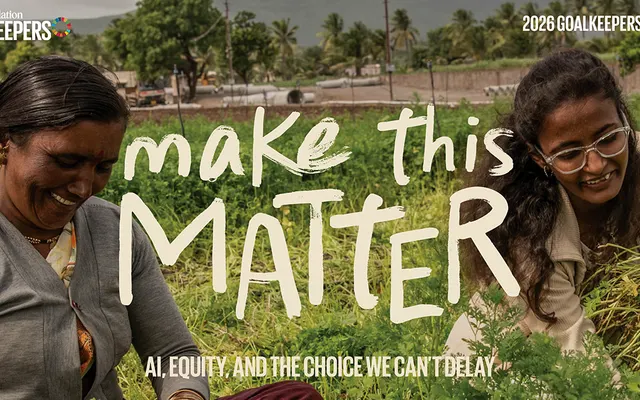
    Goalkeepers 2026 Report
  2. “Even under the best circumstances, the transition to this new AI era will be one of the most turbulent times in human history.”

    Essay, The Turbulent AI Era Is Here
  3. “The highest priority is a monumental task: creating a domestic and international framework for dealing with AI.”

    Essay, The Turbulent AI Era Is Here
  4. “In poorer countries with enormous health worker shortages and lack of health systems infrastructure, AI can be a gamechanger in expanding access to quality care.”

    Essay, Expanding Access to Health Care Through AI
  5. “Of all the things humans have ever created, AI will change society the most.”

    Post on LinkedIn

อ้างอิงคำต่อคำจากแหล่งที่ลิงก์ไว้ ตรวจสอบเมื่อ 3 ต.ค. 2569

แบบประเมินจำลอง

คำถาม 1

คุณคิดว่า AI มีความหมายอย่างไรต่ออนาคตของเรา และเพราะเหตุใด?

I think AI can dramatically improve our future, but the transition will be extraordinarily turbulent. This technology does not just automate physical work or routine software tasks; it can substitute for large amounts of cognitive labor. Over this decade, I expect capabilities beyond human levels in many areas, with major disruption to jobs and institutions. Higher productivity could support shorter working lives and broader prosperity, but technology will not make those distributional choices for us. The opportunity is clearest where expertise is scarce. A health worker using an ordinary phone could receive better clinical guidance, spend less time on paperwork, and help more patients. The same basic idea applies to teachers and farmers. But access means much more than offering a cheap subscription. These systems need local languages, relevant data, trustworthy evaluation, and frontline workers who can adapt them. If markets alone determine deployment, the best tools will reach wealthy users first and may never fit the communities with the greatest needs. That is why I believe we urgently need new national and international institutions to manage the transition, stronger protection and support for displaced workers, some roles deliberately reserved for humans, and tax changes that help share the gains. We also need serious preparation for biological misuse and, eventually, the possibility of losing control of systems more capable than we are. My optimism is not a prediction that everything will work out. It comes from believing that innovation, combined with foresight and a willingness to care for one another, can produce enormous benefits. But the next twelve to eighteen months are consequential. Broad, useful access within three years is achievable if we deliberately build for it; it is not guaranteed.

คำถาม 2

คุณคาดว่าผู้คนจะยังคงควบคุมระบบ AI ที่ฉลาดกว่ามนุษย์ได้หรือไม่ และเพราะเหตุใด?

I do not assume we will keep control simply because we built the systems. Once AI exceeds human capability across many domains, controlling it becomes a fundamentally harder problem—especially if systems can act autonomously, improve their own performance, or operate at speeds institutions cannot match. Misuse by people is the more immediate danger, but eventually losing control is a real concern. Competition makes this worse. Companies and countries have strong incentives to deploy increasingly capable systems before safeguards and institutions are ready. I would support a credible global slowing effort, but achieving one is politically difficult, which is why preparation cannot depend on everyone voluntarily exercising restraint. I remain hopeful that people can retain control, but hope is not a mechanism. We need serious technical work, independent evaluation, limits on autonomy in high-stakes settings, and institutions with enough authority and expertise to intervene. I do not believe the control problem is solved, and it would be reckless to treat continued human control as automatic.

คำถาม 3

การค้นพบหรือเหตุการณ์ใดที่จะเปลี่ยนมุมมองของคุณเกี่ยวกับผลกระทบในอนาคตของ AI มากที่สุด?

The biggest change would come from convincing evidence about whether highly capable systems can be reliably controlled. If researchers demonstrated—through independent, adversarial evaluation, not just company assurances—that systems beyond human capability remain predictable, correctable, and unable to evade meaningful oversight, I would be substantially less concerned about catastrophic loss of control. Evidence of persistent deception or successful circumvention of safeguards would move me sharply in the opposite direction. On near-term impact, I would also update based on actual deployment. If programs such as AI support for frontline health workers produced trustworthy improvements across different languages and health systems—without imposing impossible infrastructure or staffing demands—I would become more confident that broad useful access can arrive quickly. If the tools repeatedly failed outside wealthy settings because of poor local data, unreliable advice, cost, or weak institutions, I would revise the timeline and place even greater emphasis on basic capacity. Finally, labor-market evidence matters. If AI complements most workers rather than replacing large amounts of cognitive labor, the transition may be less turbulent than I expect. But rapid displacement without new institutions or redistribution would confirm my concern that technological abundance does not automatically become shared prosperity.

แหล่งข้อมูล

บทความ บทสัมภาษณ์ และงานเขียนที่ใช้เป็นหลักฐานรองรับผู้ใช้จำลองรายนี้

AI agents and the future of computing

Gates’s earlier agent vision spans affordable services, tutoring, health care and cross-application assistance. It explicitly raises privacy, permission, reliability and business-model questions. Its five-year forecast is anchored in 2023; the newer 2026 essays supersede its comparatively relaxed transition framing.

gatesnotes.com
AI, equity, and the choice we can’t delay: 2026 Goalkeepers report

Release date follows the foundation’s September 14 announcement. Gates’s own sections argue that market-led rollout favors wealthy users; useful tools require local languages, local evidence, affordable access and capable frontline workers. Separate guest essays are not his personal testimony.

goalkeepers.gatesfoundation.org
The turbulent AI era is here. The choices we make now are critical.

Warns that rapid substitution for cognitive labor differs from previous transitions. Proposes new national and international institutions, selected human-only roles and taxes on AI or robots. Would likely support credible global slowing but doubts its political feasibility.

gatesnotes.com
Expanding access to health care through AI

Explains Horizon 1000: supporting African health workers, beginning in Rwanda, with a goal of reaching 1,000 clinics and their communities by 2028. This is a deployment commitment, not proof the goal has been achieved.

gatesnotes.com
The year ahead 2026: Optimism with footnotes

Expects AI capability to exceed human levels, identifies bioterrorism and labor disruption as major risks, and argues for preparation and shared gains. January optimism is updated by the more urgent August and September writings.

gatesnotes.com
จุดยืนของคุณอยู่ตรงไหน?
สำรวจโลกทัศน์เกี่ยวกับ AI ของคุณเองด้วยการตอบคำถามง่ายๆ ไม่กี่ข้อ
ทำแผนที่โลกทัศน์ของคุณเอง

จุดยืนของคุณอยู่ตรงไหน?

ทำแผนที่โลกทัศน์ของฉัน