







Pergunta 1
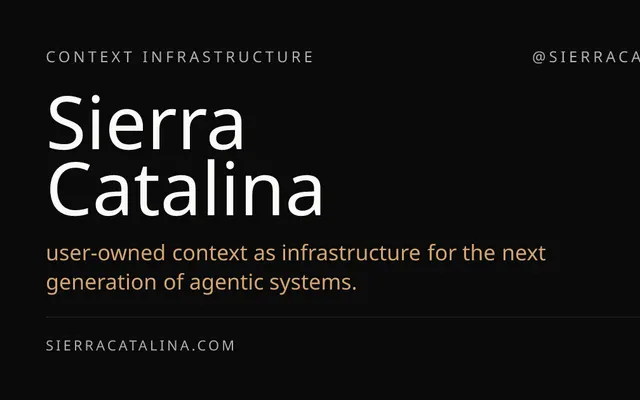
Sierra Catalina
x.com/sierracatalinaCEO of Ouroboros who builds tools for portable, user-owned AI context and writes about agent security and proof of personhood.
Como a IA mudará o mundo?
Na horizontal: a perspectiva Doom–Bloom expressa por ela. Para cima: escala da transformação.
Doom–Bloom: 67 de 100. Escala da transformação: 75 de 100. Intervalos de interpretação: 62 a 75 na horizontal, 70 a 80 na vertical. Estas são coordenadas de interpretação, não probabilidades de eventos.
≈5%
Inferido a partir das respostas simuladas dela, não de um número que essa pessoa forneceu. Intervalo plausível: 3–10%.
Uma premissa central
so the impact depends less on whether models get smarter and more on who owns the context, how access is scoped & revoked, and whether society rebuilds the human infrastructure automation thins out.Resposta 2
Se essa premissa se revelasse diferente, como a perspectiva dela mudaria?
Uma questão não resolvida
I don’t have a useful percentage.Resposta 4
O que ajudaria essa pessoa a distinguir os resultados plausíveis aqui?
Mais detalhes
Esperam-se benefícios substanciais, com condições importantes ou limites de distribuição.
76 / 100
Intervalo de interpretação de 67 a 100 na escala qualitativa.
Danos graves ou generalizados são uma parte relevante do futuro esperado.
64 / 100
Intervalo de interpretação de 67 a 67 na escala qualitativa.
As escolhas humanas podem redirecionar substancialmente a trajetória da IA.
79 / 100
Intervalo de interpretação de 50 a 100 na escala qualitativa.
Restringir os usos da IA discutidos até que proteções prévias ou uma autorização estejam em vigor.
Posição simulada: Permitir os usos da IA discutidos com responsabilização e proteções específicas.
Minimizar as restrições aos usos da IA discutidos.
Estas interpretações mantêm as condições que ela declarou. Tanto os benefícios quanto os danos podem ser substanciais. Os intervalos descrevem como interpretamos as respostas simuladas dela, não intervalos de confiança estatística.
Visões de mundo semelhantes
Líderes de opinião cujas visões de mundo simuladas são mais próximas da visão de Sierra Catalina
O que Sierra Catalina já disse sobre a IA
Catalina expects AI to take over much human labor and writes about keeping AI clearly a tool, proof of personhood and protecting human contact.
“the system must signal clearly that it is a tool. it must maintain artificial cues & avoid emotional dependency loops.”
X Article, AI voice identity “automation reduces the number of default human touchpoints in a normal week.”
X Article, third places are critical infrastructure for a post automation society “anthropomorphizing models trains people to trust interfaces instead of incentives. that confusion compounds fast in agentic systems.”
Post on LinkedIn “ASI-level automation replaces labor as the core mechanism that sustains society.”
Essay, finding purpose post ASI “but the lines will continue to blur & fast. proof of personhood becoming increasingly necessary.”
Post on X
Citações literais das fontes indicadas, verificadas em 6 de out. de 2026
Fontes
Artigos, entrevistas e textos usados para fundamentar este usuário simulado.
Her personal site states a thesis: the missing layer in modern AI is portable, user-owned context; memory, permissions and identity should travel with the person across models, agents and applications and belong to the user, not the platform. Operating principles: AI systems need scoped access to context, not persistent ownership of identity; provenance, revocation and portability are baseline requirements for trustworthy personalization; AI will remain hybrid across local, cloud and agent systems. Also lists her Ouroboros workspace and open-source agent-aware and context-layer projects. Undated page; full text inspected on 2026-10-05.

Resharing Kevin Weil’s ChatGPT agent announcement, she writes that it is “unreal”, that nothing will be the same after this, and “welcome to the future.” Enthusiasm about agents; the announcement text is Weil’s. Older context. Her short post text inspected via a search-engine extract of the LinkedIn page.

A short post arguing that anthropomorphizing models trains people to trust interfaces instead of incentives, and that this confusion compounds fast in agentic systems. Full post text inspected; a reader comment excluded.

A short post saying browser agents feel harmless until you remember most people reuse passwords and click “allow” on vibes alone. A practical security concern about agents, not a catastrophic-risk claim. Full post text inspected.

Argues that if personal agents become core, the web needs agent-readable infrastructure, and describes her open-sourced “agent aware architecture” starter: machine-legible primary actions, sensitive-field boundaries and confirmation gates for destructive operations, which she says could standardize the agent/web handshake. A design proposal tied to her own project. Post text inspected via a search-engine extract of the LinkedIn page.

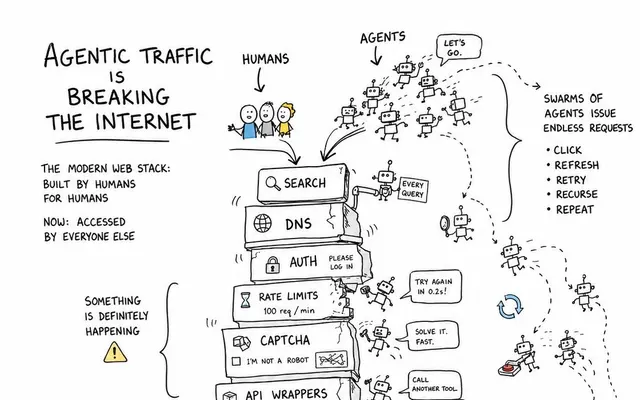
A short post saying we need to rethink agentic traffic on the web before we break the web. The accompanying image was not reviewed, and a reader’s comment belongs to someone else. Post text inspected.

Avaliação simulada
Pergunta 2
Considerando em conjunto os benefícios e os danos, que impacto geral você espera que a IA tenha em nossa sociedade?
Pergunta 3
Quanto você acha que a IA acabará mudando o mundo?
Pergunta 4
Qual é o seu palpite intuitivo sobre a probabilidade de a IA causar a extinção humana ou uma catástrofe permanente de magnitude semelhante?
Pergunta 5
Você tende a achar que a IA fará mais bem do que mal ou está realmente em dúvida?
Onde você se situa?
Mapear minha visão de mundo