Ivan Burazin

Ivan Burazin

x.com/ivanburazin

Daytona CEO who argues AI agents need their own computers to do real work, with people still setting the goals and architecture.

Como a IA mudará o mundo?

Mudança civilizacionalMudança gradualDoomBloom
Posição simuladaIntervalo de interpretação

Na horizontal: a perspectiva Doom–Bloom expressa por essa pessoa. Para cima: escala da transformação.

Doom–Bloom: 77 de 100. Escala da transformação: 39 de 100. Intervalos de interpretação: 72 a 82 na horizontal, 18 a 57 na vertical. Estas são coordenadas de interpretação, não probabilidades de eventos.

P(doom) de Ivan Burazin

Ainda não estimado

Não há informações suficientes sobre risco catastrófico nas respostas simuladas dessa pessoa para estimá-lo.

Do que a perspectiva dessa pessoa depende

Uma premissa central

But an agent needs more than a model: it needs a persistent execution environment, access to existing tools and data, and the ability to use interfaces where APIs do not exist.
Resposta 1

Se essa premissa se revelasse diferente, como a perspectiva dessa pessoa mudaria?

O que poderia mudar essa opinião

The biggest change would be evidence that agents can reliably complete long-running, real-world workflows without humans supplying architecture, tradeoffs, and repeated direction.
Resposta 3

Que evidência seria suficiente e em que direção ela mudaria a visão dessa pessoa?

Mais detalhes

Benefícios esperados

Esperam-se benefícios substanciais, com condições importantes ou limites de distribuição.

67 / 100

Pouco impactoImpacto transformador

Intervalo de interpretação de 67 a 67 na escala qualitativa.

Influência humana

Uma estimativa provisória com base nas suas respostas; o intervalo mais amplo mostra outras interpretações plausíveis.

50 / 100

Pouca influênciaForte influência

Intervalo de interpretação de 0 a 100 na escala qualitativa.

Estas interpretações mantêm as condições que essa pessoa declarou. Tanto os benefícios quanto os danos podem ser substanciais. Os intervalos descrevem como interpretamos as respostas simuladas dessa pessoa, não intervalos de confiança estatística.

Onde você se situa em relação a Ivan Burazin?
Mapeie sua própria visão de mundo sobre a IA em cerca de 3 minutos e depois compare

Visões de mundo semelhantes

Líderes de opinião cujas visões de mundo simuladas são mais próximas da visão de Ivan Burazin

Avaliação simulada

Pergunta 1

O que você acha que a IA significa para o nosso futuro — e por quê?

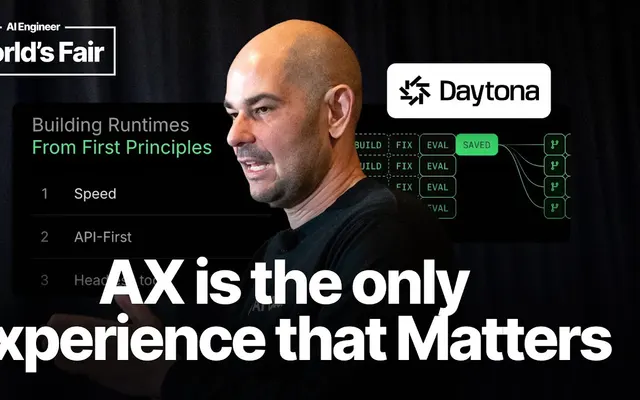
I think AI shifts software work from manually producing every implementation detail toward directing agents that can operate computers and complete workflows. But an agent needs more than a model: it needs a persistent execution environment, access to existing tools and data, and the ability to use interfaces where APIs do not exist. That infrastructure layer determines whether a promising demo can actually finish useful work. Human judgment remains central. Agents can write code and tests, but people still need to define the outcome, choose the architecture, make tradeoffs, and communicate direction clearly. Managing probabilistic agents is not merely delegation; it still requires hands-on technical understanding. I expect substantial gains from computer-use agents, especially as established products become usable headlessly and concurrently. I do not think that means frontier labs automatically consume every industry. Specialized incumbents benefit from embedded workflows and social switching costs. There are also physical constraints: datacenter space, provisioning delays, and highly spiky evaluation demand can shape where capacity grows. So the future is not just about smarter models—it is about building usable computers and operating environments around them.

Pergunta 2

Taking benefits and harms together, what overall impact do you expect AI to have?

Overall, I expect AI to be strongly useful, mainly because agents can take on substantial implementation and operational work once they have proper computing environments, tools, and data access. That can make software creation and many computer-based workflows faster and more capable. But the impact will be uneven. Models alone do not complete real workflows: agents need persistent execution, reliable access to legacy systems, and infrastructure that can handle spiky demand. Human architectural judgment, explicit goals, and technical oversight remain essential. Physical datacenter constraints may also determine where capacity and economic benefits accumulate. I also would not assume frontier labs simply replace every specialized company. Existing industries have embedded workflows, incumbents, and social switching costs. So I expect major practical gains, but not a frictionless or uniform transformation.

Pergunta 3

Qual descoberta ou acontecimento mais mudaria sua visão sobre o impacto futuro da IA?

The biggest change would be evidence that agents can reliably complete long-running, real-world workflows without humans supplying architecture, tradeoffs, and repeated direction. That would challenge my view that human technical judgment remains central even when agents produce most of the implementation. The opposite would also matter: if better models still consistently fail once tasks require persistent state, legacy interfaces, unavailable API data, or spiky infrastructure, then I would lower my expectations for near-term impact. The key test is not a benchmark or an impressive isolated demo. It is whether agents can operate computers reliably enough to finish valuable end-to-end work under real constraints.

Fontes

Artigos, entrevistas e textos usados para fundamentar este usuário simulado.

Onde você se situa?
Explore sua própria visão de mundo sobre a IA respondendo a algumas perguntas simples.
Mapeie sua própria visão de mundo

Onde você se situa?

Mapear minha visão de mundo