Victor Taelin

Victor Taelin

x.com/victortaelin

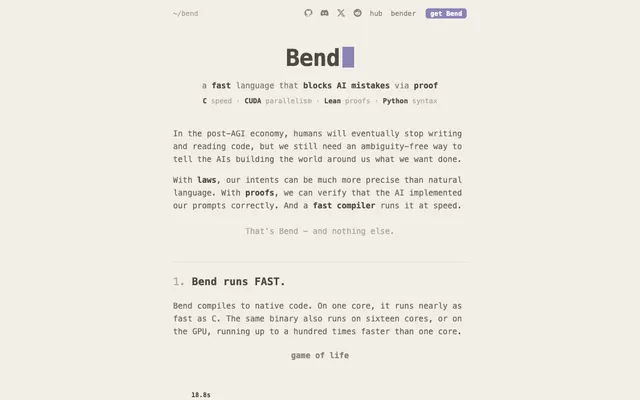
Programmer behind the Bend language who argues machine-checked proofs can catch AI coding mistakes as people read less of the code.

AIは世界をどのように変えるでしょうか?

文明規模の変化漸進的な変化DoomBloom
シミュレーション上の位置解釈範囲

横軸:その人が表明したDoom–Bloomの見通し。 縦軸:変革の規模。

Doom–Bloom:100点中73。変革の規模:100点中40。解釈範囲:横方向は68から78、縦方向は0から79。これらは解釈上の座標であり、事象の確率ではありません。

Victor TaelinのP(doom) · 推定

≈3%

0%100%

本人が示した数値ではなく、シミュレーションされた本人の回答から推定したものです。 妥当と考えられる範囲:1–9%。

その人の見通しを左右するもの

中心的な前提

But that benefit depends on reliability.
回答2

この前提が実際には異なると判明した場合、その人の見通しはどう変わりますか?

未解決の問い

Persistent memory, precise specifications, and reliable verification together could make long-running agents far more useful—but exactly how far this extends beyond software remains uncertain.
回答1

ここで考えられる結果をその人が見分けるうえで、何が役立ちますか?

詳細

予想される恩恵

大きな恩恵が予想されていますが、重要な条件や分配上の制約があります。

67 / 100

影響が小さい変革をもたらす影響

質的尺度での解釈範囲は67から67です。

予想される害

対処可能、または局所的な害が予想されています。

34 / 100

影響が小さい変革をもたらす影響

質的尺度での解釈範囲は33から33です。

人間の影響力

人間の選択には意味のある影響力がありますが、大幅に制約されています。

54 / 100

影響力が小さい影響力が大きい

質的尺度での解釈範囲は29から96です。

これらの解釈では、その人が示した条件が維持されています。恩恵と害は、どちらも大きくなり得ます。この範囲は、統計的な信頼区間ではなく、その人のシミュレーションされた回答をどのように読み取ったかを示すものです。

あなたはVictor Taelinと比べてどの位置でしょうか?
約3分で自分のAIに対する世界観をマッピングして、比較できます

似ている世界観

シミュレーションされた世界観がVictor Taelinの世界観に最も近いオピニオンリーダー

シミュレーション評価

質問1

AIは私たちの未来にとって何を意味すると思いますか?また、なぜそう思いますか?

I think AI will increasingly write and maintain software at a scale where humans simply won’t read most of the code. That changes the central question from “Does this implementation look reasonable?” to “Can we state precisely what it must do, and can a machine verify that it does it?” Formal laws and machine-checked proofs are promising because they can express intent without the ambiguity of prose and prevent specified classes of mistakes from accumulating as agents work. The emphasis is on specified classes. A proof does not magically capture every human intention, eliminate every possible bug, or remove trust from the proof machinery itself. Critical kernels still deserve careful human attention, even if the surrounding agent-generated code has rough edges. I also think we should judge AI systems less by their most impressive demonstrations and more by their destructive failures. A model that occasionally produces brilliant code but sometimes corrupts a project may be less useful than one with a lower peak and a safer worst case. And those comparisons are domain-dependent: the “best” model in one programming setting may not be best elsewhere. Persistent memory, precise specifications, and reliable verification together could make long-running agents far more useful—but exactly how far this extends beyond software remains uncertain.


質問2

Taking benefits and harms together, what overall impact do you expect AI to have?

Overall, I expect AI to be strongly beneficial, especially by expanding how much software and research we can produce. But that benefit depends on reliability. If agents generate vast amounts of code while occasionally causing destructive failures or silently accumulating technical debt, impressive peak capability is not enough. The promising path is to pair capable agents with persistent memory, precise specifications, formal laws, and machine-checked proofs. That lets us prevent defined categories of mistakes even when humans no longer read most implementations. It does not guarantee that our specification captures every intention, nor does it remove the need to scrutinize trusted kernels and proof machinery. So my expectation is positive, but not because raw capability automatically produces good outcomes. It is positive insofar as we build systems whose worst cases are controlled and whose intended properties can be stated and verified. How well that approach generalizes beyond programming is much less certain.

出典

このシミュレーション対象者の根拠として使用された記事、インタビュー、著作です。

あなたはどの位置でしょうか?
いくつかの簡単な質問に答えて、自分のAIに対する世界観を探ってみましょう。
自分の世界観をマッピングする

あなたはどの位置でしょうか?

自分の世界観をマッピングする