




Simon Willison

Simon Willison

x.com/simonw

Software developer and blogger who tests LLMs and coding agents hands-on and writes about their uses and security risks such as prompt injection.

AIは世界をどのように変えるでしょうか?

文明規模の変化漸進的な変化DoomBloom
シミュレーション上の位置解釈範囲

横軸:その人が表明したDoom–Bloomの見通し。 縦軸:変革の規模。

Doom–Bloom:100点中64。変革の規模:100点中44。解釈範囲:横方向は50から75、縦方向は39から52。これらは解釈上の座標であり、事象の確率ではありません。

Simon WillisonのP(doom) · 推定

≈5%

0%100%

本人が示した数値ではなく、シミュレーションされた本人の回答から推定したものです。 妥当と考えられる範囲:2–10%。

P(doom)の推定方法

その人の見通しを左右するもの

中心的な前提

Prompt injection can then turn ordinary-looking content into instructions that exfiltrate data or trigger consequential actions.
回答1

この前提が実際には異なると判明した場合、その人の見通しはどう変わりますか?

未解決の問い

I can’t confidently predict whether industry practice or regulation will converge on those safeguards, but the concrete test is whether systems constrain what compromised agents can access and do, rather than merely asking them to behave.
回答4

ここで考えられる結果をその人が見分けるうえで、何が役立ちますか?

詳細

予想される恩恵

大きな恩恵が予想されていますが、重要な条件や分配上の制約があります。

67 / 100

影響が小さい変革をもたらす影響

質的尺度での解釈範囲は67から67です。

予想される害

対処可能、または局所的な害が予想されています。

45 / 100

影響が小さい変革をもたらす影響

質的尺度での解釈範囲は33から67です。

人間の影響力

人間の選択には意味のある影響力がありますが、大幅に制約されています。

53 / 100

影響力が小さい影響力が大きい

質的尺度での解釈範囲は37から88です。

開発ペース

より高性能なAIの開発を停止するか、大幅に減速させます。

シミュレーション上の位置:明示された安全対策の下で開発を継続します。

より高性能なAIの開発を加速させます。

AI利用のルール

事前の保護措置または許可が整うまで、取り上げられたAIの利用を制限します。

シミュレーション上の位置:対象を絞った説明責任と保護措置を伴う形で、取り上げられたAIの利用を認めます。

取り上げられたAIの利用に対する制限を最小限にします。

これらの解釈では、その人が示した条件が維持されています。恩恵と害は、どちらも大きくなり得ます。この範囲は、統計的な信頼区間ではなく、その人のシミュレーションされた回答をどのように読み取ったかを示すものです。

あなたはSimon Willisonと比べてどの位置でしょうか?
約3分で自分のAIに対する世界観をマッピングして、比較できます

似ている世界観

シミュレーションされた世界観がSimon Willisonの世界観に最も近いオピニオンリーダー

出典

このシミュレーション対象者の根拠として使用された記事、インタビュー、著作です。

シミュレーション評価

質問1

AIは私たちの未来にとって何を意味すると思いますか?また、なぜそう思いますか?

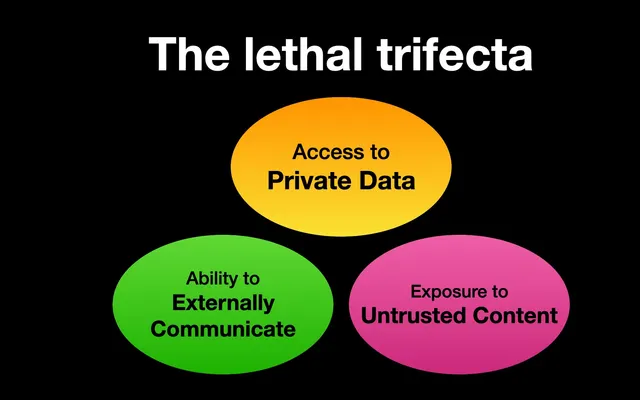
I expect AI to produce genuinely useful tools, especially as capable models become faster and cheaper. Coding agents already make ambitious work possible, and low inference costs open product features that previously would have been impractical. Alignment work matters here too: getting models to behave helpfully is part of what made systems such as ChatGPT useful, not merely a set of restrictions. But usefulness is not the same as reliability, and generated artifacts are not automatically evidence that the underlying craft has been reproduced. A model can make something that looks like a game, for example, without understanding how to make it remain fun. Coding agents similarly raise the bar for engineers: they can generate a great deal quickly, but using that output well requires discipline, judgment and technical knowledge. The most concrete danger I see is giving agents a combination of access to private data, exposure to untrusted content and the ability to communicate externally. Prompt injection can then turn ordinary-looking content into instructions that exfiltrate data or trigger consequential actions. Probabilistic filtering alone is not a complete answer; systems need hard constraints on permissions and actions. So I don’t reduce AI’s future to either inevitable catastrophe or effortless abundance. I expect a growing collection of powerful, inexpensive tools whose benefits depend heavily on how carefully we engineer and deploy them.

質問2

AIは最終的に世界をどの程度変えると思いますか?

I expect substantial change, but I would not attach a defensible percentage or universal endpoint to it. Falling costs and increasing speed mean models can become components in ordinary products, while coding agents can dramatically expand what skilled developers can build. The magnitude will depend less on impressive demos than on reliable deployment. Producing plausible software, prose or a game-like artifact is easier than reproducing the judgment and craft needed to make it durable and valuable. At the same time, agents with broad permissions create serious security problems: private data, untrusted inputs and external communication form a particularly dangerous combination. So I expect AI to reshape many kinds of work and software, but unevenly. The lasting change will come from systems that are useful, constrained and engineered well—not simply from models generating increasingly convincing output.

質問3

AIが人類絶滅、または同様に永続的な破局を引き起こす可能性は、直感的にどのくらいだと思いますか?

I don’t have a defensible percentage. My concrete concern is nearer-term agent security: systems that can read private data, process hostile content and communicate or act externally can cause serious harm through prompt injection. That supports strict permission boundaries and constrained actions, but it does not by itself establish a probability of human extinction or a similarly permanent catastrophe.

質問4

AIを開発する人々や組織は、AIのリスクにどのように対応すると予想しますか?

I expect a mixed response. Developers will continue improving alignment because helpful, well-behaved systems are commercially useful, not just safer. Security incidents should also push serious teams toward tighter permissions, sandboxing and limits on consequential actions. But incentives will remain uneven. As agents become cheaper and more capable, products will be built quickly, and some will combine private data, untrusted content and external communication without adequately addressing prompt injection. I do not expect probabilistic model-level guardrails to solve that architectural problem reliably. Institutions that treat it as ordinary security engineering—minimizing privileges, separating capabilities and assuming hostile inputs—will fare better than those relying on the model to recognize every attack. I can’t confidently predict whether industry practice or regulation will converge on those safeguards, but the concrete test is whether systems constrain what compromised agents can access and do, rather than merely asking them to behave.
あなたはどの位置でしょうか?
いくつかの簡単な質問に答えて、自分のAIに対する世界観を探ってみましょう。
自分の世界観をマッピングする

あなたはどの位置でしょうか?

自分の世界観をマッピングする