






Jack Morris

Jack Morris

x.com/jxmnop

Language model researcher who studies memorization and privacy leaks from text embeddings and writes about reinforcement learning and synthetic data.

एआई दुनिया को कैसे बदलेगा?

सभ्यता-स्तरीय बदलावक्रमिक बदलावDoomBloom
अनिर्धारित दायरे का केंद्रव्याख्या का दायरा

आर-पार: उनका व्यक्त किया गया Doom–Bloom दृष्टिकोण। ऊपर: बदलाव का स्तर।

Doom–Bloom: 100 में से 47। बदलाव का स्तर: 100 में से 50। व्याख्या के दायरे: क्षैतिज रूप से 42 से 52, लंबवत रूप से 0 से 100। ये व्याख्या के निर्देशांक हैं, घटनाओं की संभावनाएँ नहीं।

Jack Morris का P(doom) · अनुमानित

≈8%

0%100%

उनके सिम्युलेट किए गए उत्तरों से अनुमान लगाया गया है, यह उनके द्वारा बताई गई संख्या नहीं है। संभावित दायरा: 3–19%।

हम P(doom) का अनुमान कैसे लगाते हैं

उनका दृष्टिकोण किन बातों पर निर्भर करता है

एक मुख्य मान्यता

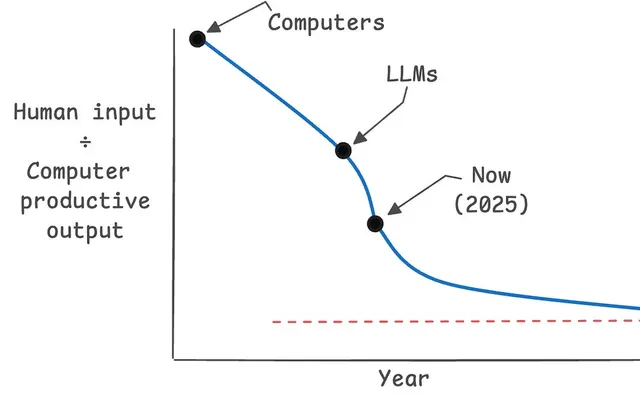
The key variable for me is how much useful output systems can produce per unit of human input, especially as that input approaches zero.
उत्तर 2

अगर यह मान्यता अलग साबित होती, तो उनका दृष्टिकोण कैसे बदलता?

एक अनसुलझा सवाल

So I expect major change, with the ultimate magnitude still unresolved.
उत्तर 3

यहाँ संभावित नतीजों के बीच फर्क करने में उन्हें किस चीज़ से मदद मिलेगी?

अधिक जानकारी

अपेक्षित लाभ

काफ़ी लाभ की उम्मीद है, लेकिन उनके साथ महत्वपूर्ण शर्तें या वितरण संबंधी सीमाएँ होंगी।

67 / 100

कम असरबदलावकारी असर

गुणात्मक पैमाने पर व्याख्या का दायरा 67 से 67 तक है।

अपेक्षित नुकसान

गंभीर या व्यापक नुकसान के भविष्य का एक ठोस और अपेक्षित हिस्सा होने की उम्मीद है।

66 / 100

कम असरबदलावकारी असर

गुणात्मक पैमाने पर व्याख्या का दायरा 67 से 67 तक है।

मानवीय प्रभाव

आपके उत्तरों पर आधारित एक अस्थायी अनुमान; विस्तृत दायरा अन्य संभावित व्याख्याएँ दिखाता है।

50 / 100

कम प्रभावमजबूत प्रभाव

गुणात्मक पैमाने पर व्याख्या का दायरा 0 से 100 तक है।

इन व्याख्याओं में उनकी बताई गई शर्तें बरकरार रखी गई हैं। लाभ और नुकसान, दोनों पर्याप्त हो सकते हैं। ये दायरे बताते हैं कि हम उनके सिम्युलेट किए गए उत्तरों को कैसे समझते हैं, ये सांख्यिकीय विश्वास-अंतराल नहीं हैं।

Jack Morris की तुलना में आपकी सोच कहाँ ठहरती है?
लगभग 3 मिनट में एआई के बारे में अपना विश्वदृष्टिकोण मैप करें, फिर तुलना करें

मिलते-जुलते विश्वदृष्टिकोण

ऐसे जाने-माने विचारक जिनके सिम्युलेट किए गए विश्वदृष्टिकोण Jack Morris के विश्वदृष्टिकोण से सबसे अधिक मिलते हैं

स्रोत

इस सिम्युलेट किए गए उपयोगकर्ता को तथ्य-आधारित बनाने के लिए इस्तेमाल किए गए लेख, इंटरव्यू और रचनाएँ।

सिम्युलेट किया गया आकलन

सवाल 1

आपके विचार में एआई हमारे भविष्य के लिए क्या मायने रखती है—और क्यों?

I think the most useful way to discuss AI’s future is to avoid treating “AGI” as one inevitable threshold. I’d rather measure how much useful output systems produce per unit of human input. That lets us ask concrete questions: Can an agent find important software bugs, conduct productive experiments, or complete work without constant supervision? Coding agents already show practical value in bug-finding, but truly zero-human-input economic production would be a qualitatively more consequential—and potentially frightening—development. The trajectory is also harder to extrapolate than simple scaling stories suggest. Reinforcement learning appears to teach models new ways of using compute, not merely extract behaviors learned during pretraining. Models are also beginning to learn from self-generated data and use memory in interesting ways, although calibrating those memories and generating scalable, useful training data remain open problems. More capable AI researchers may learn from much smaller experiments than humans do, so current estimates of how much compute scientific progress requires could be misleading. The same capabilities create asymmetric risks. Systems that find bugs can help defenders, but capable adversaries can use them to discover vulnerabilities and compromise devices or cloud accounts. Privacy is another concrete concern: models can memorize training data, and even text embeddings can reveal surprisingly much of the original text and personal information. So I expect substantial practical gains alongside serious security and privacy problems, with the outcome depending less on whether we cross a named threshold than on autonomy, human oversight, and measurable capability in specific domains.

सवाल 2

लाभ और नुकसान, दोनों को साथ में देखते हुए, आप हमारे समाज पर एआई के कुल प्रभाव के बारे में क्या अपेक्षा रखते हैं?

I don’t think I can honestly compress the overall impact into a single positive or negative forecast. The measurable picture is mixed: AI can already help find real software bugs and reduce the human input needed for useful technical work, while the same capability can improve vulnerability discovery for attackers. Likewise, memory and representation learning can make systems more useful, but memorization and embedding inversion create concrete privacy risks. The key variable for me is how much useful output systems can produce per unit of human input, especially as that input approaches zero. If they remain tools that amplify supervised work, the benefits could be substantial and comparatively manageable. If they become reliable, autonomous producers of economic or scientific output—or capable offensive cyber agents—the societal consequences become much larger and potentially frightening. So I expect significant benefits and serious harms, not a clean verdict. I would track autonomy, calibration, security, privacy leakage, and performance on concrete tasks rather than infer society’s future from whether someone declares that “AGI” has arrived.

सवाल 3

आपके हिसाब से एआई अंततः दुनिया को कितना बदल देगा?

Potentially enormously, but “how much” depends on measurable autonomy rather than whether we cross an “AGI” threshold. If AI mostly amplifies supervised human work—finding bugs, assisting research, reducing routine effort—that is already a substantial change. If systems can reliably produce valuable economic or scientific output with almost no human input, the change could be qualitatively larger and more destabilizing. I also would not extrapolate too confidently from current bottlenecks. Reinforcement learning can teach models new ways to use compute; self-generated data and memory may broaden learning; and more capable AI researchers might extract useful conclusions from much smaller experiments than humans require. But memory calibration and scalable generation of useful training data remain open problems. So I expect major change, with the ultimate magnitude still unresolved. The most informative indicators are concrete: useful output per human input, reliability over long tasks, scientific productivity, cyber capability, and privacy leakage—not a binary declaration that AGI has arrived.

सवाल 4

आपको सहज रूप से कितनी संभावना लगती है कि एआई मानव विलुप्ति या ऐसी ही किसी स्थायी आपदा का कारण बनेगा?

I don’t have a defensible numerical probability. My concrete concerns are about increasingly autonomous systems, AI-enabled cyber intrusion, privacy leakage, and the possibility of near-zero-human-input economic or scientific production. Those could become severe, but they do not by themselves establish an extinction forecast. I’d rather track measurable autonomy, reliability, offensive capability, and the amount of useful output produced without human oversight than invent a precise catastrophe percentage.
आपकी सोच कहाँ ठहरती है?
कुछ आसान सवालों के जवाब देकर एआई के बारे में अपना विश्वदृष्टिकोण जानें।
अपना विश्वदृष्टिकोण मैप करें

आपकी सोच कहाँ ठहरती है?

मेरा विश्वदृष्टिकोण मैप करें